El Niño & Its Effect on US Weather
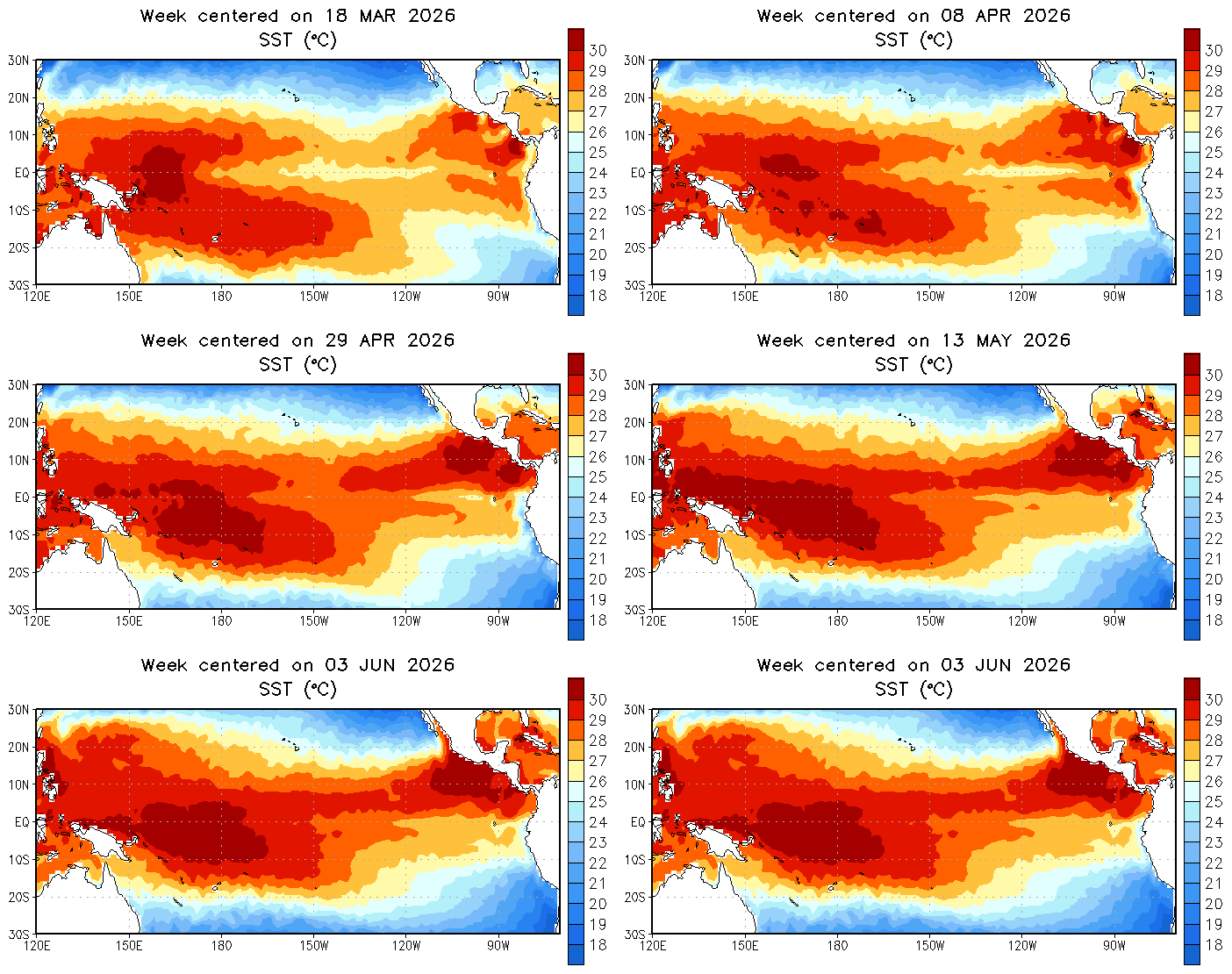
GIF displaying changes in Pacific sea surface temperatures. Credit: National Weather Service Climate Prediction Center
The weather phenomenon known as El Niño has officially returned in 2026, bringing with it changes in worldwide weather patterns that will be helpful for some areas and potentially disastrous for others. To prepare for the likely impacts of El Niño, it’s important to understand this weather phenomenon, including how it occurs and what regions it affects.
What is El Niño?
Under normal conditions in the Pacific Ocean, trade winds move westward and push warm water from South America to Asia. As that warm water moves out of the area, colder water rises to replace it in a process called upwelling. When that natural pattern is interrupted, phenomena like El Niño, and the opposite event, La Niña, occur.
During El Niño, the trade winds are not strong enough to transfer warm water to Asia. Instead, that warm water is pushed eastward to the west coasts of North and South America. This change then leads to a domino effect: the warmer waters cause a southern shift in the Pacific jet stream, which in turn causes drier and warmer air to move into the northern US and Canada, while the southeast US and Gulf Coast are exposed to wetter-than-usual weather conditions with an increased chance of flooding.
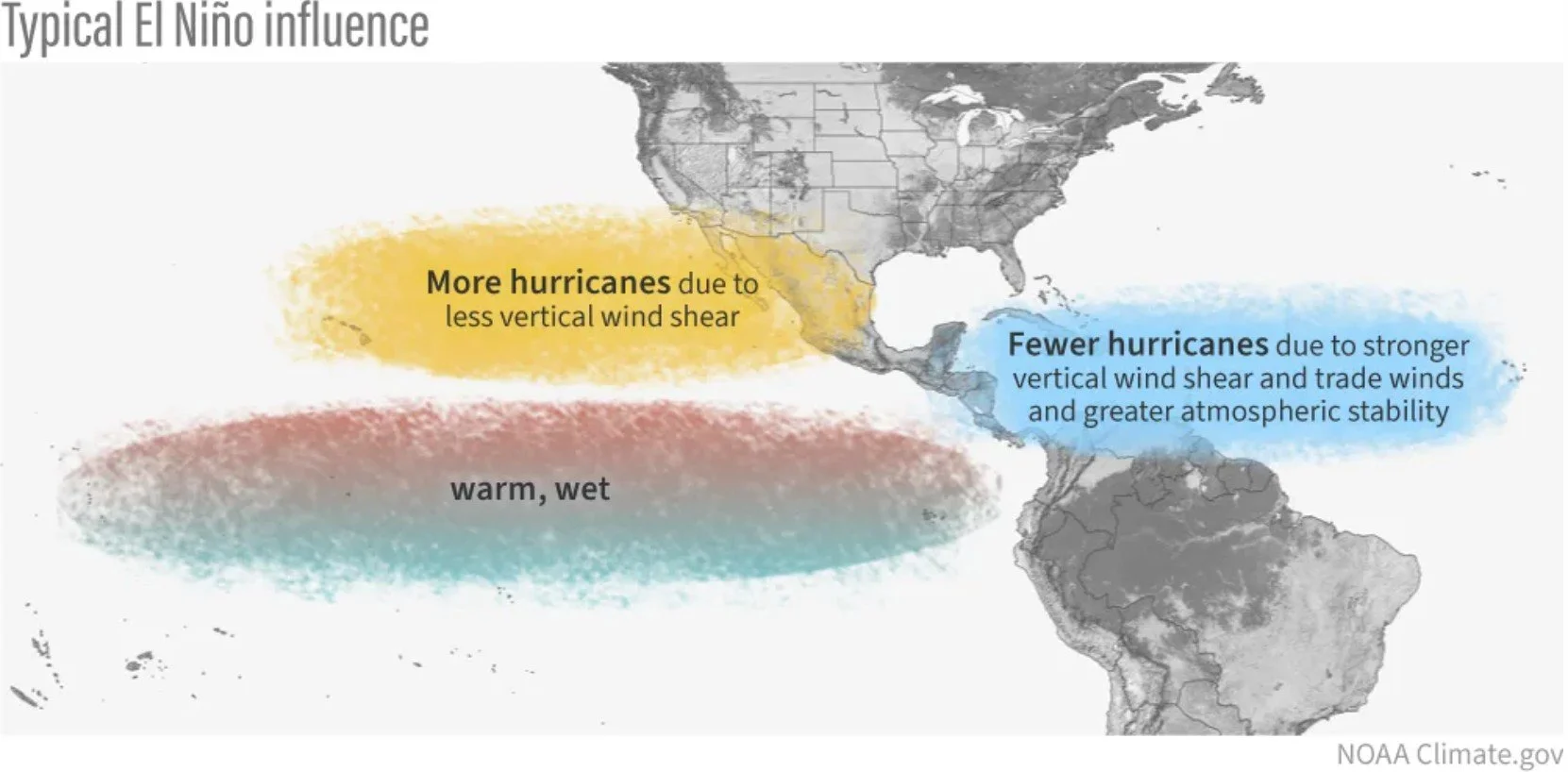
Graphic displaying the effect El Niño typically has on hurricanes in the Pacific and Atlantic regions. Credit: NOAA Climate.gov
How Often does El Niño Occur? How Long does it Last?
El Niño events occur every two to seven years, and tend to last for nine to twelve months. El Niño usually begins developing between March and June, reaching peak intensity between November and February and impacting temperatures into the following year.
The intensity and duration of El Niño events typically depend on when they begin, their overall strength, and the interaction with other climate phenomena around the world. The 2026 El Niño event is predicted to be especially strong (sometimes called a “Super El Niño”) and potentially one of the strongest on record because of the increase in baseline temperatures worldwide.
How Does El Niño Impact the Weather?
When an El Niño event occurs, it affects weather worldwide because it disrupts the normal transfer of heat in the ocean via upwelling and the natural movement of weather systems via the trade winds and the Pacific jet stream. This disruption of natural patterns makes extreme weather more likely and increases the odds of heat waves, flooding, landslides, and droughts, depending on location.
In the US, El Niño’s impact is often more prevalent in the winter months, when warmer-than-average conditions occur in the northern US while the southern US experiences wetter and cooler weather due to a more active jet stream.
California often sees an increase in atmospheric river events because of El Niño’s impact on the jet stream. According to NOAA, atmospheric rivers provide up to 50% of total annual precipitation in California but also cause more than 80% of flood damages.
The other state that experiences the greatest impact from El Niño is Florida. Because El Niño pushes the jet stream further south, storms and severe weather events that would normally impact Georgia, South Carolina, and into the mid-Atlantic region are pushed directly toward the Florida peninsula.
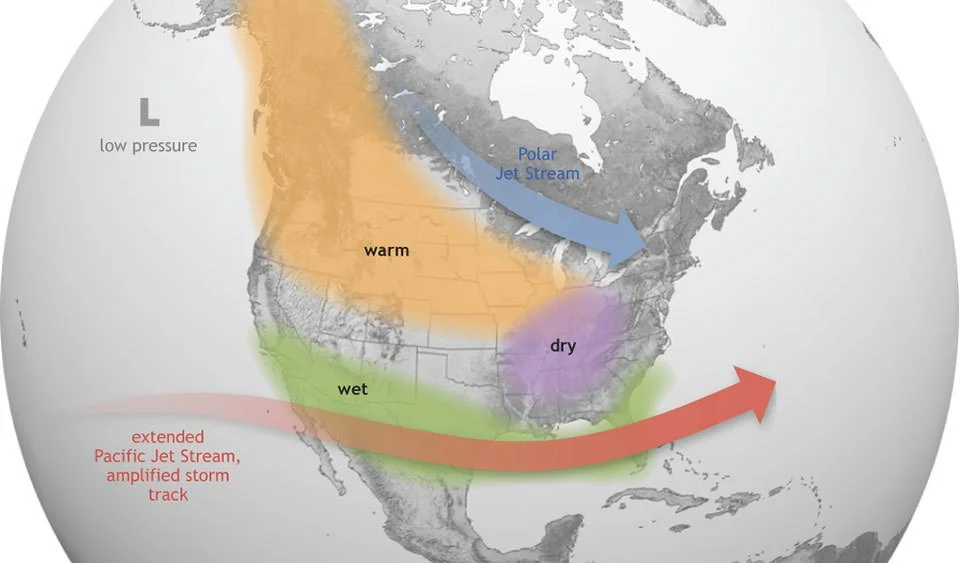
Graphic displaying how El Niño affects weather in the continental US by affecting the Pacific jet stream.
Does El Niño Cause Natural Disasters?
The El Niño phenomenon does not cause disasters directly. However, it can create conditions that lead to more natural disasters in some areas (but may also lead to less extreme weather in others). In the Atlantic Ocean, El Niño actually makes it more difficult for hurricanes to form because it can increase wind shear, which is the change in wind speed with height in the atmosphere.
The warmer water in the Pacific Ocean, on the other hand, creates the perfect conditions for stronger storms and hurricanes to form as a result of El Niño. That increased water temperature also can wreak havoc on marine life. By interrupting the upswelling process, which transfers much-needed nutrients to the surface along with cooler water, El Niño can disrupt the food web and reduce phytoplankton. Marine heat waves triggered by El Niño can cause coral bleaching, generate algae blooms, and can push certain species of fish into new territories, which upsets established migratory patterns.
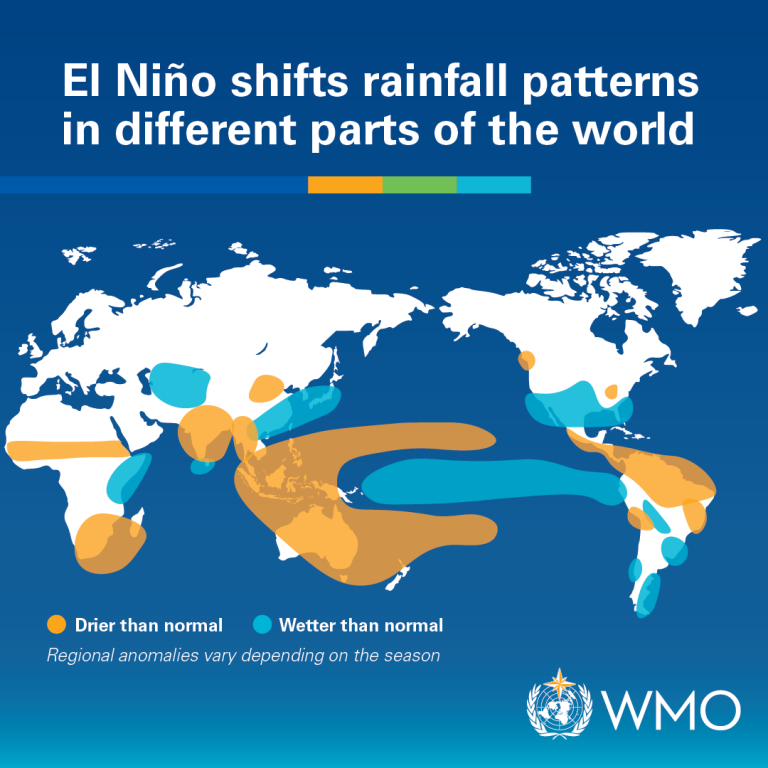
Graphic displaying how El Niño affects rainfall throughout the world. Credit: WMO
How to Prepare Yourself
Depending on the region of the US where you reside, you may see drought conditions or increased rainfall that can lead to flooding. You may also experience higher temperatures. The best way to prepare yourself is to ensure you and your family are aware of the different types of flooding and ready to take action in the event of flooding in your area. You should also educate yourself on the dangers of extreme heat and prepare accordingly.