Extreme Heat - The Basics
Our climate is changing, and these changes are increasingly leading to severe weather events that are more extreme, more widespread, and longer lasting than in years past. One of the biggest factors contributing to this increase in extreme weather events is temperature.
Across the globe, temperatures have been rising. Climate researchers report that the last 11 years were the warmest years on record, with 2024 having the distinction of being the hottest year ever recorded, according to NOAA. Around the world, the number of “extremely hot days”, in which the temperatures reach 95 degrees Fahrenheit or higher, has been steadily increasing. Simultaneously, the frequency of heat waves is also increasing, and prolonged extreme heat events are becoming more widespread, more extreme, and of longer duration than ever before.
As the earth warms, the risk of extreme weather events of all kinds increases. Higher temperatures provide the conditions under which hurricanes are able to form and intensify more quickly, drop larger amounts of rain, and bring stronger winds and higher storm surges. Higher temperatures contribute to increased fire risk, and the fire season is getting longer and more dangerous as wildfires are becoming more common, more extreme, and more likely to release harmful contaminants into the air. And higher temperatures increase the likelihood of extreme heat events such as prolonged heat waves and extremely hot days.
While hurricanes and wildfires tend to garner more public attention, it is actually extreme heat events that pose the greatest threat to humans, businesses, and society as a whole.
Source: Climate Central
Extreme heat is deadly.
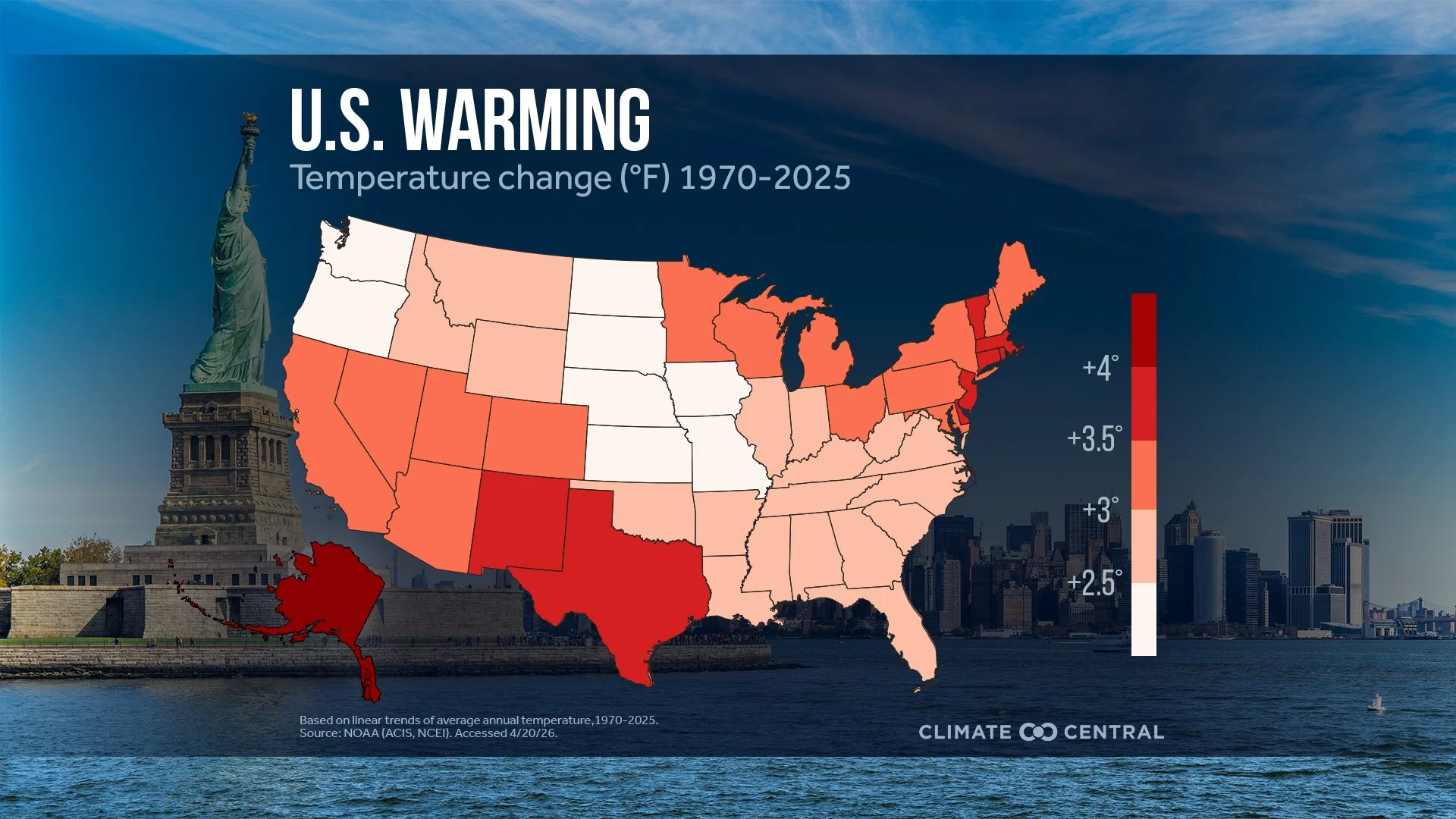
Globally, extreme heat exposure kills more people than any other category of extreme weather event. And in the United States, more people die each year due to heat-related illness or injury than from all other types of weather events combined. As global temperatures have risen, so have the numbers of heat-related deaths. This phenomenon is most acute in the United States where, since 1970, temperatures have risen 60% more than the global average, a trend that is expected to continue. At the same time, according to Yale School of Public Health, heat-related deaths in the United States have also been increasing, with the greatest increase having occurred between 2000 and 2020 when heat-related deaths jumped by 53%.
Extreme heat is costly.
Extreme heat does not just threaten people’s lives; it threatens the economy. Higher temperatures lead to more health issues requiring hospitalization, causing medical costs to increase. Prolonged heat waves and more frequent “extremely hot days” lead to labor losses in industries that rely on outdoor workers, such as agriculture and construction, causing a loss of revenue for the company and a loss of income for the employee. Energy costs increase as people try to stay cool. And maintenance budgets are stretched thin as high temperatures cause damage to infrastructure, such as buckling roads.
Extreme heat is not equally distributed.
While extreme heat poses a real health risk to all humans, certain places and certain populations of people tend to be disproportionally affected.
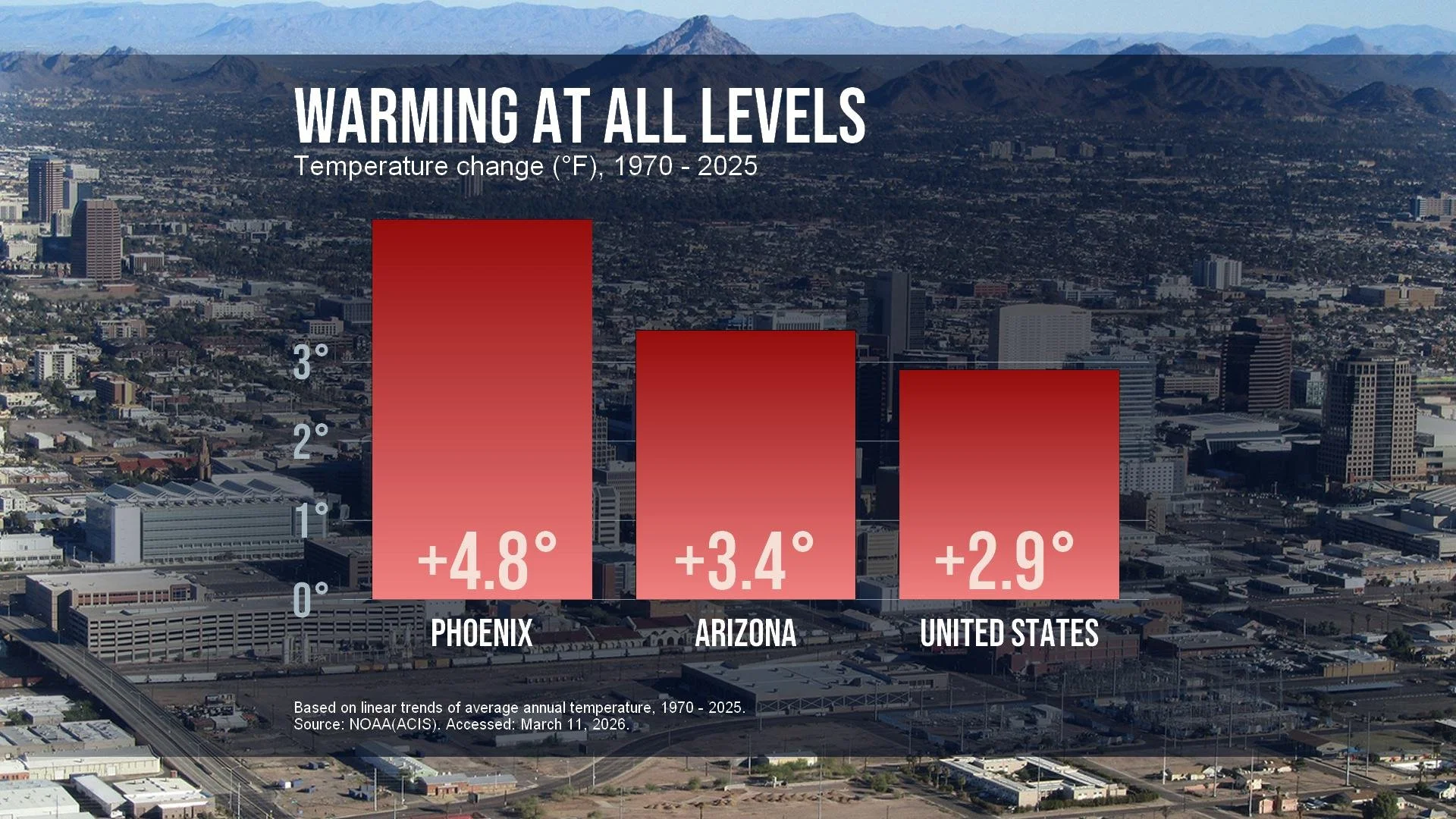
In terms of the places most at risk, cities are at the top of the list. Around the world, cities are consistently warmer than neighboring suburban or rural neighborhoods as a consequence of the Urban Heat Island effect (UHI). However, not all cities face the same level of risk. In the United States, temperatures have been rising faster than in other countries, and within the U.S., it is projected that the northern and western regions will see an even greater increase in temperature than the rest of the country. This means that although temperatures are increasing around the world, the United States is particularly vulnerable to the impacts of extreme heat, with cities in the north and west facing the greatest risks.
Source: Climate Central
In terms of the people most at risk, outdoor workers, homeless people, children, the elderly, and people with underlying physical and/or mental health conditions tend to face far greater health risks from extreme heat exposure than others. In addition, poor people, people of color, and people who are members of marginalized or underserved communities also tend to be disproportionately impacted by extreme heat events. For some, such as outdoor workers and homeless individuals, the risk is higher because of the amount of time spent outside each day. For others, such as children, the elderly, and those with health conditions, the risk is higher because the heat takes a greater toll on their bodies. And for those who are poor, who are people of color, or who are members of marginalized or underserved communities, the risk is higher due to external factors, such as lack of air conditioning, limited cooling centers, or an overabundance of built environment and not enough green space.
Extreme heat can be managed – even if it can’t be stopped.
The increase in the average global temperature each year is certainly alarming, but there are several things that communities can do to manage or even lessen the risks from rising temperatures.
To manage the risk of extreme heat, jurisdictions can develop and implement Heat Action Plans (HAPs) to guide their response during extreme heat events. These plans should include things like a definition of Extreme Heat Events (EHEs), the locations and hours of operation for cooling centers, guidance for conducting heat-related surveillance, and plans to deal with power outages.
To mitigate against extreme heat, communities can adopt green best practices. For example, cities can employ more green building strategies, such as light-colored roofing and pervious roadway materials, or implement green initiatives, such as tree-planting, to help lower the temperatures and lessen the UHI effect. While we may not be able to reverse the trend of rising temperatures, HAPs will help ensure that communities are prepared to handle extreme heat events and mitigation efforts may be able to slow the rate at which temperatures are increasing, particularly when implemented in cities.
Extreme heat and the future
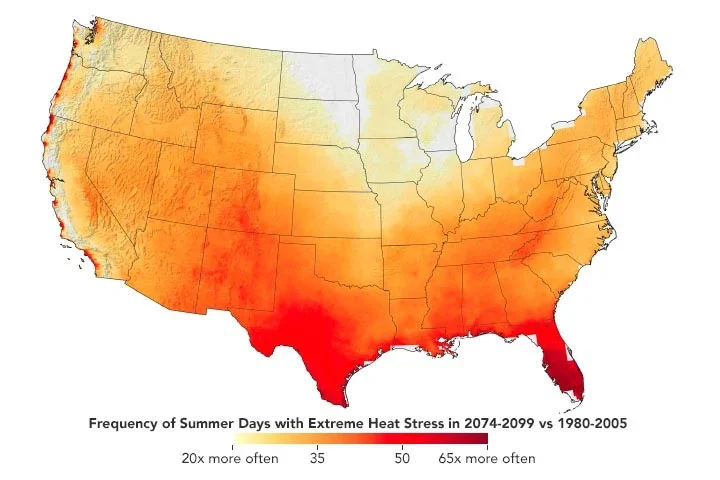
In the U.S., 13.2 million households reported being “uncomfortably hot” for 24 hours or more in 2023. Worldwide, 770 million people experienced record annual heat in 2025. This means that one out of every 12 people on the planet were exposed to record-high temperatures last year alone. The average global temperature in 2025 was 2.59 degrees Fahrenheit warmer than in the pre-industrial era, and some researchers have estimated that by 2029, if nothing is done to reduce pollution and mitigate against extreme heat, temperatures worldwide will exceed the warming limit of 2.7 degrees Fahrenheit, established by the Paris Climate Accord in 2015.
Source: SciTech Daily; Adam Voiland, NASA Earth Observatory
Multiple climate research groups have predicted that 2026 will be as hot, if not hotter, than 2025. Unlike many other weather-related threats, extreme heat cannot be run from, hidden from, or just waited out. There is only so long that the human body can withstand high temperatures before serious health complications arise. The costs from extreme heat events are significant, both in terms of loss of life as well as the impact on the economy.
Extreme heat is an urgent problem that needs to be fully understood and addressed. It goes beyond the issue of rising temperatures and encompasses urban design, city investment, environmental justice, economic stability, health, education, and almost every other aspect of our social world.
To raise awareness about the dangers of extreme heat, the International Federation of Red Cross and Red Crescent Societies (IFRC) designated June 2nd as Heat Action Day. The theme for 2026 highlights the particular risks posed by indoor heat.
In recognition of Heat Action Day 2026, this article will be the first in a series that will examine the issue of extreme heat. Please join us over the coming weeks as we take a closer look at the impact that extreme heat has on our health and our economy, the factors that have contributed to rising temperatures and the warming of our cities, the people and places who are most at risk, and the variety of ways we can manage and mitigate this growing danger. Understanding and preparing for extreme heat will be key to preventing deaths, avoiding economic losses, and creating more livable communities for us all.