Development & Disaster: Wildfire Mitigation & Land Use Planning
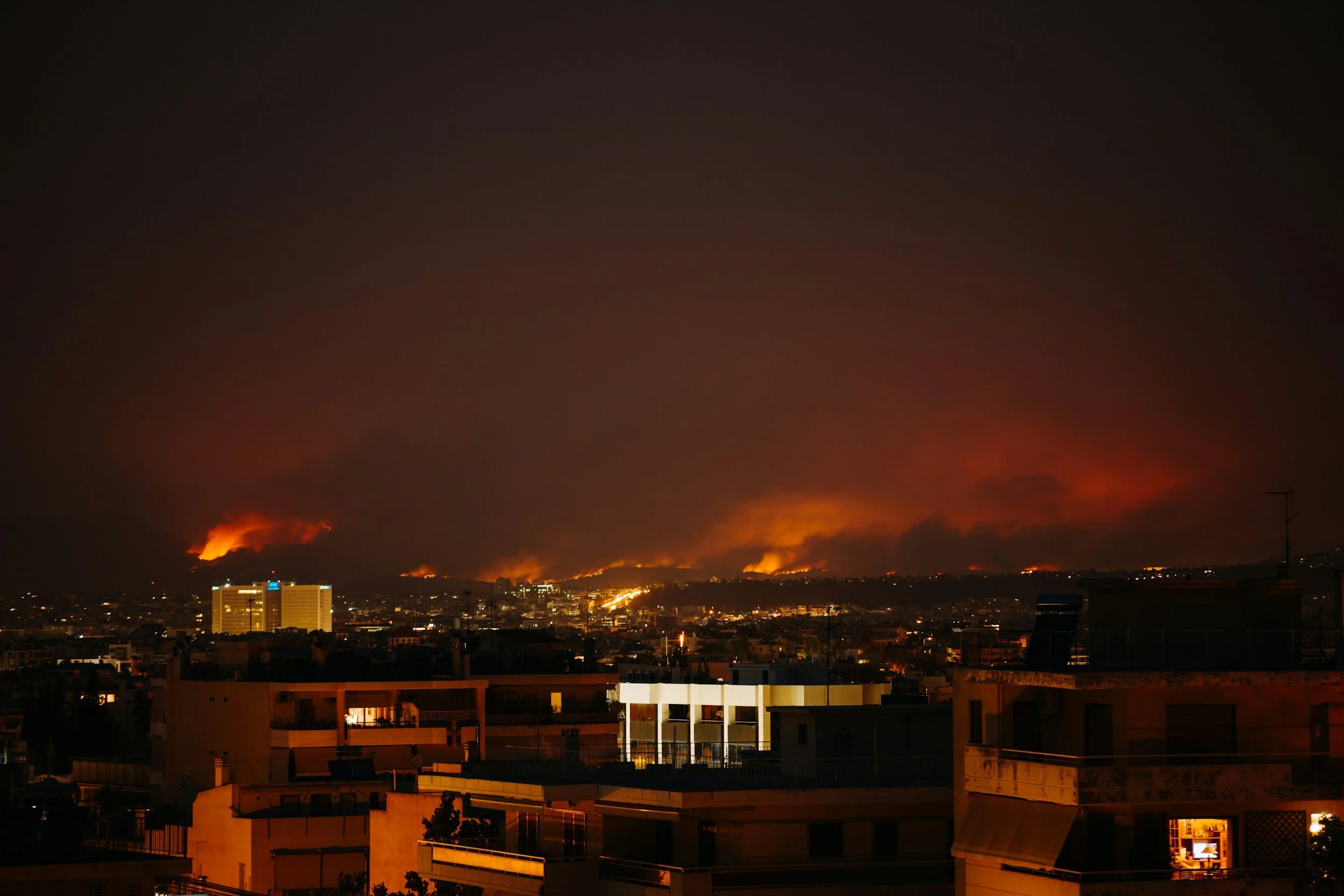
View of buildings in an urban environment with an active wildfire in the background
As weather events become increasingly more destructive and costly, understanding the relationship between development and disaster can help make smart building decisions, minimizing the risks, and subsequent costs, of future disasters. This article is the sixth in our series, Development and Disaster, where we examine the impact of land use and development on how we, as a society, experience disasters.
As climate change drives temperatures ever higher across the United States, the drier air and more extreme weather events that accompany those warmer temperatures create the perfect conditions for wildfires. Combining this elevated risk with the urban sprawl that has been occurring for decades leaves many residents in danger from a potential disaster most are not prepared to face.
The January 2025 Los Angeles County wildfires showed the horrible destruction wildfires can cause when they reach a more urban area. The Palisades and Eaton fires (the two largest in the LA event) destroyed more than 16,000 homes, burned a total of 38,000+ acres, killed 29 people, and left thousands homeless. Powered by the Santa Ana winds, those fires were so destructive because of where they occurred, and the future of development in the United States must account for the danger wildfires pose. Fortunately, there are many strategies available to mitigate wildfire disasters.
Wildfires are Becoming More Widespread & More Dangerous
Residents who live at the intersection of the wildland-urban interface (WUI) are most vulnerable from wildfire. The WUI is defined as the area where human development meets unoccupied land filled with forests and other vegetation. According to the USDA, more than 70,000 communities along the WUI are at risk from wildfire. This is upwards of 50 million homes and nearly one-third of the US population (approximately 99 million people).
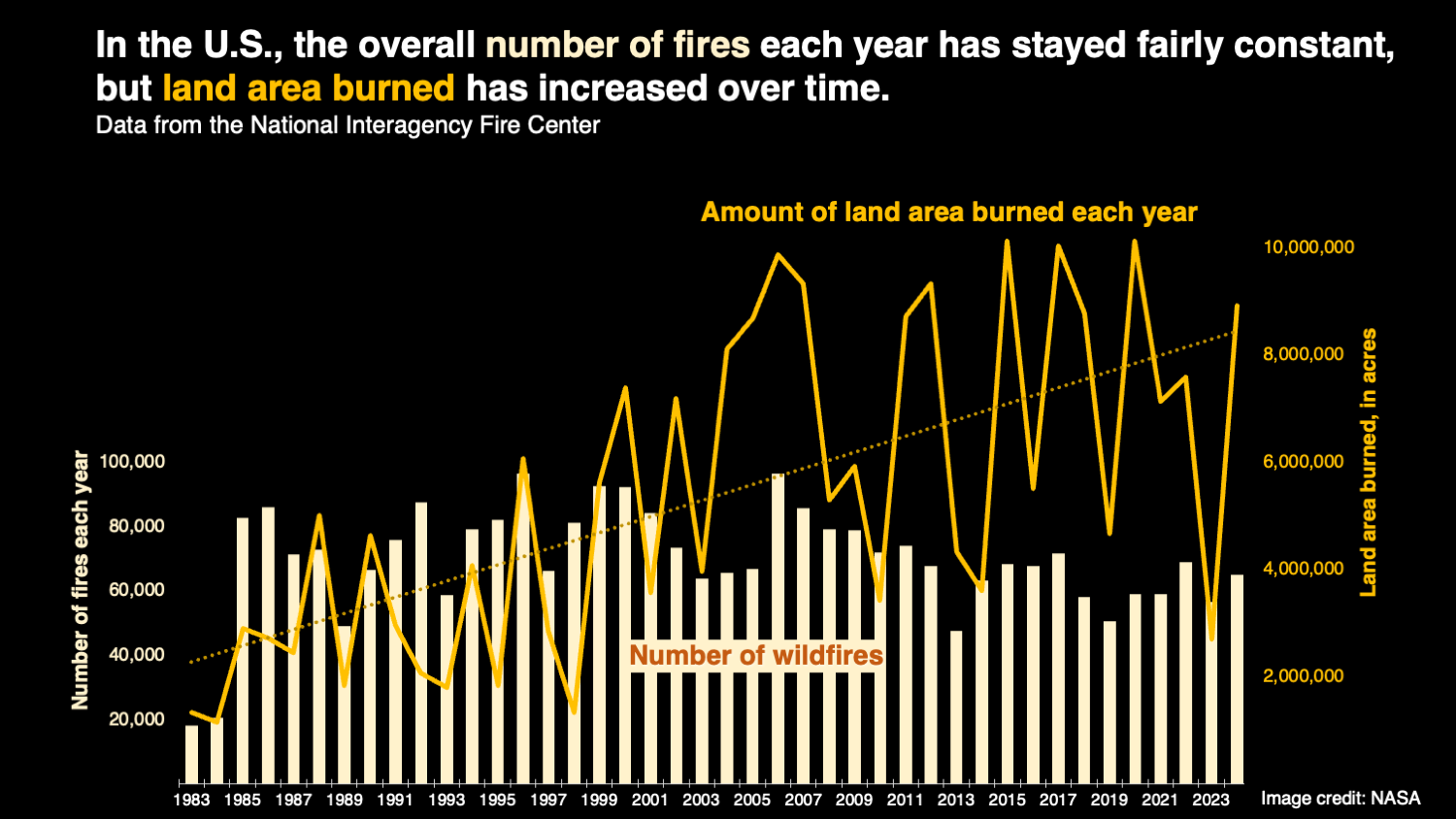
Graph showing the number of wildfires and amount of land area burned by wildfires in the U.S. every year from 1983 through 2024. Data from the National Interagency Fire Center. Credit: NASA
As the chart above demonstrates, the number of wildfires each year has remained fairly steady, if not showing a slight decline over the past 10–15 years. However, the amount of land area burned by these fires has risen significantly, which makes them more costly both in terms of damage and human impact.
A recent study published in the journal Science reviewed 40+ years of data and found that the number of disastrous wildfires around the world increased by 300% between 1980 and 2023. Of the 242 wildfire disasters selected for review based on scope of losses, 43% occurred in the past 10 years and most were located in the western part of Canada and the US, southern Europe, and southern Australia. As wildfires become more widespread, the communities along the WUI will find themselves in the crosshairs.
Urban Sprawl Creates a New Dynamic for Wildfires
While urban sprawl persists, the WUI continues to expand, growing by approximately 10% from 2020 to 2025. This makes more citizens vulnerable to potential wildfires, but it also increases the potential for human-caused wildfires.
Naturally occurring wildfires started by lightning strikes or other causes have been common around the world throughout history. Often these events serve a vital purpose and refresh the landscape by removing dead underbrush and other vegetation to create the right environment for certain plant and animal species to thrive. When humans are introduced, however, the natural process is interrupted and those same wildfires become a danger to the community.
As developments continue to be established on the verge of wilderness, the tendency of humanity to interfere with nature contributes to wildfire risk in more than one way. Improper forest management may create more fuel for fires. Construction projects often introduce additional pollutants and potential fire starters unless proper materials are utilized.
Humans themselves can also be a more direct cause of wildfires. Burn barrels or debris piles that get out of control are one of the leading causes of wildfires. Accidental fires started by vehicles, firearm use, or fireworks/explosives occur every year. The most unfortunate way humans start wildfires, however, is arson. One out of every five wildfires caused by humans each year are intentionally set.
Beyond the obvious costs of wildfires, like property damage and injuries or deaths, there are the underlying human impacts. Survivors of wildfires experience a profound loss, often being forced to evacuate their homes with nothing but the clothes on their backs, racing away with fire and smoke spreading behind them. The psychological cost of cheating death and losing one’s home cannot be overstated and is something we as a society should strive to avoid.
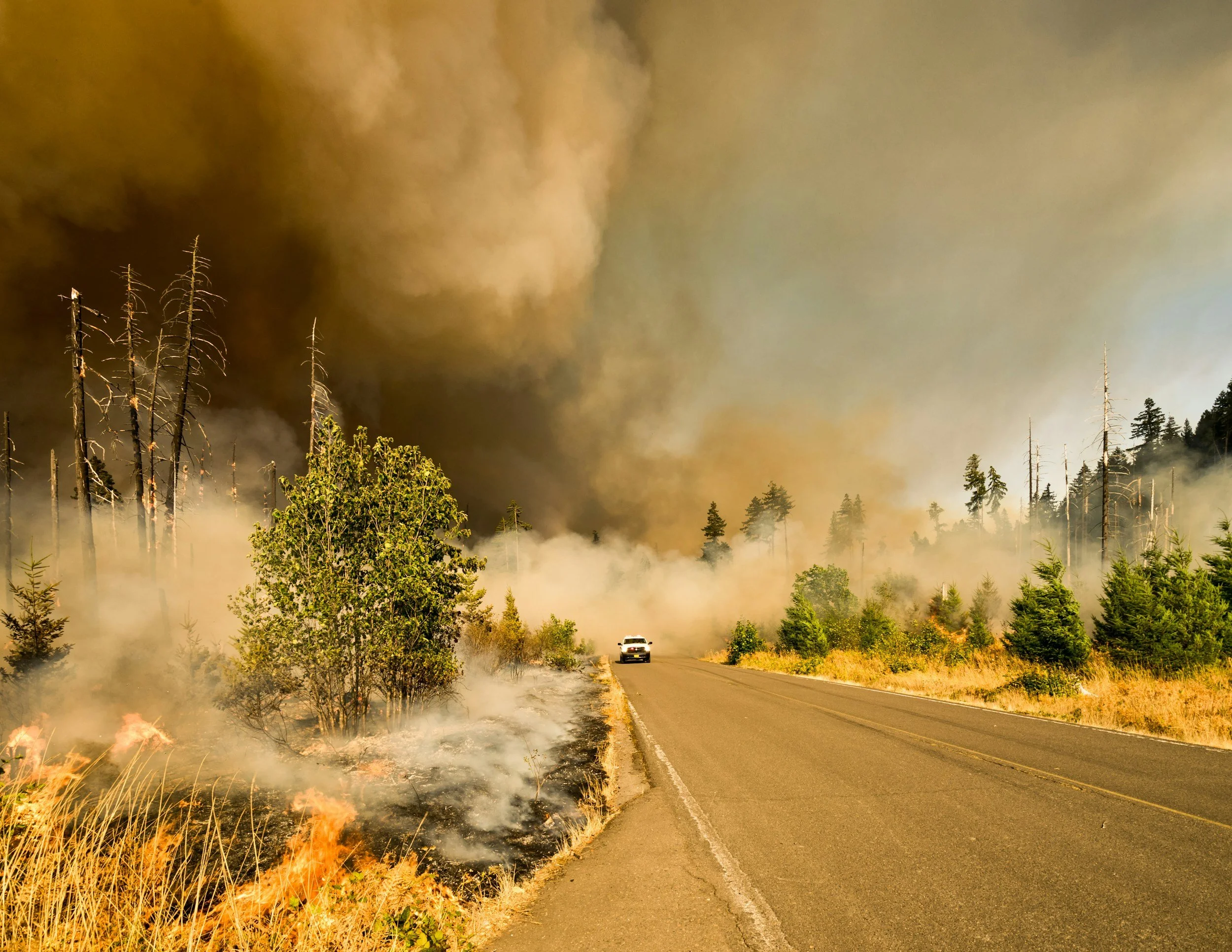
Truck racing to escape oncoming smoke from a nearby wildfire
The Importance of Land Use Planning
When it comes to urban sprawl, the genie is already out of the bottle, so the focus should change to ensuring additional development is done with safety in mind. This will entail prudent land use planning and a focus on helping communities grow with wildfire safety in mind.
Fortunately, there are many land use planning tools available to reduce the risk of wildfires, and Community Planning Assistance for Wildfires (CPAW) offers many helpful resources to better understand and manage areas prone to wildfires. When implemented at the state or municipal level, these tools create an effective, holistic land use planning approach focused on reducing wildfire risk.
Forest Management – Orchestrating projects to properly manage and maintain surrounding woodlands and forest areas decrease the amount of fuel that could feed a potential wildfire.
Steep Slope Ordinances & Landscaping Regulations – Restricting development in wildfire-prone areas and requiring landowners to maintain their properties significantly reduces risk.
Subdivision Design Standards – Compelling developers to install specific risk reduction elements, like minimum road widths and adequate water supplies, ensures the safety of future residents.
Building Codes – Establishing specific requirements for fire-resistant or incombustible materials in new construction and renovation projects further reduces the available fuel for a wildfire.
Land Preservation, Land Use & Development Codes – Creating incentives for developers to incorporate agricultural areas, open space, and recreational trails in their plans supply essential fuel breaks that diminish the severity of wildfires.

Mountain hiking trail with evergreen forest and additional mountains in the background
How Fire Adapted Communities Can Reduce Wildfire Risk
Fire adaptation requires a community approach. Just as a single cigarette butt or unmonitored burn pile can cause a wildfire that destroys several thousand acres of land, a fire adapted community is only as strong as its weakest link. As the US Forest Service puts it, “the work to reduce wildfire risk never ends.” Fortunately, they have compiled an exhaustive list of tools for communities to improve their fire adaptation.
Community Groups – Forming a dedicated community group responsible for fire adaptation can help promote understanding and awareness.
Community Wildfire Protection Plan (CWPP) – Drafting a detailed document to identify wildfire risk, outline strategies to mitigate that risk, and formulate a plan for risk reduction is essential.
Hazardous Fuel Management – For communities at risk of wildfires, one of the most effective approaches is to remove the fuel that could feed a fire. Eliminating dead and dry vegetation, executing prescribed burns, and creating buffers around key facilities reduces risk for the entire community.
Fire Departments & Associations – Having a well-prepared firefighting operation is essential, and members of a local fire department or fire protection association can serve as valuable advocates to promote awareness and share critical information on evacuation routes, fire safety, and wildfire risk reduction.
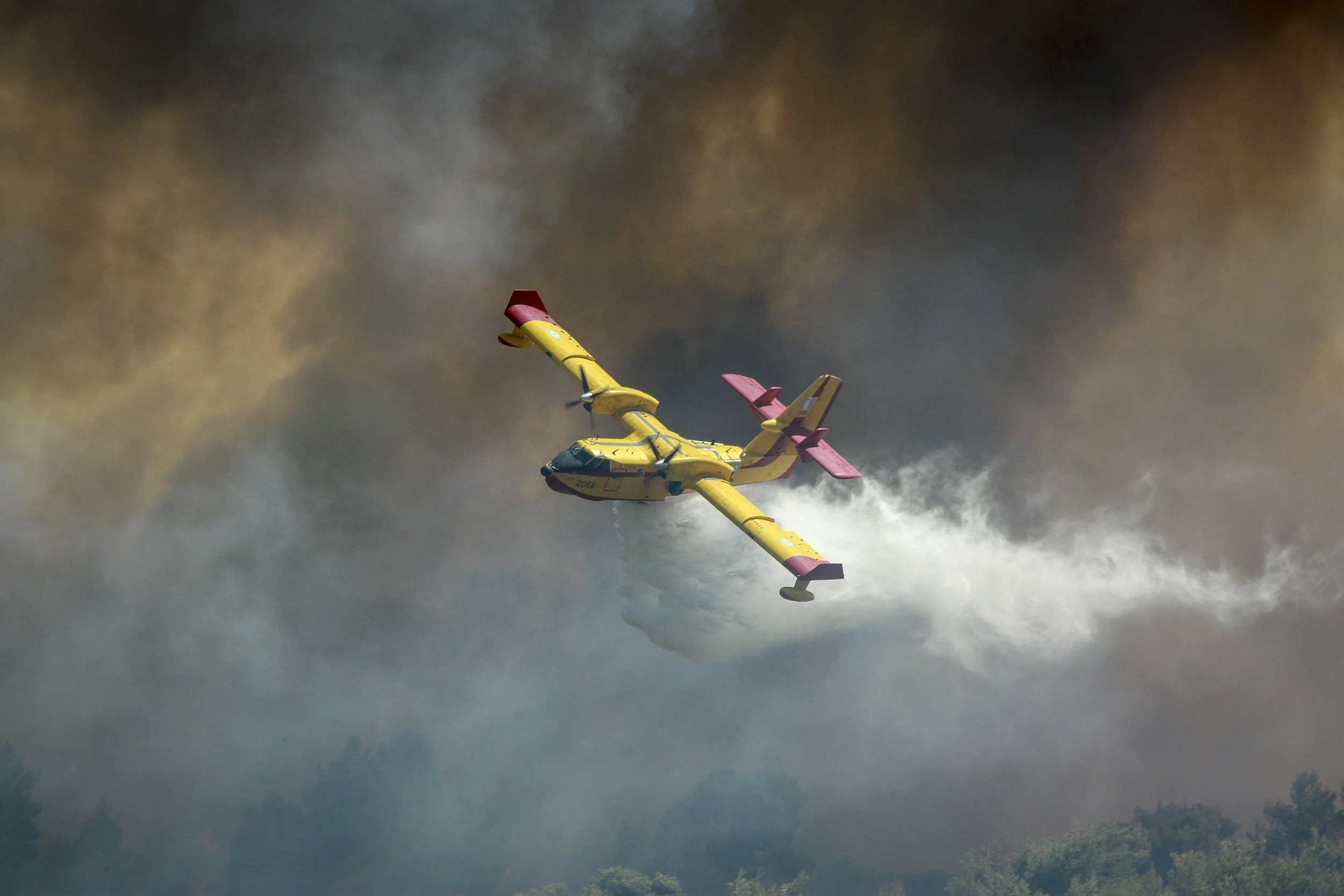
Aerial firefighting aircraft dropping water on an active wildfire
Each year from May to November, wildfire season reaches its height in the United States. As hotter and more arid weather brought by climate change increases the risk of wildfires and urban sprawl exposes more communities to potential fire disasters, it is vital that citizens know the risks and understand the simple actions they can take to make themselves and their neighbors less vulnerable to wildfires.