Types of Flooding
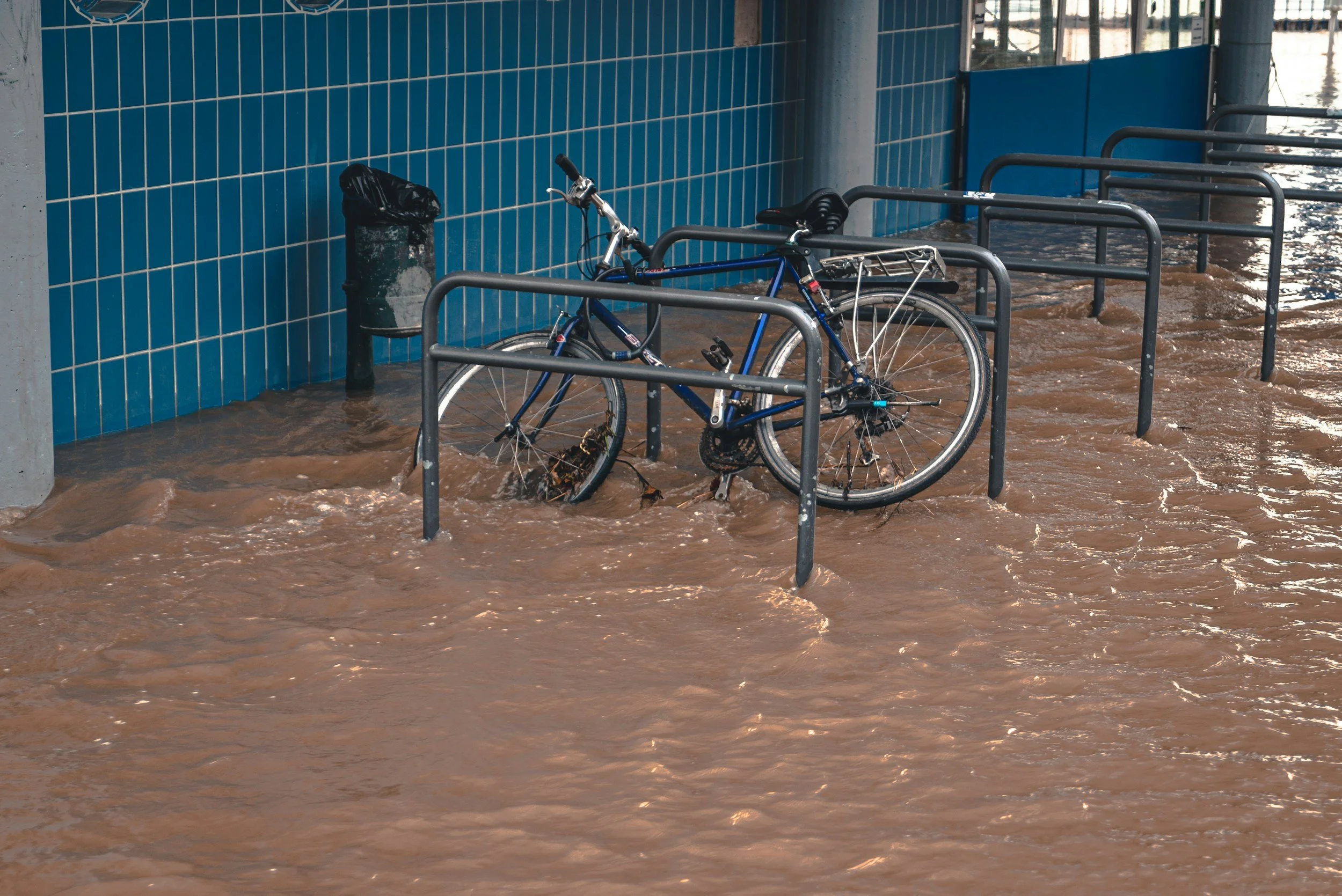
Image showing a bicycle with flood waters surrounding it
While severe storm events such as tropical cyclones (aka hurricanes) and tornado outbreaks often get more attention and cause more damage across the US, flooding is the third most frequent disaster type, accounting for approximately 10% of billion-dollar disasters in the US since 1980.
Nearly every corner of the US is susceptible to some type of flooding. However, some areas are more vulnerable than others, and certain types of flooding are more destructive and deadly. As climate change continues to intensify, sea levels rise, and weather events get more extreme, flooding is expected to increase, so it’s important to know the difference between the three primary types of flooding: fluvial, pluvial, and coastal.
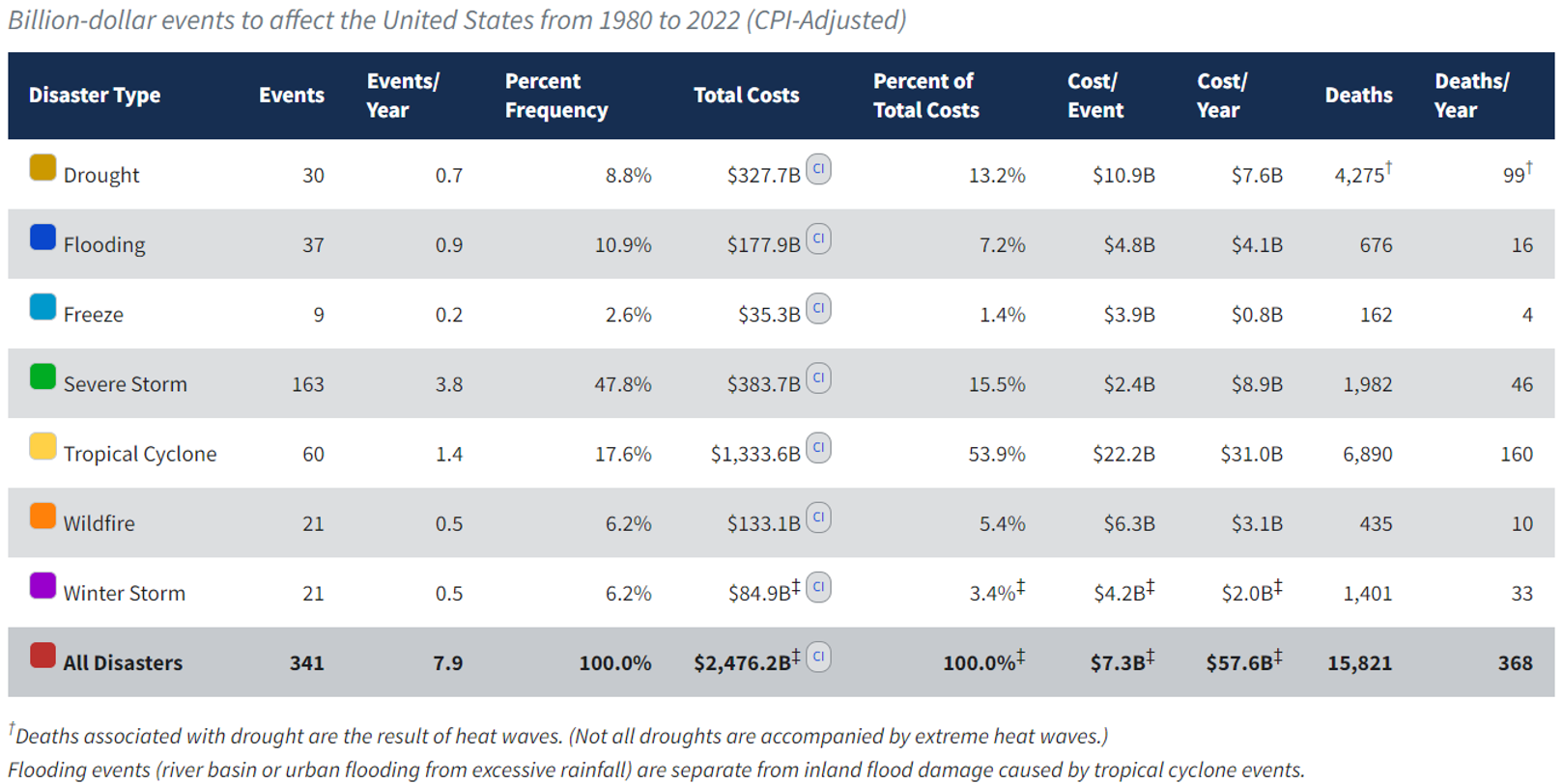
This table shows the breakdown, by hazard type, of the 341 billion-dollar weather and climate disasters assessed since 1980. Screenshot from the NOAA NCEI Billion-dollar Disasters webpage.
Fluvial (River Flooding)
The most common type of flooding is fluvial or river flooding. This is when water levels exceed the banks of a body of water, like a river, pond, or lake. Caused by excessive rainfall and/or snowmelt, fluvial floods can cause widespread damage to the surrounding area as the flowing water carries debris downstream and accelerates erosion.
The severity of a fluvial flood is impacted by the amount of floodwater, but also by the terrain. In a relatively flat area, standing water can remain for days, which creates a secondary public health crisis via waterborne disease. In hilly areas, flash flooding can happen, which is extremely dangerous and often deadly, even with early warning systems in place.
When an oncoming storm has the potential to cause fluvial flooding, meteorologists and emergency management professionals use a combination of previous flood records, rainfall data, and projected precipitation levels to predict a flood’s intensity. The Federal Emergency Management Agency (FEMA) regularly updates floodplain maps based on historical fluvial flooding data to alert the public about which areas could be at greater risk, called Special Flood Hazard Areas (SFHAs). These floodplain maps are also used to calculate 100- and 500-year flood probabilities.
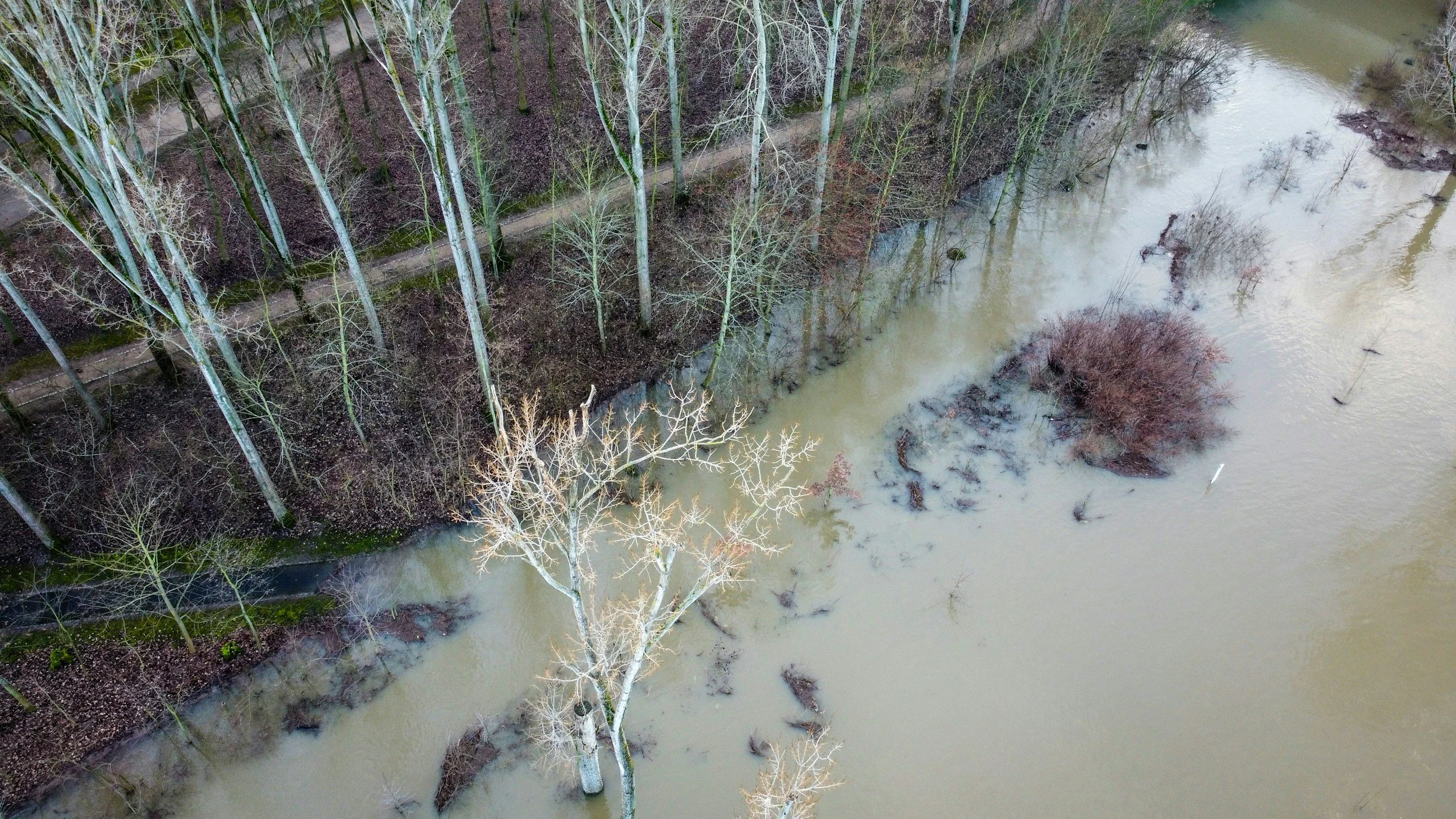
View from above showing a flooded river
Pluvial (Surface Water Flooding)
Pluvial flooding occurs when the amount of precipitation overwhelms the land’s ability to absorb and/or drain the water. Unlike fluvial flooding, pluvial floods are completely independent of any body of water. Therefore, these types of floods can happen anywhere.
Often, pluvial flooding occurs in urban areas when drainage systems are unable to keep up with the amount of rainfall, causing water to pool in lower-lying areas and flow into streets and buildings. This type of flooding may be more gradual, which makes it less dangerous, but it can cause more property damage.
In certain settings, pluvial flooding can take the form of a flash flood. When precipitation overwhelms the land’s ability to absorb water, it either pools if the area is flat or flows if the area is sloped. When torrential downpours occur on a hill or mountainside, the accumulating water can grow into a flash flood, picking up debris as it speeds downhill, causing significant danger for anything in its path.
Although pluvial flooding is more difficult to predict than fluvial flooding, researchers are working to create more robust urban flood models that combine rainfall data with drainage information to improve flood predictions. This research, combined with the installation of early warning systems in areas at greater risk, will help to save lives in the future.
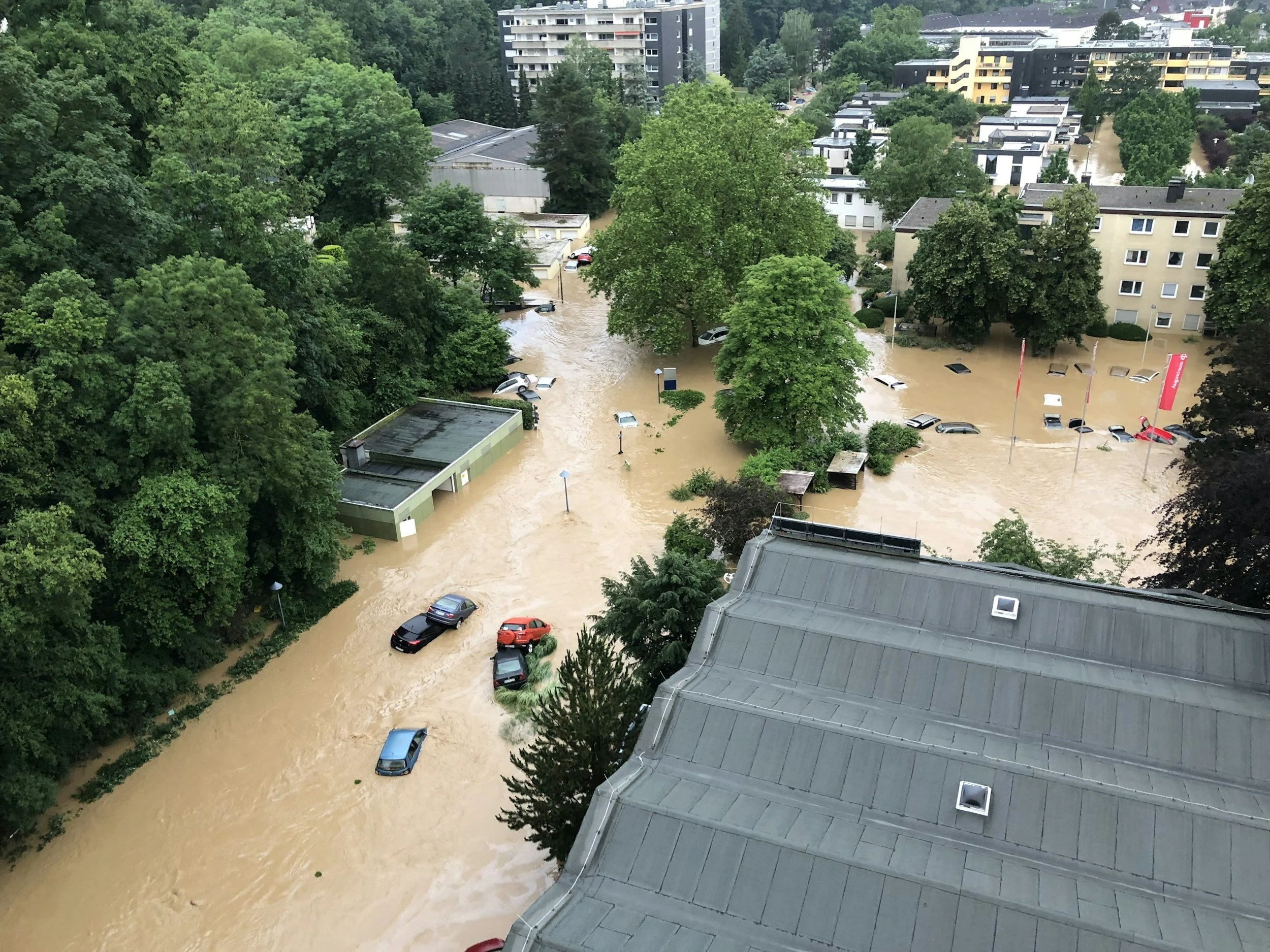
Photograph showing a flooded town
Coastal
Coastal flooding happens when land areas along the shoreline become inundated by seawater. This may be caused by one or more factors, including high tides, storm surge, and tsunamis. As sea levels continue to rise, coastal flooding has increased 5- to 10-fold since the 1960s and is predicted to continue increasing in the future.
Tidal flooding is characterized by the coastal water level exceeding the average daily high tide by 0.5 to 0.65 meters or more. According to the National Oceanic and Atmospheric Administration (NOAA), tidal flooding now occurs at twice the rate it did in 2000 due to sea level rise. By 2050, high tide flooding could be a weekly occurrence, happening between 45 and 85 days per year, depending on the location.
When a tropical cyclone, or hurricane, makes landfall, it triggers a storm surge, which is a rise in water above the normal tidal level. The storm’s strength, size, speed, and track, combined with the timing of landfall (at low or high tide), the orientation of the coast, and the coastal and underwater topography all impact the severity of the storm surge. The largest storm surge in the US occurred during Hurricane Katrina and was measured at 27.8 feet.
While less common than tidal flooding or storm surges, coastal flooding caused by tsunamis can be just as dangerous. Caused by earthquakes or volcanic eruptions off the coast, as well as landslides in rare cases, tsunamis are giant waves that can reach far inland and cause massive flooding in the right conditions. While potentially devastating, tsunamis in the US are more rare than tropical cyclones/hurricanes and NOAA/National Weather Service operate the US Tsunami Warning System, which alerts the public when a tsunami risk is present.
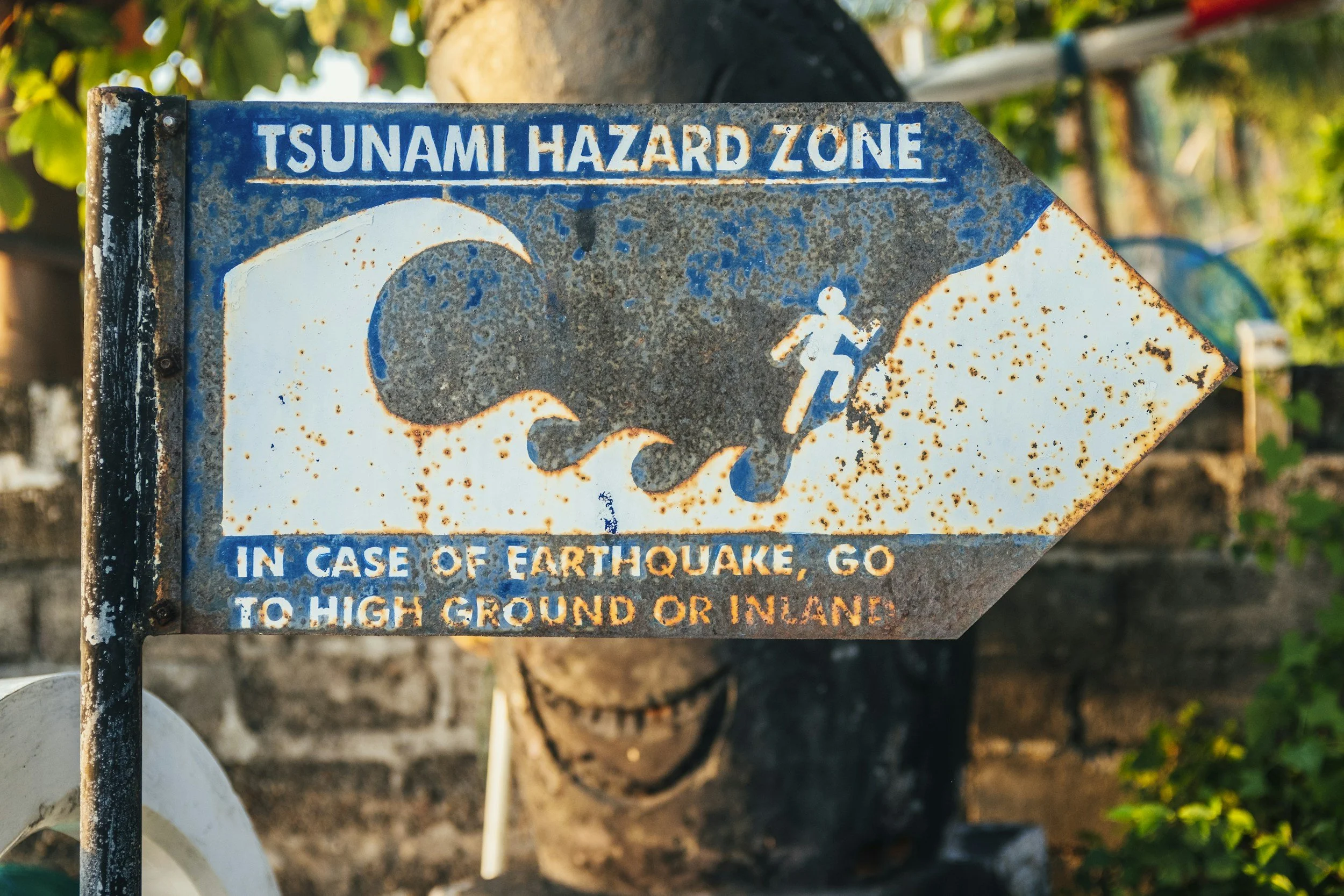
Image of a sign for a Tsunami Hazard Zone
Brief Note on Flood Safety
Each type of flooding carries its own unique risks, but all flooding is inherently dangerous. When confronted with fluvial, pluvial, or coastal flooding, it’s important to know the basics of flood safety. Ensure that you and your loved ones are prepared for flooding before the event begins, stay updated and monitor for evacuation orders during the flood, and when flooding begins to subside, don’t become overconfident; listen to authorities for continued guidance and avoid flood waters that can harbor hidden dangers.
Flooding will continue to account for a significant portion of disasters in the US. In fact, the danger of flooding only stands to increase as climate change continues to produce stronger storms while sea levels rise and real estate development spreads to more vulnerable areas. Understand the dangers of flooding and prepare a disaster plan to keep yourself, your family, and your friends safe.