Demystifying 100-Year & 500-Year Floods
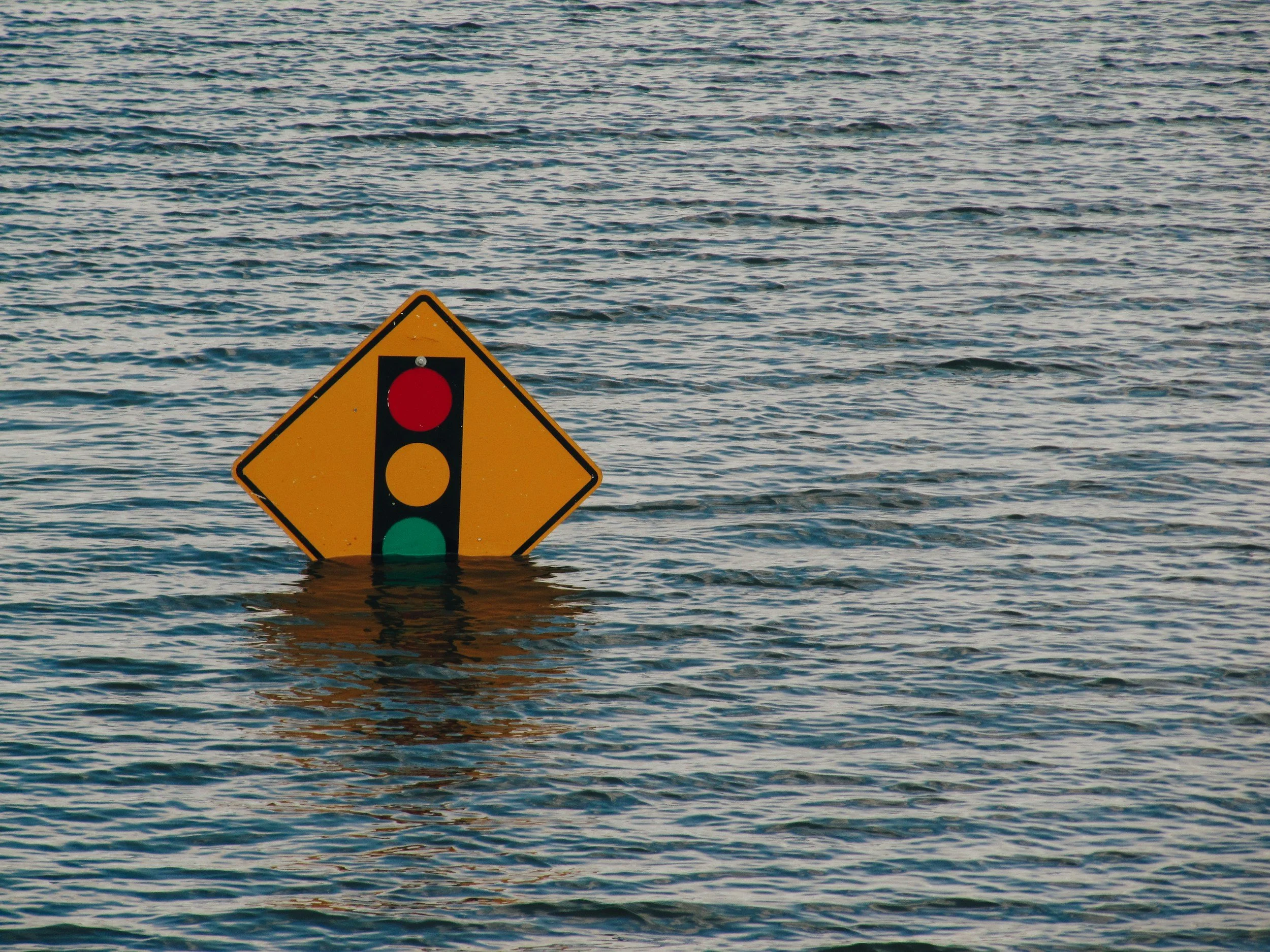
Street sign almost fully submerged during major flooding event
Since 2010, there has been a significant increase in major flooding events, often characterized as “100-year” or even “500-year” floods. In fact, the United States has experienced approximately two dozen “500-year” rain and flooding events since 2010, with Houston experiencing three separate instances of “500-year” rainfall over a three-year period.
While originally intended to signify the statistical probability of these severe weather disasters, as these events become more common, this nomenclature often confuses members of the community, which hinders awareness and preparation. To clear up any confusion about major flooding events, we must first examine how floods are defined and characterized by meteorologists and emergency management professionals.
What are flood stages?
What makes a flood a flood? According to the National Weather Service (NWS), the “flood stage” is reached when the water level in a given community is high enough to cause damage or pose a threat to the public. The NWS also differentiates between three specific flood stages:
Minor Flood Stage: Some property flooding and public threat may occur. Roadways, trails, park land, and private property near the stream may become flooded.
Moderate Flood Stage: Flooding of structures and main roadways may occur. Residences and numerous roadways near the stream may become flooded. Evacuations may be necessary amid disruptions to daily life.
Major Flood Stage: Extensive flooding of structures, main roadways, and other critical infrastructure may occur. Schools, hospitals, police stations, fire stations, residences, businesses, and roadways may become flooded. Evacuations may be necessary as the flooding causes significant disruption to daily life.
During any flooding event, it’s important to pay close attention to flood stage announcements and updates. Under the right conditions, even a minor flood can be life threatening, but the danger increases considerably when a flood progresses to the moderate or major stage.
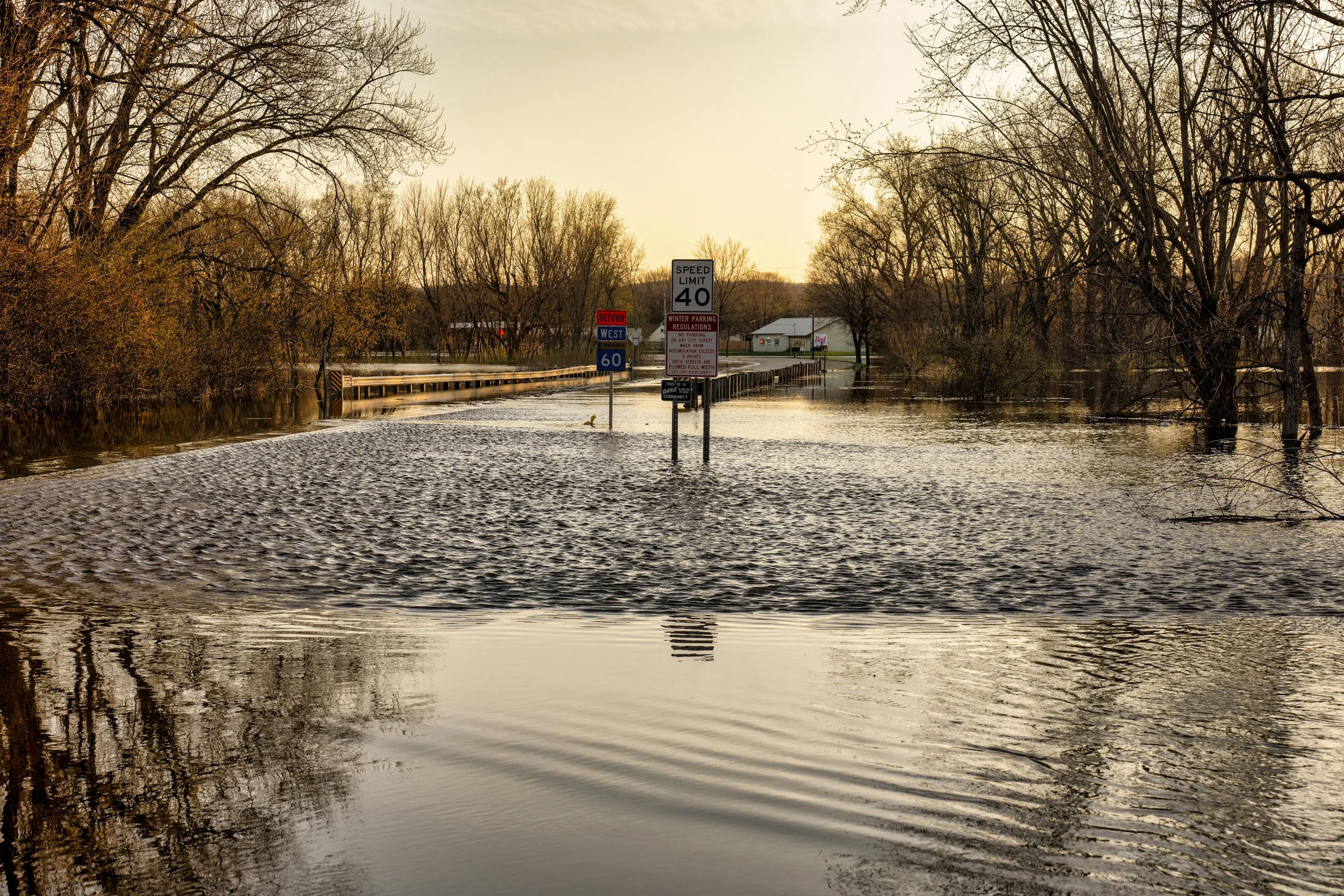
Floodwaters have made a bridge impassable and cut off access to Interstate 60
What is a 100-year flood? A 500-year flood? A 1,000-year flood?
When most people hear the term “100-year flood” or “500-year flood,” they often jump to the conclusion that it means a flood that would only occur once every 100 or 500 years, which is understandable. However, that is not the case, which is how a city like Houston could experience three 500-year flood events between 2015 and 2017.
The x-year flood phrase really pertains to the statistical probability of the event. For a given location in any given year, there is a one in 100 or 1% chance that a 100-year flood could occur. That same location would have a 0.2% chance of experiencing a 500-year flood. And a 1,000-year flood? The chances of that occurring would be one in 1,000 or 0.1%.
To calculate the statistical probabilities that are the basis of “100-year” or “500-year” floods, authorities refer to flood maps like the one below, which are created and updated by analysts and floodplain managers around the United States and compiled by the Federal Emergency Management Agency (FEMA).
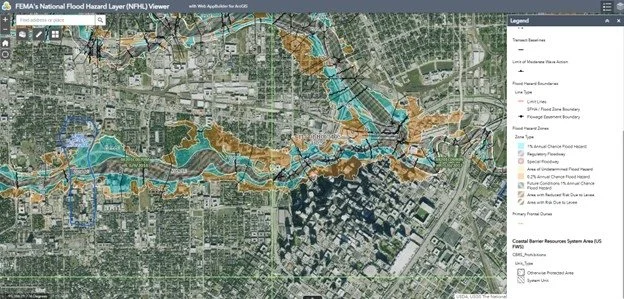
Example of FEMA’s National Flood Hazard Layer (NFHL) Viewer displaying flood risk for the city of Houston, TX
Are these flood events becoming more common? If so, why?
The answer to the question above is a resounding “yes.” There is mounting evidence from around the United States and throughout the world showing a rise in major flooding events, with specific locations providing anecdotal support. Since 1999, there have been nine storms in North Carolina that qualify as 100-year or even 1,000-year floods. A St. Louis suburb experienced three major floods (two of which were 100-year flood events) between 2015 and 2019. It is apparent these severe weather events are increasing. Why is that?
By all accounts, the culprit is climate change. As global temperatures continue to rise and break records year after year, the energy brought by that additional heat leads to more and more powerful storms. Warmer water temperatures lead to more precipitation, and changes in weather patterns around the United States are manifesting in the form of larger, stronger, and more severe storms.
According to researchers at Stevens Institute of Technology, not only are these major flooding events becoming more common, they will be routine by 2100. In a 2020 study focused on the area of Jamaica Bay, NY, researchers used anticipated greenhouse gas concentration levels to conduct simulations of different scenarios to calculate the probability of various flood events. They ultimately found that the current 100-year flood level will become a nine-year flood level by 2030–2050 and a one-year flood level by 2080–2100. The team also hypothesized that the current 500-year flood level will become a four-year flood level by the end of the century.
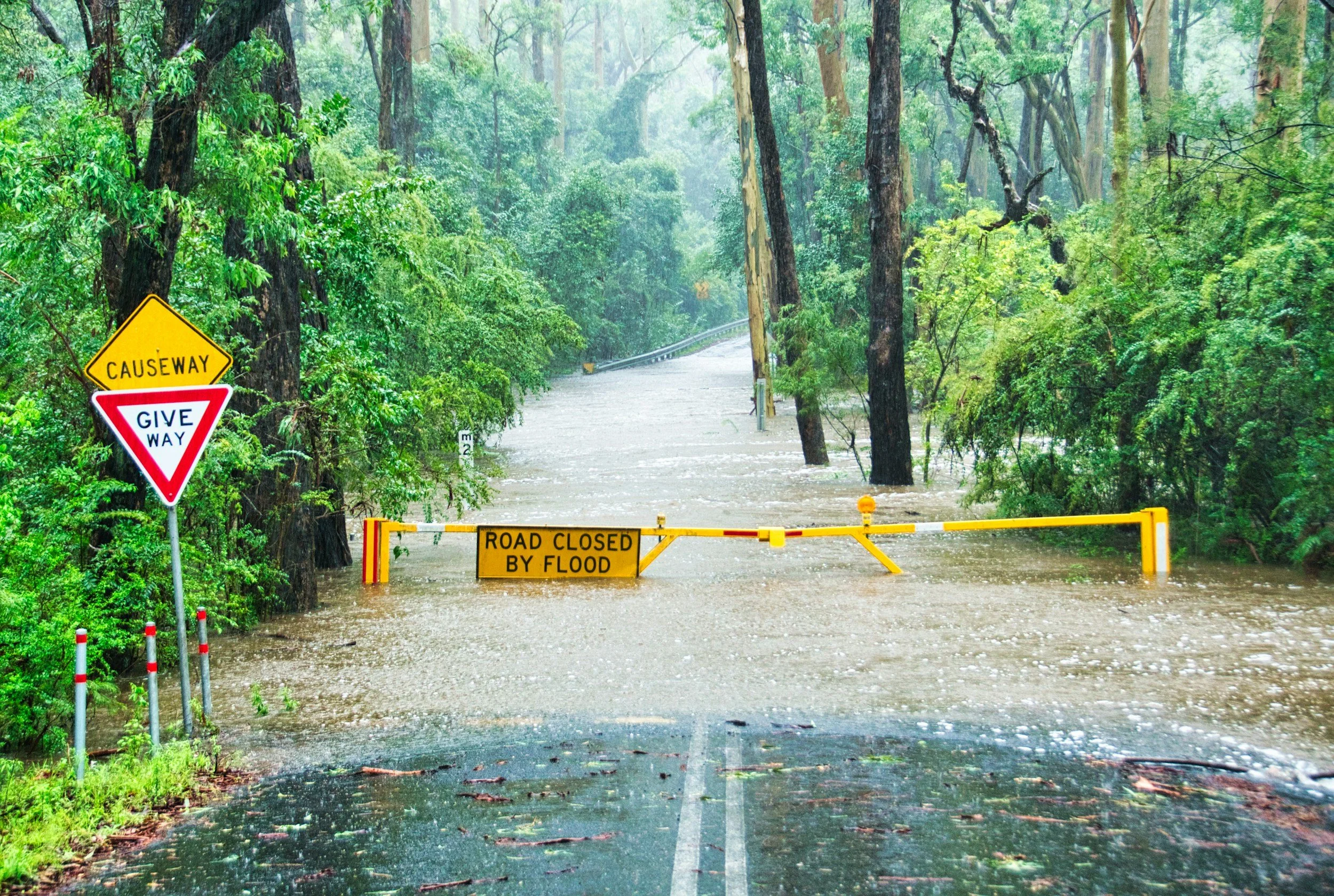
Road closed due to flooding with a gate blocking the way and standing water covering the roadway
What can we do? Know the basics of flood safety.
Beyond working to combat or reverse the effects of climate change, the best thing to do is to learn about flood safety. Once you know what to do before, during, and after a flood, you can maximize your chances of survival and help keep your loved ones safe.
Before a Flood: There are many simple steps you can take to prepare yourself before a flood begins. By having a plan of action along with accessible supplies, you can save valuable time when every second counts.
Communication is Key – Make sure your family and friends know what to do in the event of an emergency. Create a plan to stay in contact and identify a safe location to meet up.
Prepare an Emergency Kit – Create your own “go bag” with essential items like potable water, non-perishable food items, medicine, flashlights, batteries, and a first aid kit.
Get Your Home, Family & Pets Ready – Make sure your house is insured and reach out to professionals (home inspectors, electricians, etc.) to confirm your house is safe and ready. Make sure your family knows what do in an emergency and put together a smaller “go bag” for your pets with food, extra water, medicine, and any other essentials they might need.
Charge Essential Electronics – If the forecast calls for a potential severe weather event, ensure electronics like your cell phone, portable radio, laptop or any other devices you may need are fully charged.
Know Your Risk & When to Leave – Is your home in a floodplain? Do you know the safest route to higher ground? The time to answer those questions is before a flood event. Once flooding starts, stay updated on flood levels and don’t hesitate to evacuate even if you haven’t been ordered to do so.
During a Flood: Situations can change very quickly during a flooding event, so it’s important to remain calm and rely on your prior planning to help you through the emergency.
Stay Updated – Find a source for reliable information, whether it’s from radio, television, social media, or directly from the NWS.
Evacuate if Necessary – Listen for and obey any evacuation orders, but don’t wait to be told to evacuate. If water begins to inundate key areas nearby, get to higher ground as soon as possible.
Avoid Electricity – When water rises above electrical outlets, contact with the water risks electrocution. Don’t go into any room with water above any cords or outlets and leave the area immediately if you hear any cracking or popping noises.
Keep Away from Flood Waters – Never walk or drive through flood waters. It only takes six inches of moving water to knock you down. Twelve inches of water can float a car or small SUV, and it only takes 18 inches of water to carry away large vehicles. If you become trapped by flood waters, get to the highest point possible and call 911 for rescue.
After a Flood: When the storm passes and the rainfall tapers off, the danger is not quite over. Avoid the temptation to become overconfident after a flooding event and protect yourself from the contamination and hidden dangers floods leave behind.
Get the Latest Updates – Continue referencing your preferred news sources to get up-to-date information on things like road conditions, water safety, and utilities. If you have been forced to evacuate, wait for an “all clear” declaration before returning to a disaster area or re-entering your home.
Continue to Avoid Flood Waters – Just because the rain has ended doesn’t mean standing or moving water is safe. Stay away from any flood waters, as they could contain hidden dangers or be contaminated with bacteria, toxins, or chemicals.
Listen to Authorities – Heed any road closure signs or other warnings you come across. Just as with flood waters, there could be danger on a given road just around the bend or over the hill.
Reach out to Family & Friends – Inform any family or friends that you made it through the flooding event okay and give them any necessary updates on your situation and location.
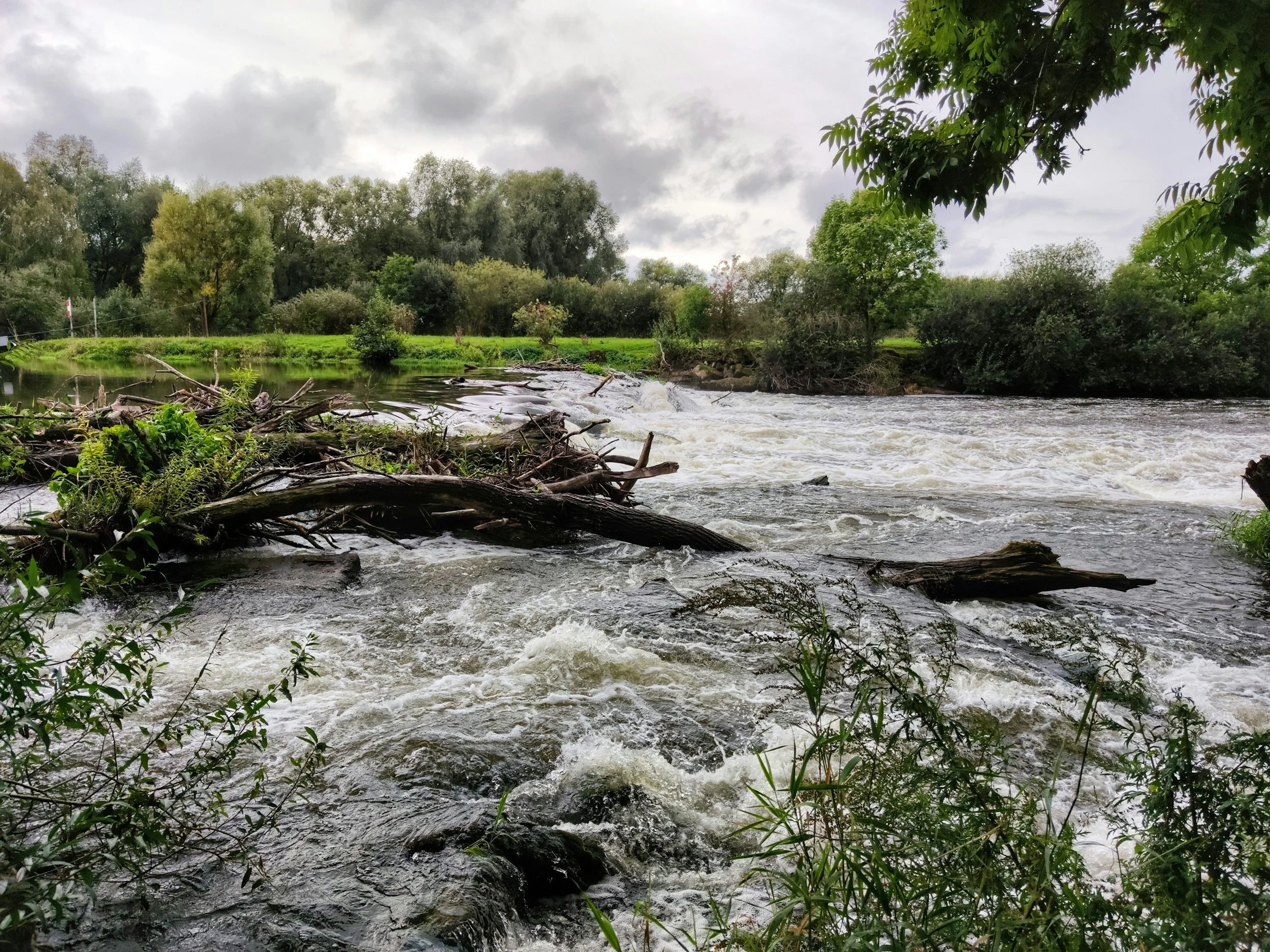
Rushing water from a river that has flooded
While “100-year” and “500-year” flood events are a bit misleading since they are becoming more and more common, the phrasing brings attention to the severity of these disasters and has almost become shorthand for “big” floods. As storms continue to grow in size, scope, power, and even duration due to climate change, this awareness is essential. While we may not be able to stop oncoming storms, we can prepare for the floods they bring and maximize the chances for citizens and communities to survive and rebuild.