Extreme Heat & Mental Health
For several decades, temperatures everywhere have been rising, and the United States has been at the front of the pack. In 2026 already, the western half of our country has broken records with the hottest March on record.
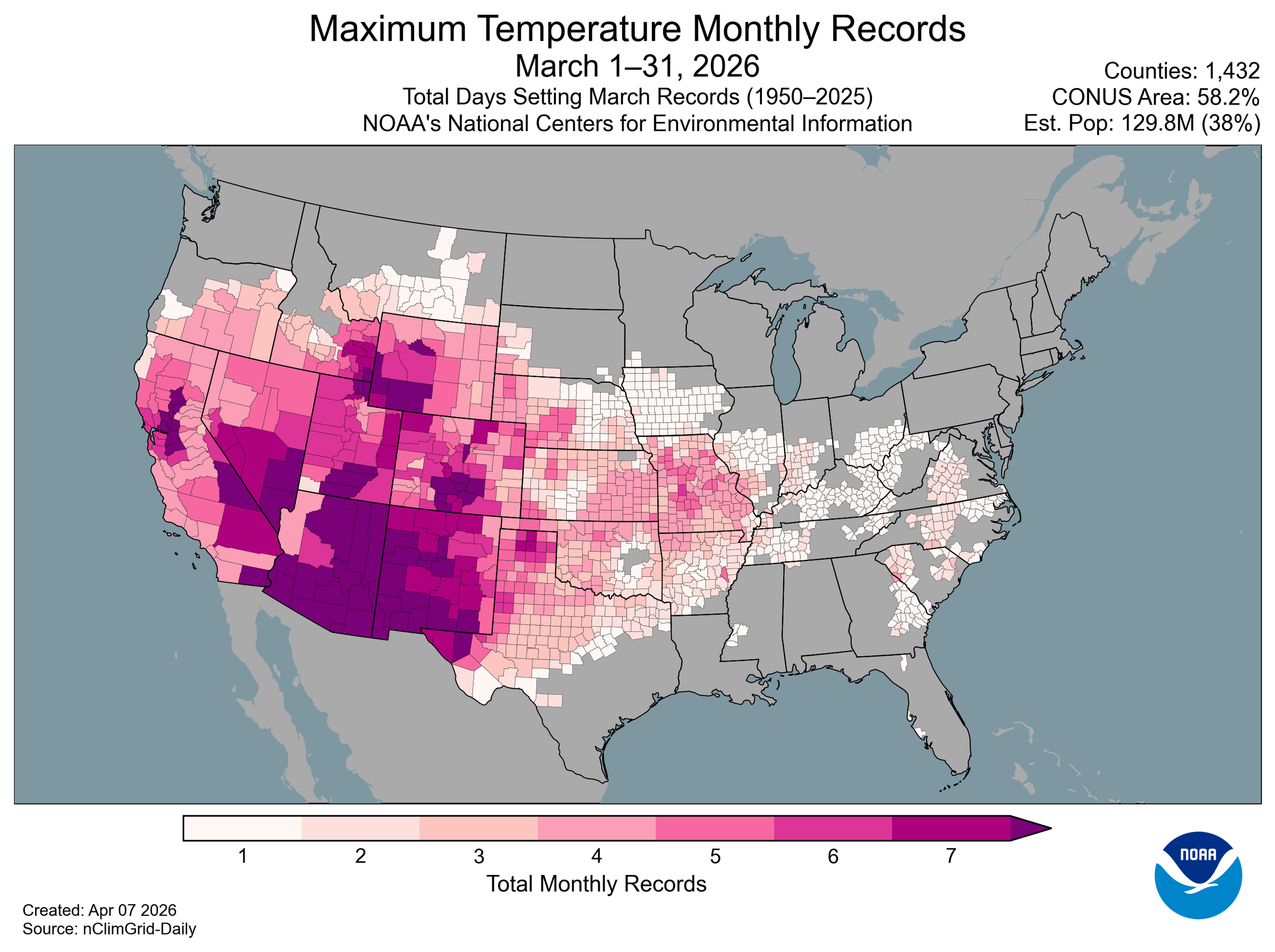
Image Credit: NOAA
As temperatures increase, so do the risks to human health. While it is important to understand how extreme heat exposure impacts our physical health, it is just as important to understand how extreme heat exposure affects our mental health.
What Heat Does to the Mind
Extreme heat is dangerous primarily because it requires the body to work harder to maintain a normal temperature. Much of this work occurs within the brain, which is primarily responsible for regulating the biological mechanisms our bodies use to stay cool. As a result, the longer a person is exposed to high temperatures, the higher the demand for resources, and the greater likelihood for adverse effects on the brain or “troubling mental health outcomes”.
Biological Effects
In high temperatures, the endocrine system ramps up cortisol production. This helps keep our bodies cool but can also lead to increased stress levels.
Extreme heat can cause abnormalities to neurotransmitters, which the body uses to help with thermoregulation. This can disrupt psychiatric functioning and make it harder for the brain to cool the body.
Extreme heat can result in abnormal production of proteins, which could potentially exacerbate preexisting psychiatric disorders.
Extreme heat exposure can also lead to dehydration, which has a major impact on the brain. Dehydration from extreme heat can cause memory impairment and result in disruptions to brain, enzyme, and neurotransmitter functioning.
Cognitive & Emotional Effects
Extreme heat exposure can cause sleep disruption. Poor sleep has been linked with psychiatric dysfunction and can strain our ability to manage emotions.
Dehydration can harm cognitive ability, leading to memory impairment, slower reaction time, impaired motor coordination, and diminished executive functioning.
Extreme heat can impact cognitive styles and tendencies, making us more aggressive and impulsive and also reducing our critical thinking skills.
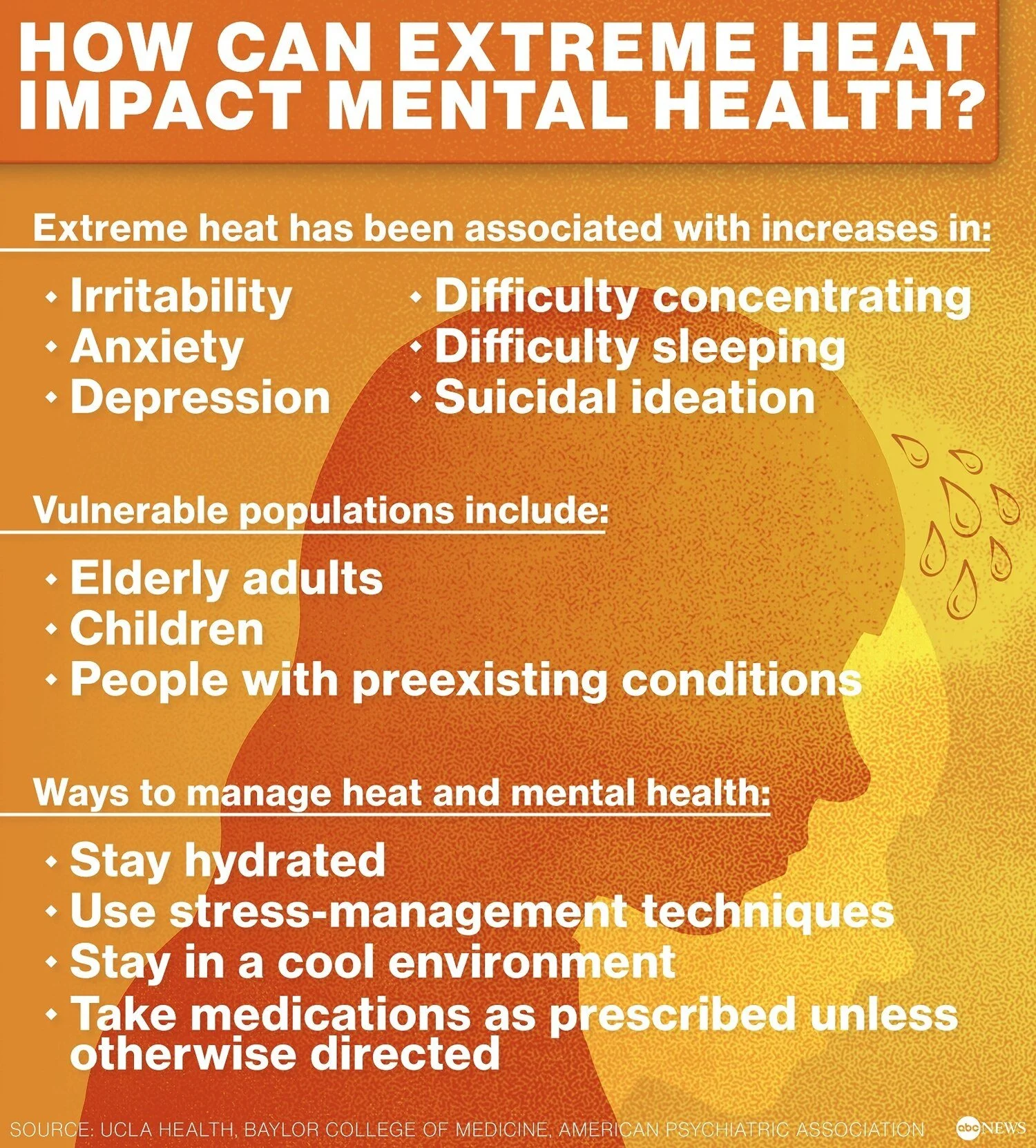
Higher temperatures can lead to decreased cognitive function and reduced emotional regulation. In extreme heat, people may experience brain fog, and feel less happy, more anxious, and irritable.
Extreme heat can also lead to more generalized psychological discomfort because it tends to increase stress and anxiety. People may feel embarrassed about excessive sweating or body odor in the heat. People may also feel anxious about keeping themselves and their loved ones safe, or feel anxiety based on a lack of control, as extreme heat may interrupt coping mechanisms, like nature walks or other outdoor activities.

Image Credit: Maria Medem
Heat & Mental Health Conditions
Anyone exposed to high temperatures for an extended period is at risk for adverse physical or mental health outcomes. However, certain mental health conditions are significantly more vulnerable to extreme heat than others.
Psychotic Spectrum Disorder
People diagnosed with psychotic spectrum disorder face an increased risk of hospitalization and death from extreme heat exposure because they often lack appropriate methods to adequately protect themselves and avoid exposure in the first place.
Researchers have estimated that heat waves lead to a 5% increase in ER visits for people with psychotic spectrum disorder. And shockingly, according to a study of a 2001 heat wave in British Columbia, researchers reported that heat waves can cause as much as a 200% increase in mortality for people with psychosis. This means that psychotic spectrum disorder increases the risk of mortality in the heat more than any other chronic condition, including cardiovascular disease, kidney disease, and diabetes.
Bipolar Disorder
People with bipolar disorder experience increased risk of hospitalization during extreme heat events. Studies show that the warmer, brighter, and more humid the day, the greater the likelihood of hospitalization for those with bipolar disorder. Excessive heat can also trigger manic episodes. According to researchers, as temperatures rise, each degree above average increases the chance of a manic episode by as much as 17.5%.
Substance Use Disorder
For people with substance use disorder, exposure to high temperatures can increase the risk of hospitalization by 15%. There are a variety of factors that make people with substance use disorder vulnerable to extreme heat, particularly the type of substance being consumed.
Stimulants like cocaine and methamphetamines can lead to heat exhaustion/stroke, cardiac arrest, or dehydration because they raise the body temperature and lead to increased sweating. Alcohol consumption leads to more frequent urination, increasing the risk of dehydration. Opioid use slows respiration, disrupting the body’s ability to regulate temperature and leading to an increased risk of heat exhaustion/stroke or cardiovascular injury. At the same time, opioids’ intoxicating effects can make it harder to recognize, and react accordingly, to the signs and symptoms of overheating.
Heat & Emotional Dysregulation
We have all noticed that high temperatures can make people a little cranky. But it turns out that heat has a far greater impact on our emotional well-being than we may have realized.
Depression
Extreme heat exposure can cause or worsen depression. In fact, health professionals can accurately predict depression rates based solely upon the temperature. According to research, in areas with an average temperature of 23 degrees Celsius (approximately 73 degrees Fahrenheit), each additional degree above the average results in a 7% increase in depression.
Aggression
Heat causes an increase in anger, aggression, and aggressive behaviors. Multiple studies have shown that crime waves peak in the summer months, and as the temperature increases, so does homicide, domestic violence, gun violence, and police-involved shootings. Extreme heat is uncomfortable and taxing on the body, creating a low-level stress burden, and can overwhelm our coping abilities, making it difficult to manage emotions and restrain aggressive impulses.
Suicide and Self-Harm
Extreme heat leads to higher rates of self-harm and suicide. Visits to the ER because of self-harm injuries increase in the warmest months of the year. Rising temperatures are also linked with increased suicide and suicidal attempts. For those with pre-existing mental health conditions, extreme heat may act as a compounding factor, exacerbating symptoms and placing them at greater risk for self-harm or suicidal ideation.
Heat & Psychiatric Medications
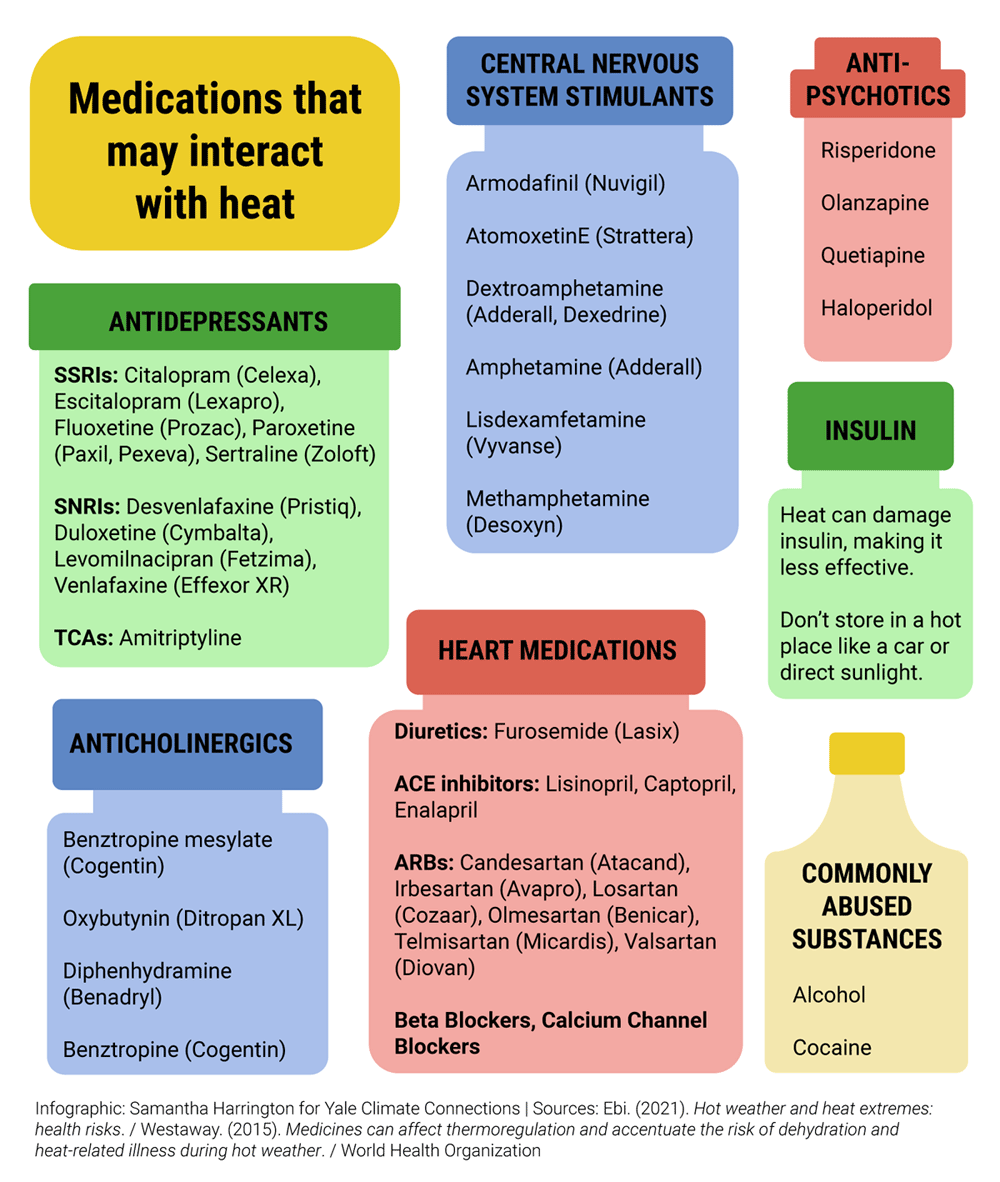
The medications people rely upon to manage mental health conditions are also affected by the heat. High temperatures can make some medications less effective or raise the risk of heat-related illness because of the way they interact with the body. In particular, the risk is increased because many psychiatric medications target the nervous system. This means that important functions, such as perspiration, blood flow, urination, and cardiovascular function, can be altered by the medication itself, raising the risk of dehydration, heat stroke, or cardiac arrest.
The use of psychiatric medications during heat waves leads to higher rates of hospitalization and increased mortality. According to a study of a 2003 heat wave in France, the use of antidepressants increased the risk of hospitalization by 1.5 - 4.5 times and the use of antipsychotics during the heat wave increased the risk of hospitalization by 11 times.
Some of the psychiatric/psychotropic medications that increase the risk of heat-related illness include tri cyclic depressants, SSRIs, SSNIs, antipsychotics, and benzodiazepines.
Who is Most Vulnerable to Extreme Heat?
In terms of mental health, extreme heat puts everyone at greater risk for emotional dysregulation, including increased aggression, anxiety, and depression, regardless of where we live or how much time we spend outside. However, there are some factors that make certain groups of people more vulnerable to negative mental health outcomes due to the heat than others.
People with pre-existing mental health conditions are at greater risk for heat-related illness or death because they are more likely to be prescribed medications that impact the nervous system and the body’s overall ability to maintain a normal temperature. Some psychiatric disorders, such as psychosis or schizophrenia, can make it more difficult to detect that they are overheating, and respond accordingly.
Older adults, especially those with mental health conditions or who live alone, are also at higher risk of mental health impacts from the heat. Heat waves increase the risk of hospitalization for mental health conditions among older adults by 30 times. Because conditions like Alzheimer’s and dementia are also more common amongst older adults, extreme heat can be especially dangerous because they may lack the situational awareness that would allow them to keep themselves safe in the heat.
People with substance use disorder tend to be more vulnerable, primarily because of the physiological and psychological effects of drug use. Stimulants increase the chances of cardiovascular injury and opioids increase the chances of dehydration. Injuries due to falls or from passing out in the heat further raises the risk for this group.
Staying Safe in the Heat
Everyone is at risk of suffering negative emotional and cognitive effects from extreme heat, so it is imperative to recognize and understand the impacts that extreme heat can have on our mental health.
Extreme heat can make us more aggressive, more anxious, and more unhappy, so understanding the emotional toll that extreme heat can have may make us better equipped to manage our own emotions and the emotions of others.
Extreme heat increases the risks of depression, self-harm, and suicide, so understanding the signs of depression (both in ourselves and others) may help lower the risk.
Extreme heat can raise the risk of illness or injury for those using medications (both prescription drugs and illicit drugs), so understanding how different drugs interact with the heat can help lower the risk for people who rely upon them.
Coming Up…
Extreme Heat & The Built Environment - Earth’s extreme heat crisis is not just about rising temperatures, it is also about how the choices we make as a society either mitigate, or further contribute to, the serious threat extreme heat poses right now and in the years to come. In the next article of our Extreme Heat series, we’ll dive into how the things we build contribute to our own vulnerability, and explore things we can do to plan, design, and build communities that are prepared for extreme heat.