Winter Weather & Mental Health
Severe winter storms may be just as likely as heat waves, flooding, and hurricanes to lead to depression, anxiety, and post-traumatic stress, according to researchers from the University of Utah and the University of Texas at El Paso.
As discussed in this article, published in the International Journal of Disaster Risk Reduction, a great deal of research has been conducted to identify the ways in which severe weather events can impact an individual’s mental health, however, much of this research has focused on “flashier” events such as floods or hurricanes. As a result, there has been very little known about the ways in which people may be impacted by other weather events, in particular, winter weather events.
To change this, the research team conducted surveys of residents in 8 metropolitan areas of Texas to investigate the aftereffects of Winter Storm Uri, which hit the state in February 2021.
Winter Storm Uri
Winter Storm Uri was unprecedented in Texas. For eight days, 23 hours, and 23 minutes, from February 10th through February 20th, 2021, the entire state was engulfed in the “Great Freeze,” with record or near-record low temperatures and snow, freezing, rain, and sleet falling throughout the state. The impacts from Winter Storm Uri were felt in every county in Texas. The storm caused at least 210 deaths and resulted in damages to the tune of $80 - $130 billion.
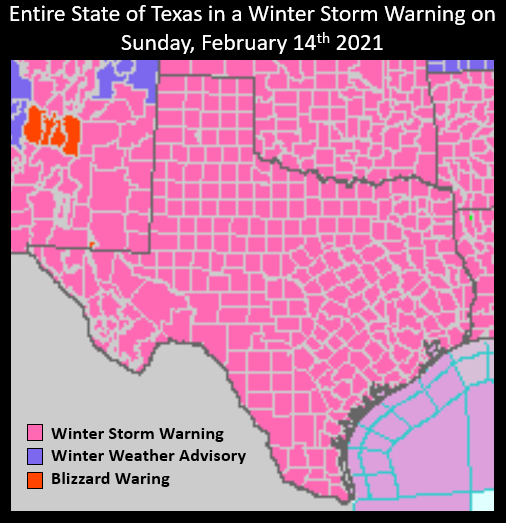
Photo Credit: National Weather Service
While Uri did not create substantial amounts of snow, multiple consecutive days of below-freezing temperatures led to widespread and long-lasting disruptions to both electricity and water.
Because it is rare for Texas to experience such low temperatures for such an extended period of time, Winter Storm Uri ended up having a cascading effect on the state. Low temperatures led to power and water outages. Power outages led to burst pipes and water outages led to GI illnesses. The sheer number of burst pipes overwhelmed plumbers and resulted in long waits for repairs, which subsequently increased the number of people getting sick from lack of access to clean water. And the lack of electricity combined with the sustained low temperatures caused people to turn to unsafe heating methods to stay warm, resulting in fires and carbon monoxide poisoning.
After analyzing the survey data, the researchers made several key findings regarding residents’ experiences both during the storm and in the months following.
During and immediately after the storm:
20% of residents reported running out of food
20% of residents also reported having no access to medical care
40% of residents reported lacking access to adequate drinking water and a working toilet
Six months after the storm:
14.9% of residents reported experiencing anxiety
15.1% of residents reported experiencing depression
20% of residents reported symptoms of post-traumatic stress
15 months after the storm:
16% of residents reported they were still experiencing symptoms of post-traumatic stress
Trapped at Home
According to the researchers, it is the features of winter storms themselves that may lead to higher levels of anxiety and depression in people. Winter storms, unlike other weather events, tend to “entrap people in housing units.” Residents may be stuck inside their homes for days or longer, leaving them socially isolated and alone. They may be forced to miss work and/or replace food lost from extended power outages, leading to feelings of anxiety or depression around finances. Or they may struggle to simply access food and water or to find a safe and warm place to rest their heads. These experiences individually tend to increase feelings of anxiety or depression, but together, each additional experience was shown to raise the odds of anxiety and depression by nearly 15%.
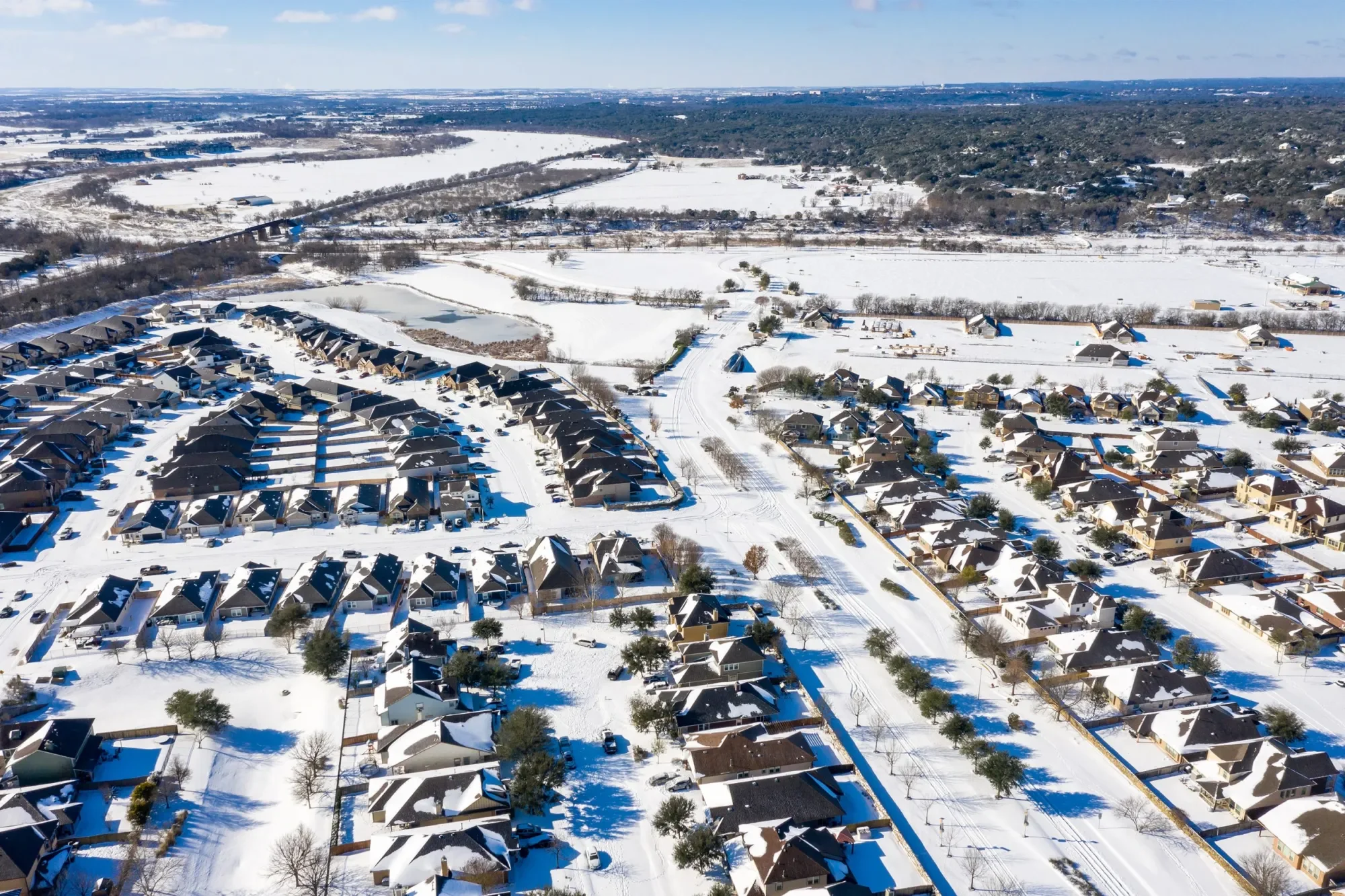
February 15, 2021; San Marcos, Texas; Photo Credit: Jordan Vonderhaar, The Texas Tribune
To put it simply, the more difficult it is for an individual to withstand a severe weather event, the greater the likelihood that they will report feelings of depression, anxiety, or post-traumatic stress in the aftermath. In particular, it is adverse experiences such as the loss of utilities, loss of communication, inability to access health care, social disruption, safety concerns, and financial problems that tend to have the greatest negative impacts on individuals.
As of this writing, more than 100 Americans have died as a result of the January 2026 outbreak of severe winter weather and extreme low temperatures that covered much of the country. There are currently more than 60 million Americans under cold weather alerts. Residents in Mississippi, Louisiana, Tennessee, and North Carolina, just to name a few, have been without electricity for more than a week. The Southeastern US is digging out (again) after their second winter storm in the last 2 weeks, and many of us have learned the term “snowcrete” as our homes and businesses remain encased in ice hardened snow.
While snow is often either a lovely wintertime distraction or a manageable nuisance for most of us, it is easy to see how these kinds of extreme winter weather events can bring on feelings of anxiety, depression, and stress if the power goes out, the temperatures are below freezing, and the roads are impassable for extended periods of time. Winter weather events typically do not generate the same kinds of pre-storm activities that hurricanes do, but maybe they should, especially in those areas where snow and freezing temperatures have historically been rare.
As with other weather-related risks, preparing and planning for extreme winter weather is key, both in terms of physical safety, but also for peace of mind. By planning ahead of time for severe winter weather, individuals will be better prepared to endure extended power outages or freezing temperatures and as such, may be able to avoid some of the adverse experiences that are most likely to lead to feelings of anxiety and depression in the days and weeks following an event. Individually, we cannot control whether the power goes out or the water stops running during or after a severe weather event, but we CAN create a plan for how we will handle utility disruptions if they do occur.