Remembering Kai Erikson
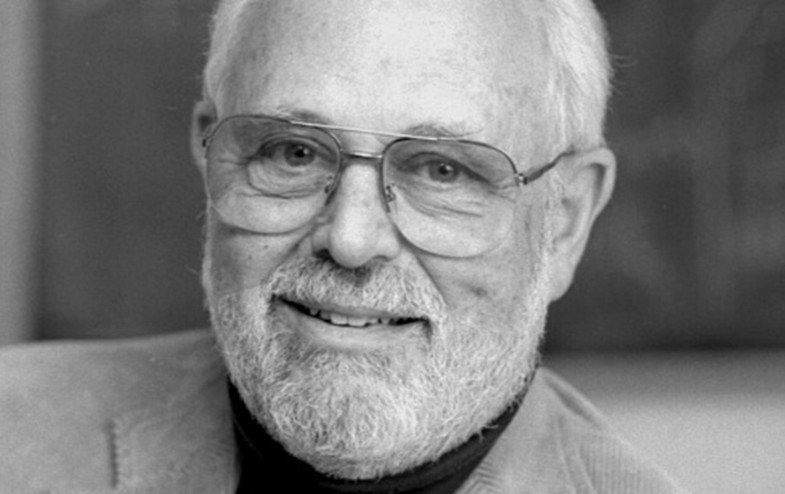
Kai Erikson; Photo Credit: Michael Marsland
On November 10, 2025, Kai Erikson, sociologist and pioneer of disaster studies, passed away at the age of 94. While a familiar figure to many social scientists, Erikson’s name may be less well-known in the world of emergency management. Yet for nearly fifty years, Erikson was an omnipresent force in the aftermath of disasters. Over the course of his career, Erikson studied the Three Mile Island event, the Exxon Valdez oil spill, and Hurricane Katrina, among others. He wrote prolifically on the disproportionality of disaster as well as the role that human choices play in creating the conditions that increase the likelihood of disaster or exacerbate the effects of disasters when they occur. But it was his early work in the small mountain town of Buffalo Creek, West Virginia that set the trajectory for his career and provided his entry into the sociological study of disasters.
Born in the shadow of his famous father, acclaimed psychologist and theorist Erik Erikson, Kai Erikson successfully blazed his own path in the world of social science. He dedicated his professional life to investigating and identifying the social impacts of disasters. While Erikson’s career revolved around disasters (even earning him the nickname, “Professor Catastrophe”) it turns out that he stumbled into the field of disaster studies purely by chance.
As described in his New York Times obituary, after a catastrophic dam failure in February 1972 wiped out much of the coal mining town of Buffalo Creek, West Virginia and killed more than 100 townspeople, Kai Erikson received a call from the lawyer representing the surviving residents. The lawyer was looking for a graduate student to spend a semester in the town studying the aftereffects of the disaster. Wanting to understand the situation in the town before sending a student, Erikson decided to travel to Buffalo Creek himself. Unexpectedly, he ended up taking the job – and then proceeded to spend the next year in Buffalo Creek interviewing residents and learning as much as he could about the ways in which the people, and the community itself, were forever altered by this event.
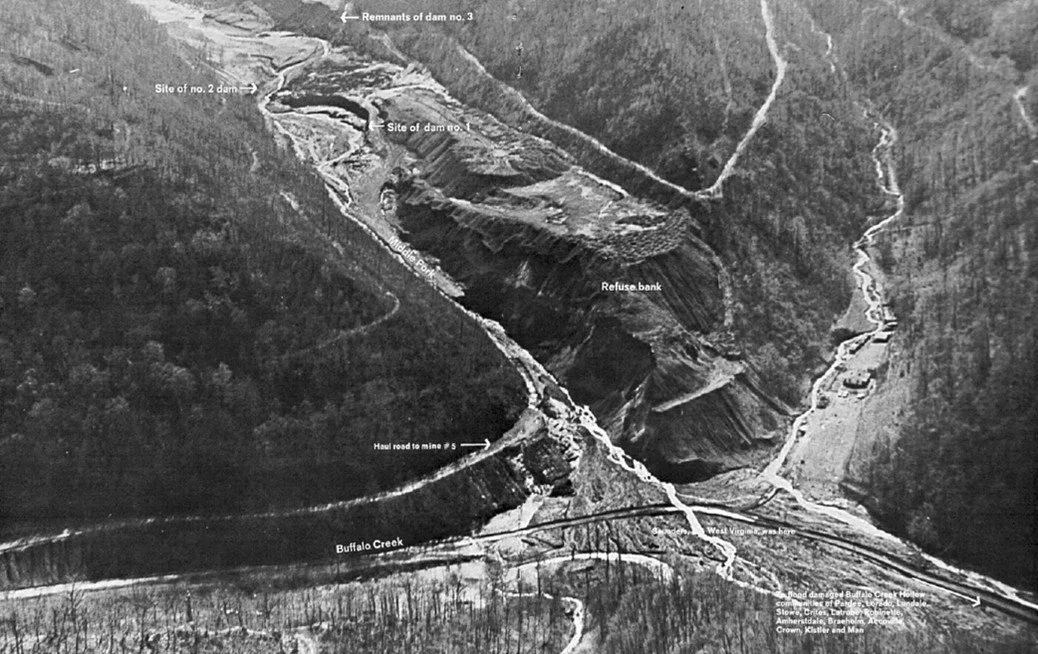
Buffalo Creek, 2/27/1972; Photo Credit: U.S. Government, Wikipedia Commons
Through his work in Buffalo Creek, Erikson advanced our understanding of disaster trauma by listening to and giving voice to the survivors. In fact, it was only after hours and hours of interviews with the survivors of the Buffalo Creek tragedy that Erikson was able to uncover the deep-rooted trauma that tends to linger in the weeks, months, and even years following a disaster. Trauma that he discovered is felt both individually AND collectively.
In his book, The Sociologist's Eye: Reflections on Social Life, Erikson spoke eloquently about the individual trauma that he discovered was common to many survivors of the Buffalo Creek tragedy:
Almost every person who lived on the upper reaches of Buffalo Creek before the flood was damaged in one way or another by what happened to them. They had experienced something akin to a concussion of the spirit—a state of shock that reached to the very core of their being. They had lost kinfolk and neighbors, and they suffered from the feeling that a part of their own selves had been ripped away…. Many of them had lost the illusion, so essential to life, that the social order and even the natural order can be relied upon.
[….]
The survivors of Buffalo Creek, then, by which I mean those who had experienced the flood at close range, felt that something had gone very wrong in the order of things, that they had been harmed beyond easy repair, that they might never again feel quite at home in the world, that they had been forever changed. One woman said of her feelings on the day of the flood: “It was like something was wiped over me and left me different.” She felt the same way several years later, and so did most of her neighbors. (p. 51)
And here, Erikson described the collective trauma caused by the Buffalo Creek disaster.
It seemed evident that the people of Buffalo Creek suffered two different forms of trauma that cold February day. The first, clearly, was a blow to the bodies and the minds of people who survived the flood. That is what “individual trauma” means.
The second form of trauma, however, was a blow to the larger community. We can call that “collective trauma” and define it as what happens to people when the community of which they had long been an integral part is itself damaged by the force of some disastrous event. If the first trauma can be said to impair the tissues of the individual mind, the second can be said to impair the tissues of social life….
Collective trauma is a far more difficult concept to deal with at first glance…if only because “loss of community” sounds so abstract when contrasted with the raw immediacy of the disaster scene itself. Collective trauma works its way slowly into the awareness of those who suffer from it, so it does not have the quality of suddenness usually associated with “trauma.” But it is a form of shock all the same, a gradual recognition that the community no longer exists as a source of support or solace. It leaves people isolated and very alone—as it did Wilbur, whittling by himself in the silence of his new home high above the creek. “It’s like being all alone in the middle of a desert,” said one former neighbor of Wilbur’s, who had moved with her husband to a tight cluster of homes not far from her original home on Buffalo Creek. As she spoke, the voices of other people living nearby could be heard in the background. One can hear those voices now on the tape where the interview is recorded. But they were not her neighbors, not her people, and their physical nearness did not give her the sense that she was part of a nourishing human community. She was surrounded by other folk, but she was alone. She was not at home. The healing power that can come from belonging to a larger communal body was no longer available to her. (p. 58)
Kai Erikson was a trained sociologist, but as his writings demonstrate, he was much more than that. He was a disaster historian, a documentarian, and an artist. Phrases like “concussion of the spirit” and “impair the tissues of social life” are not ones you’d typically find in academic writing. But Erikson, often to the chagrin of his fellow sociologists, was not a typical academic. He eschewed the trappings of academic life, preferring to conduct field work himself and present his findings in ways that were accessible to all, not just other social scientists.
Most importantly, his work brought to light the depths of individual and collective trauma that disasters leave behind. Erikson helped us understand that for survivors, the disaster does not end when the debris is cleared and they have a roof over their heads, but instead, it tends to linger on, popping up as fear with every rainstorm or the never-ending nagging sense that things are just not right.
Buffalo Creek, West Virginia was Kai Erikson’s entry into the field of disaster studies, but he continued to examine the social impacts of disasters throughout his career, studying events as varied as radiological emergencies, terrorist attacks, natural disasters, and even veterinary outbreaks.
Although we lost a great man, his legacy will live on in the body of work that he left behind.
Rest in peace, Professor Erikson, and thank you for your work.
To learn more about Buffalo Creek:
The Tragedy at Buffalo Creek - JSTOR Daily
To read more from Kai Erikson:
Disproportionality and Disaster: Hurricane Katrina and the Mississippi River-Gulf Outlet