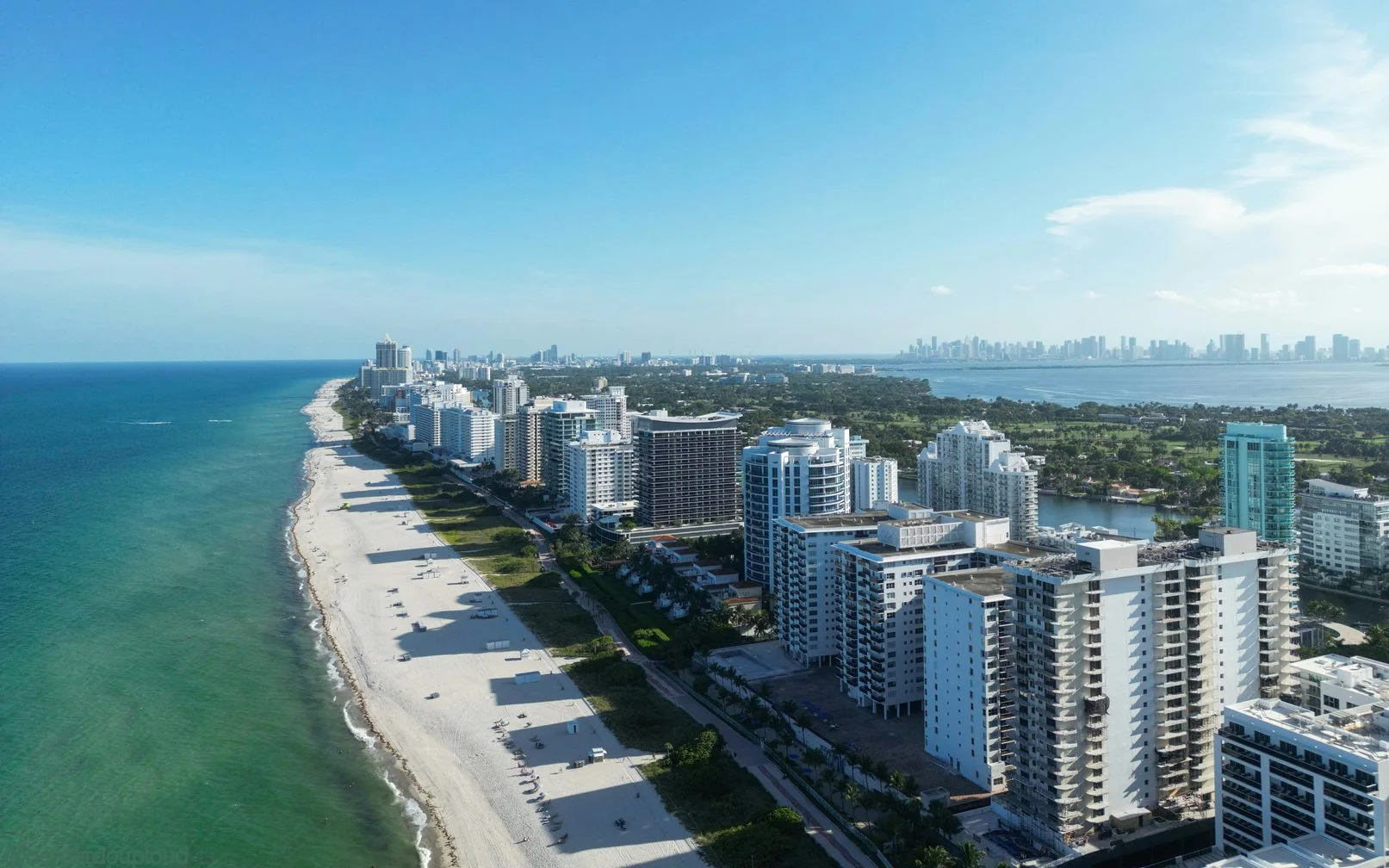
Aerial view of beachfront development in Miami, FL
As weather events become increasingly more destructive and costly, understanding the relationship between development and disaster can help make smart building decisions, minimizing the risks, and subsequent costs, of future disasters. This article is the fourth in our series, Development and Disaster, where we examine the impact of land use and development on how we, as a society, experience disasters.
Throughout early human history, coastal areas were one of the first locations where civilization thrived as humanity transitioned away from a hunter-gatherer lifestyle. Due to their proximity to key resources, these waterfront sites served as desirable locations for the establishment of trading ports and fishing communities.
As civilization matured and expanded over the following centuries and millennia, those primitive seaports grew to large cities and quaint fishing villages evolved to become tourist destinations and beach resorts. What has remained constant, however, is the underlying danger of building along the coast.
Placing largescale developments near the coast will always carry with it a certain level of risk because coastal areas are vulnerable to many kinds of disasters. From coastal flooding and storm surges to erosion, landslides, tsunamis, and high winds, coastal communities experience many threats. However, just as these hazards vary in scope and type, there exist many different ways to combat these dangers.
The strategies to mitigate the inherent risks of coastal development generally fall into three separate categories: nature-based solutions, engineered solutions, and policy/planning solutions.
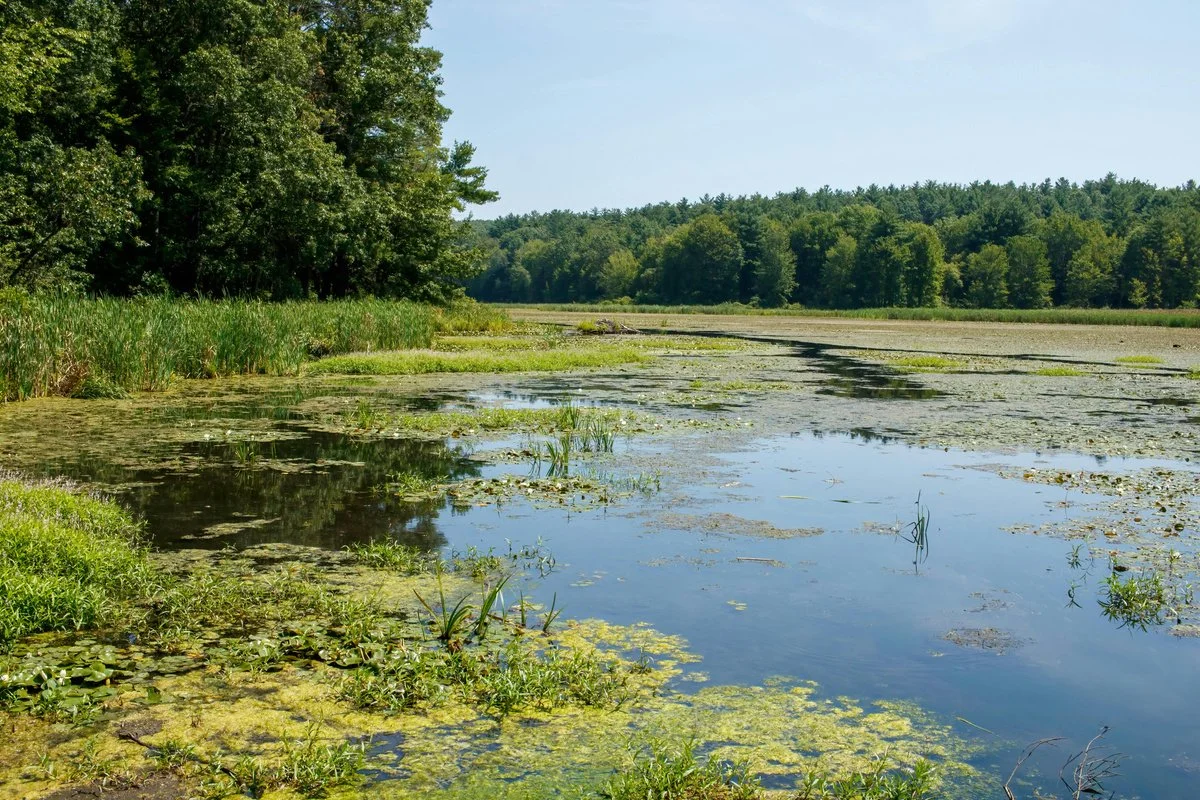
Example of marshy area near forest
Nature-Based Solutions
As communities have become more aware of the risks of coastal development, some leaders and advocates have turned to nature for inspiration. Before humanity moved into these waterfront areas, the natural environment developed its own methods to protect the surrounding ecosystem and handle events that now cause catastrophic damages for human occupants.
Wetland/Marsh/Mangrove Protection and Restoration: Wetlands and marshes significantly reduce the impact of hurricanes, typhoons, and other storms by serving as a buffer against storm surges and coastal flooding.
Wetlands act as natural sponges and are capable of storing as much as 1.5 million gallons of floodwater per acre.
Vegetation present in mangrove forests and tidal marshes helps to reduce wave energy by 50%, providing vital protection against erosion and stabilizing shores.
Wetland restoration is one of the more cost-effective approaches for storm protection, estimated in the US to provide $7 in flood reduction for every $1 spent.
Beach Nourishment/Replenishment: Adding sand and other sediment to expand existing beaches can provide storm protection by absorbing wave energy and counteracting erosion.
In addition to its storm protection properties, beach nourishment can have a positive impact on tourism by increasing beach area without impacting naturally occurring sediment movement.
While effective at providing a buffer against the sea, beach replenishment is not viewed as a long-term solution due to the high cost and frequent maintenance required. According to a 2024 investigation by CBS News, the US has spent almost $16B on beach nourishment projects over the last century.
In addition to the associated cost, beach replenishment can have unintended environmental consequences. The heavy machinery and weight of the new sand can inadvertently kill smaller animals living on the beach, which can cause a chain reaction to the surrounding ecosystem.
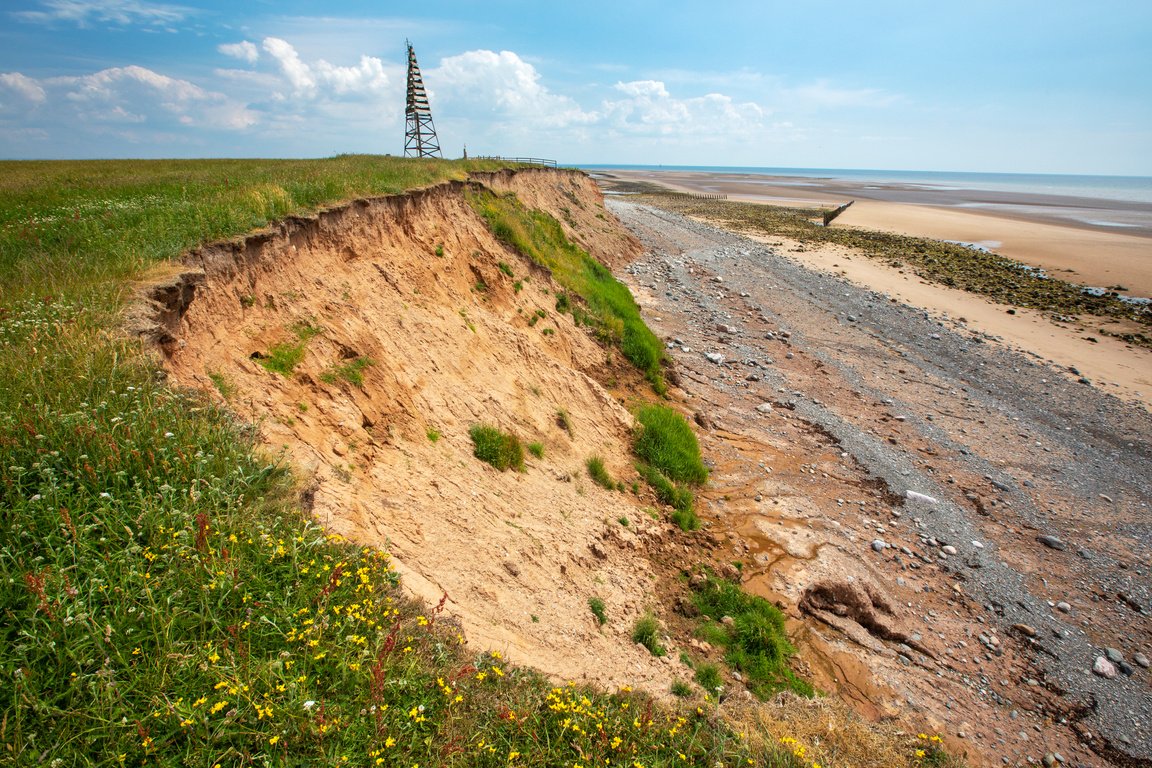
Erosion occurring near shoreline
Coral and Shellfish Reefs: Acting as natural barriers and absorbing up to 97% of wave energy, reefs prevent an estimated $5B+ in potential flood damages per year while also serving as key habitats for fish species.
Healthy coral reefs are resilient and can grow and repair themselves over time to provide cost-effective storm protection. However, these living structures are also vulnerable to climate change and can completely collapse if exposed to the wrong conditions.
Beyond offering storm protection, reefs also filter water and support biodiversity, which in turn provides essential economic benefits to the surrounding community, generating billions of dollars per year through tourism, recreation, and commercial fishing.
Living Shorelines: Living shorelines share similarities with some of the other approaches described above and serve many of the same purposes to defend against erosion and provide protection against flooding by using natural materials like plants, sand, and oyster shells.
While effective and inexpensive to install, living shorelines are often smaller in scale and more ideal for residential shoreline protection.
Living shorelines also provide excellent habitat for many plant and animal species, while improving water quality by filtering pollution and controlling sediment.
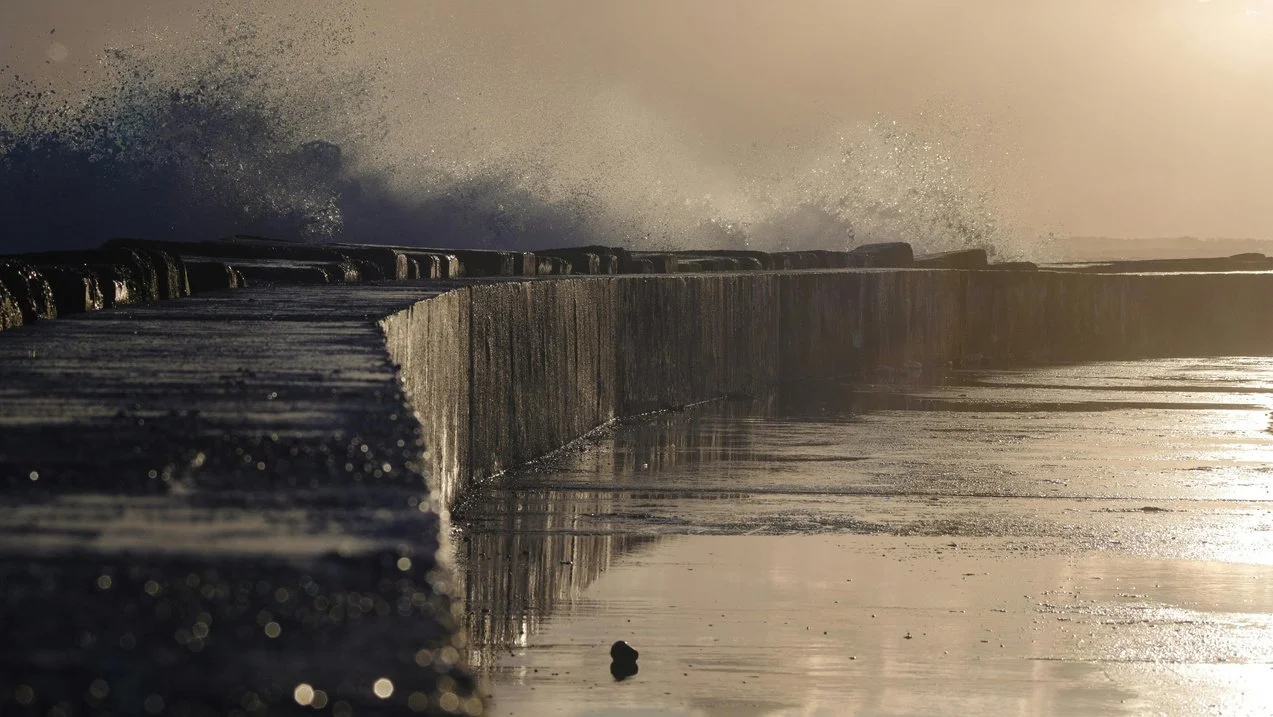
Waves crashing against a seawall
Engineered Solutions
Throughout history, humanity has shown an incredible ability to devise inventive methods to solve problems. When it comes to safeguarding waterfront communities, engineers have created several methods to protect residents and property from danger through various structural features sometimes referred to as “hardened shorelines.” While these engineered solutions offer protection and effective coastal management, they can be expensive to implement and cause environmental problems.
Floodwalls, Seawalls, Levees, and Revetment/Riprap: These barriers are normally constructed using concrete, running parallel to the shoreline and providing a defense against floods, waves, and erosion.
Seawalls and levees are one of the more expensive options for coastal management, with some estimates predicting a cost of up to $400B necessary to protect US coastal cities from storm surge by 2040.
In some cases, seawalls can actually accelerate erosion through wave reflection causing a washout at the base of the wall and eventually impacting the structural integrity of the wall itself.
Groins and Jetties: Unlike parallel seawalls, groins and jetties are constructed perpendicular to the shoreline, and their primary function is to mitigate erosion and control sediment. These structures don’t offer protection against flooding or reduce wave energy.
The protection offered by groins and jetties is limited to localized erosion control. While groins help funnel sediment to replenish a section of beach area, jetties are used primarily to protect navigation channels at river mouths and tidal inlets.
By disrupting the natural sediment movement, groins often exacerbate down-drift erosion, requiring the installation of additional groins to counteract erosion on adjacent sections of the coast.
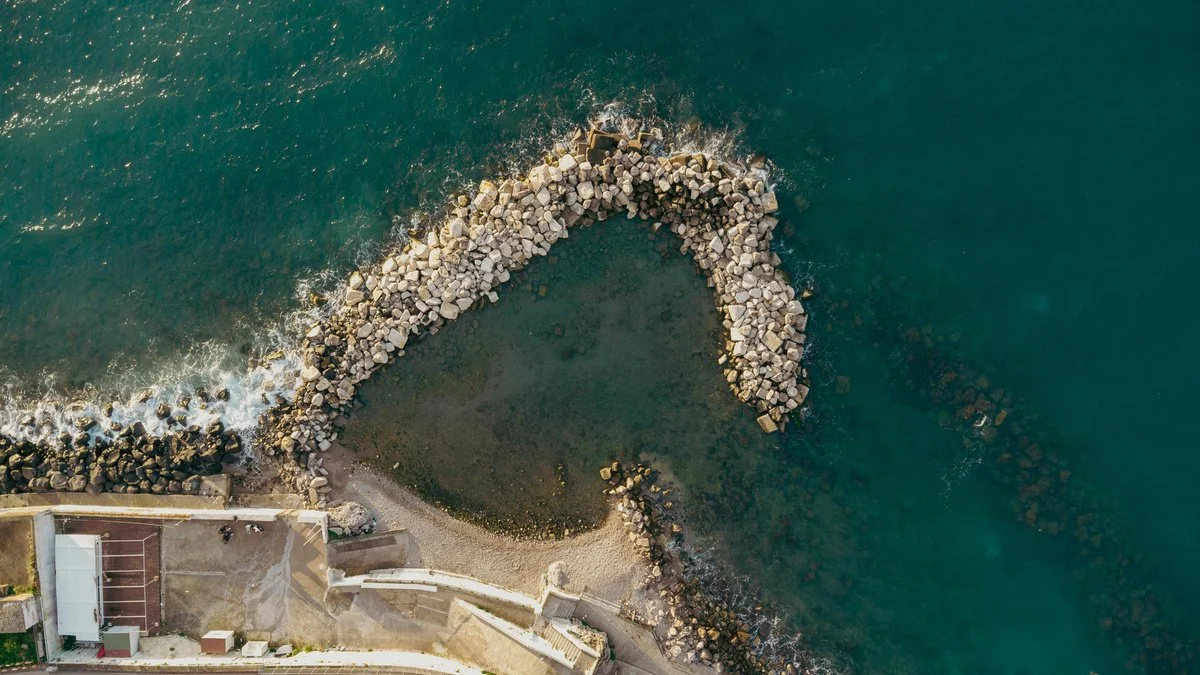
Example of a headland breakwater
Nearshore and Headland Breakwaters: Breakwaters modify currents to reduce erosion and moderate wave energy. Nearshore breakwaters are constructed parallel to shore like seawalls but located a short distance away from the shoreline. Headland breakwaters are integrated within the coastline and function similar to groins.
According to a recent study in the Mekong Delta, breakwaters reduced wave energy by 51% to 90% depending on their arrangement and construction materials.
Because headland breakwaters provide erosion protection similar to groins, they can also cause down-drift erosion. Furthermore, the installation of breakwaters in coastal areas can disrupt natural processes and negatively impact the surrounding habitat by forming intertidal marshes.
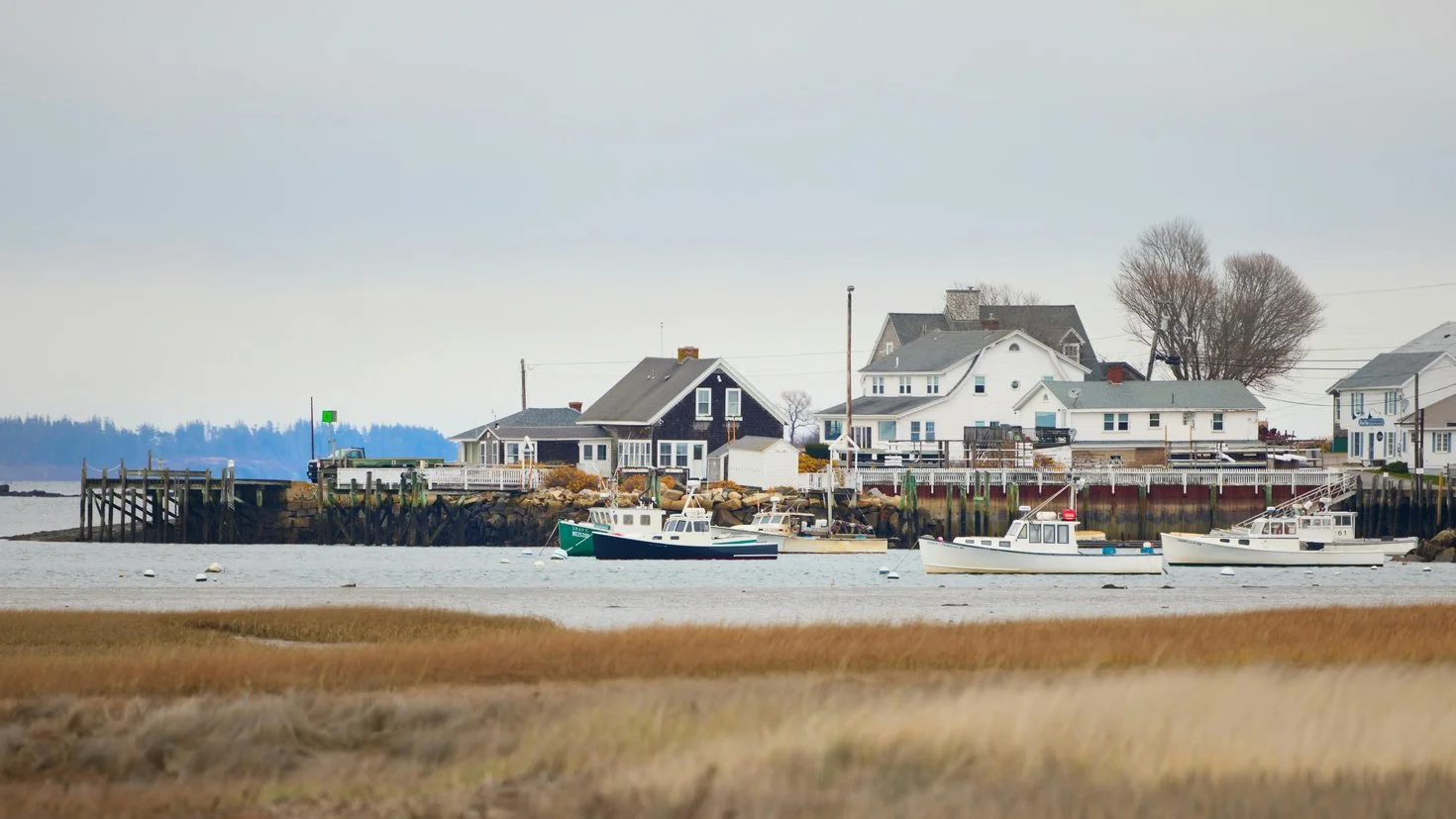
Seaside village with boats in a harbor
Policy/Planning Solutions
In some cases, the best way to solve a problem is through proper planning and foresight. In a number of coastal communities, this comes in the form of zoning and policy changes enacted to minimize risk factors; other areas may choose to introduce stronger building codes to ensure structures can withstand the intense forces they’ll be subjected to during storms; and in extreme cases residents choose to simply relocate rather than continuing to battle the natural world around them.
Zoning: Enacting zoning changes can help protect citizens and the natural environment by designating appropriate uses to reduce coastal vulnerability and provide for sustainable development.
Creating zoning districts or coastal overlay zones allows municipalities to regulate development and usage to protect citizens and property.
While effective, this approach can be time-consuming and expensive, as it requires properties to be mapped for inclusion. Local community members may also resist additional regulation, which can lead to court battles.
Community Programs: Community action and volunteerism can help coastal areas enhance resilience and protect against inherent threats through grassroots efforts rather than government mandates.
Often orchestrated in tandem with various nature-based solutions, community programs can drive conservation projects to improve coastal management through green infrastructure.
Federal programs like the National Coastal Resilience Fund can provide valuable resources and support for community programs and projects.
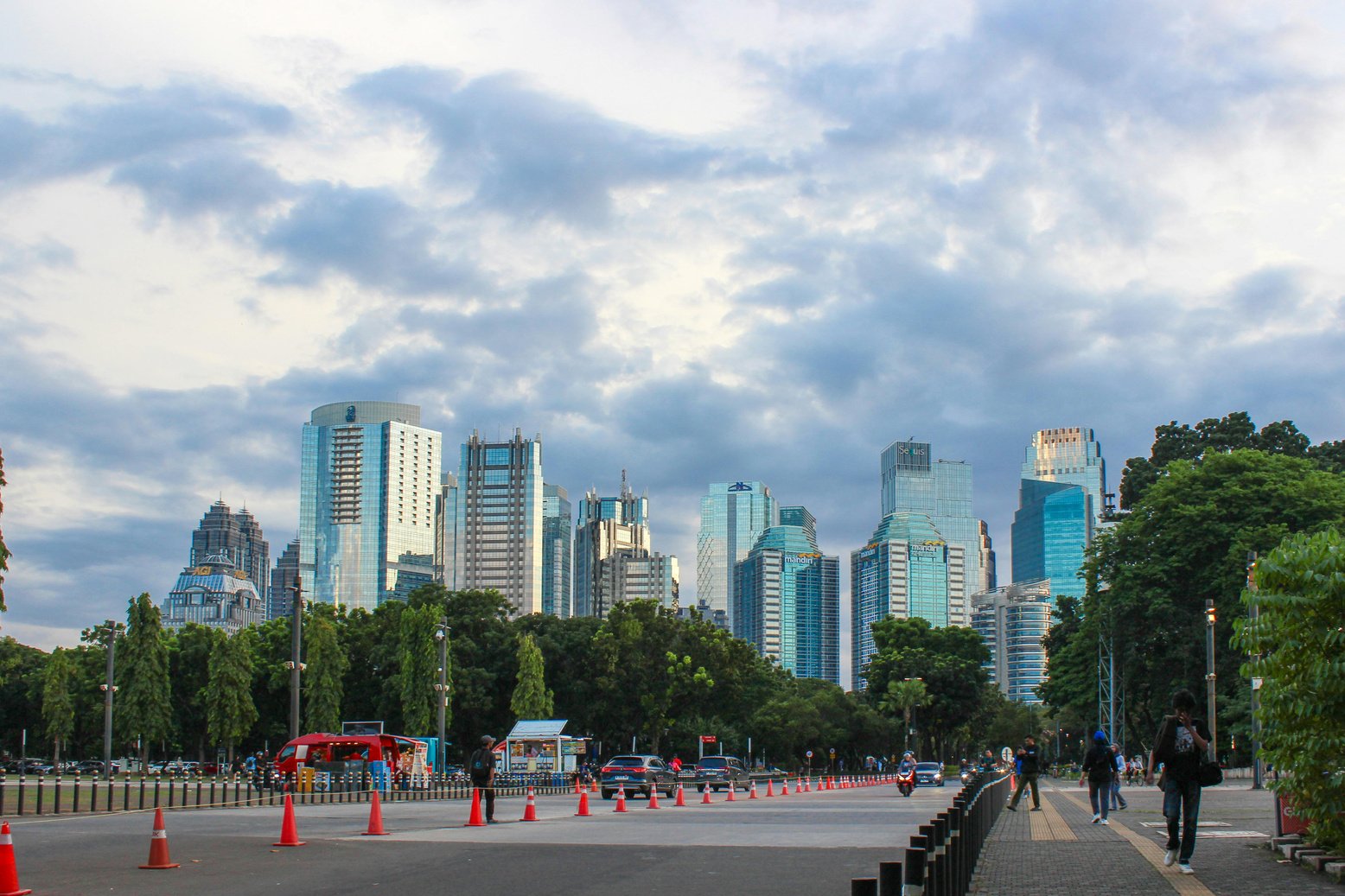
City skyline of Jakarta, Indonesia
Managed Retreat/Relocation: In the most drastic situations, when mitigation becomes nearly impossible, the only recourse left is to relocate to protect the human population. Managed retreat is a massive undertaking whether the town is simply moved to nearby higher ground or many miles inland, orchestrating such a move can be incredibly complicated and costly.
As rising sea levels have begun to affect coastal cities around the world, cases of managed retreat have become more common, including the Indonesian capital of Jakarta and the planned migration of Tuvalu.
Deciding to enact a managed retreat strategy is a decision that requires input from an entire community and should never be taken lightly. Any community considering this approach can look to history for guidance and cautionary tales.
Often, the choice between solutions for coastal protection depends upon a community’s unique location and circumstances. Sometimes an engineered solution may be best in spite of environmental concerns or associated costs. Other situations may call for a “greener” plan to protect the natural beauty of the surrounding environment. However, there is no “one-size-fits-all” approach, and many communities choose to employ a mix of strategies to protect against coastal hazards.
Overall, when deciding whether to build in a coastal environment, safety should come first, and key decisions should rely on evidence and caution. Just because it’s possible to develop a coastal location doesn’t mean it’s prudent.