October Wrap-Up
October Cyclones - Typhoon Halong and Hurricane Melissa
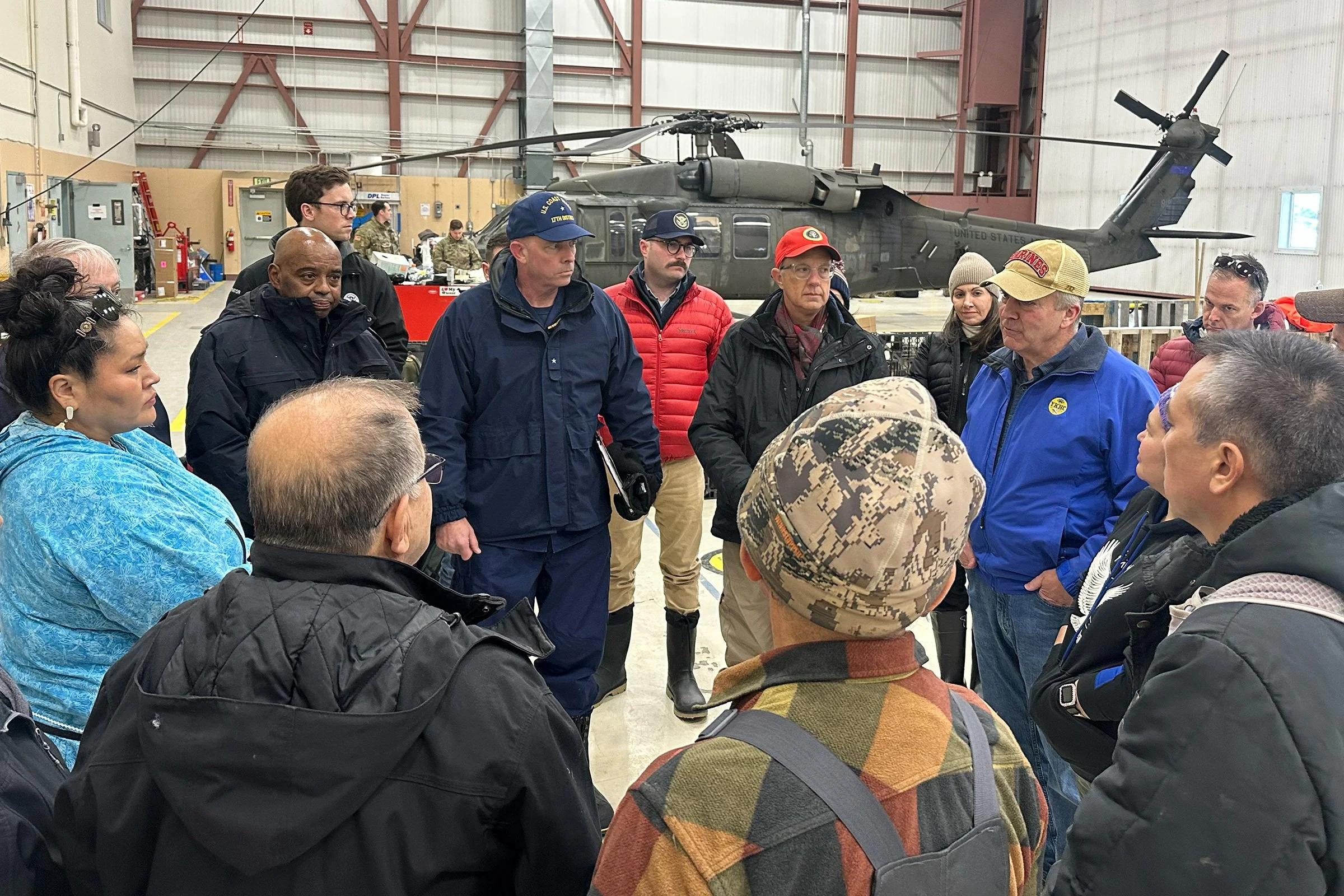
The US Coast Guard, along with politicians and other Federal Response Officials gathered in Alaska to survey the damage from Typhoon Halong. Hurricane Melissa ravaged the Caribbean, making landfall in Jamaica on October 28th as a Category 5 hurricane, leaving devastation behind that’s “never been seen before”. In Cuba, more than 735,000 people were evacuated to shelters prior to landfall.
With Melissa’s departure from the region, the final month of hurricane season is set to begin relatively quietly in the Atlantic basin, with no immediate concerns for new hurricane formation in the next week.
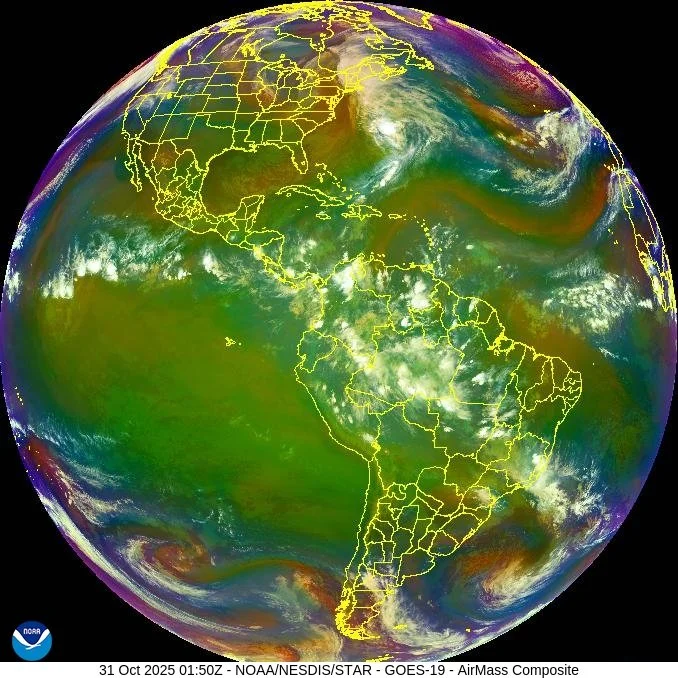
GOES East Imagery showing the Atlantic Basin, October 31, 2025
Our Planet
A research group led by Rutgers University reported that sea level rise is occurring faster than at any time in the past 4000 years. Scientists who discovered the secret cooling power of glaciers warn they may lose this power in the next decade. Mosquitoes were found in Iceland for the first time. 160 scientists representing 23 countries confirm that warm-water coral reefs are dying at unprecedented rates and the Earth has reached a tipping point. The Northern Hemisphere is getting darker. The Earth’s crust is tearing apart in the Pacific Northwest. Drought is quietly pushing cities in America towards a fiscal cliff. And, outbreaks of bird flu in the U.S. have killed nearly 7 million farm birds since September.
Federal
The Federal government shutdown that began October 1st has lasted the entire month. By the middle of next week, the length of this shutdown will surpass the previous record of 35 days. Three separate federal rulings in Rhode Island have blocked DHS from conditioning federal grant funding on conformity with unrelated immigration policies. The current Acting FEMA Administrator has held his position for 179 days, leaving only 31 days remaining before his term exceeds the maximum length of time an acting Federal official may serve. The Justice Department’s Organized Crime Drug Enforcement Task Forces and Community Relations Service will be permanently closed in the Department’s latest reorganization. Fifteen government OIG websites were taken offline in October. The Disaster Relief Fund is running critically low. And a new report from the GAO recommends that FEMA evaluate its role and capabilities to assist State and local governments with planning for extreme heat events. Included among GAO’s four recommendations: identifying potential mitigation projects with extreme heat as the primary focus and developing metrics for Benefit Cost Analyses. Based on FEMA’s response, it is unclear whether they will take any action on GAO’s recommendations.
Shutdown Impacts
SNAP Food Aid, Head Start Programs, WIC Nutrition Assistance, Essential Air Service, Military Pay, and Federal civilian paychecks are among the six ways the Federal government shutdown is about to get worse. Air Traffic Controller shortages are worsening flight delays and nearly 50 percent of major airports are experiencing staffing shortages.
State
State emergency officials say new rules and delays for FEMA grants have put disaster response at risk. Pew dives into what limited Federal assistance means for State budgets and Governing does a nice job examining whether States are capable of shouldering the increased burden. North Carolina’s Governor has asked FEMA to maintain the flow of funds to Western North Carolina during the shutdown ["We cannot afford for dysfunction in Washington to disrupt this critical work”]. The Inupiat Community of the Arctic Slope hosted a four-day exercise in Alaska bringing together local, state, and federal emergency managers from across the region to simulate response coordination with community organizations and local businesses. 7,000 Maine residents who depend on Low-Income Heating Assistance Programs will not receive assistance if the shutdown continues into November.
Local
More than 25 emergency managers from 15 States met in Washington last week to urge Congress to pass the FEMA Act of 2025. In Texas, FEMA has so far denied or found ineligible 61% of the applications from Kerr County. A CBS News investigation, which began after Hurricane Helene destroyed the community hospital in Unicoi County, TN revealed that more than 170 other hospitals are just as vulnerable. The National Weather Service confirmed the June tornado near Enderlin, ND was the first EF5 tornado in 12 years. The New York State Comptroller issued this report warning portions of New York, and particularly Long Island, are at major risk of destruction as a result of climate change and severe storms. Two were killed in New York City during a flash flooding event, linked in part to an overwhelmed sewer system and record rainfall. New York City announced a first-in-the-nation program to integrate 911 into NYC Public Schools. The City of Philadelphia has adopted virtual inspections full time, now allowing inspections to be requested and conducted virtually using cell phones or tablets. The Western Fire Chiefs’ Association developed a new wildfire evacuation checklist to help prepare citizens for “no notice” wildfire evacuations (get a copy here). And officials in Collier County Florida held a full-scale exercise at the Naples airport simulating a small plane crash.
Congratulations to Sarasota County Emergency Management for their EMAP accreditation; our own home County for its selection to participate in Smart Growth America’s 2025 Community Connectors program and Anne Arundel County, MD for adopting their updated Hazard Mitigation Plan.
Innovation and Research
Engineers from Iowa State University partnered with the Polk County Emergency Management Agency to develop an interactive training game, designed to simulate “high-pressure, high-stakes situations”.
Following an analysis of evacuation patterns in Florida during Hurricanes Helene and Milton, researchers report that people living in coastal areas were more likely to evacuate than those living inland, yet the majority of deaths in Florida from Helene occurred in inland areas historically viewed as having low hurricane risk.
Building new homes to meet fire-resistant codes adds only 2-3% to total construction costs, according to this recent analysis from Headwaters Economics and the Insurance Institute for Business & Home Safety.
According to the book, Philanthropic Response to Disasters: Gifts, Givers and Consequences, disaster philanthropy typically prioritizes immediate assistance in large-scale, visually destructive disasters, with less support given to mitigation, preparedness, and long-term recovery, or for smaller-scale disasters with less apparent damage.
A new study led by Oklahoma State University’s College of Health, published in the International Journal of Environmental Research and Public Health, highlights the direct linkage between loneliness and frequent use of social media in US adults.
Psychological inoculation techniques, such as helping people recognize the signs of manipulation before they encounter it, could help prevent radicalism and extremism. And the use of open-ended questions, rather than debate or attempts to seek common ground, seems the most effective tactic to depolarize arguments or engage in productive conversation.
According to this recent Gallup poll, a majority of Americans continue to view the US Postal Service favorably, but their ratings of FEMA, the CIA, the CDC, the FDA, the EPA, and the IRS all dropped in the last year. FEMA recorded the sharpest decrease with a drop of 20 percentage points.
An interesting approach by Italian researchers, published in the International Journal of Heritage Studies, examining their use of Virtual Reality tools to help communities envision a new future and recover from disasters, following a magnitude 6.2 earthquake that rocked the Italian towns of Amatrice and Accumoli in 2016.
Researchers in Dublin have discovered that all living organisms respond the same way to rising temperatures, with warmth leading to increased performance, before rapidly decreasing, in some cases to the point of death.
In a little bit of good news, a researcher in Spain is working to improve crowd safety using grains of rice, sheep, the Running of the Bulls, and a lot of physics, and…
Researchers in Europe found that EU citizens generally prefer self-sufficiency and the use of renewable energy sources like solar power, favoring “socially preferable and technically feasible” options over foreign dependence, even in instances where cost is higher.
SRP Partners’ nonpartisan research enables government and commercial clients to make well-informed decisions and plan for an uncertain future. The Porch is our place to share what we find relevant, interesting, and meaningful throughout the course of our work.