How Social Science Can Support Emergency Management

Emergency management is inherently a group effort. Whether before, during, or after a disaster, effective emergency management requires the collaboration of people from a variety of professions. While it is customary to see emergency managers working alongside fire, police, public works, elected officials, and planners, just to name a few, it is less common to see social scientists included in that mix – yet they may be one of the most useful tools an emergency manager can have in their toolbox.
Social scientists, as the name suggests, are focused on the scientific study of society and the social world. The social sciences encompass a broad range of disciplines, including anthropology, economics, human geography, gerontology, legal studies, political science, sociology, and psychology. Each discipline provides its own particular contribution to our understanding of what it is to be human and live in a human-created world. For this reason, social scientists are able to bring a unique understanding to emergency managers about the people and the communities with which they are working.
Because emergency management is also inherently local, as the phrase, all disasters are local reflects, having an in-depth understanding of the people and the local community is crucial to ensure that their needs are met at each phase of the emergency management cycle. This is the value that social scientists bring to emergency management.
In the preparedness stage, social scientists have a great deal to contribute, particularly in terms of planning. Ideally, the more involved social scientists are in the preparedness phase, the less they will be needed in the subsequent stages. For example, social scientists can help craft emergency messaging to ensure that it is clear and accessible to all. They can help with evacuation or sheltering planning to ensure that plans consider the social or demographic factors that influence a person’s choice to leave their home or stay put in a disaster. And they can help emergency managers anticipate how people will truly behave in a disaster – how they will react, how they will cope, and how they will respond to both emergency communications as well as directions from officials both during and after the disaster.

During response activities, social scientists generally will have less of a role to play, since the majority of response efforts will be conducted by first responders and emergency management officials. However, as the mass evacuations following Hurricane Katrina demonstrated, catastrophic events often result in decisions being made on the fly – decisions that are intended to help but may inadvertently cause more harm than good or may exacerbate an already chaotic and challenging response.
In the case of New Orleans, large numbers of people were evacuated by plane with no coherent plan for reunification nor a method for determining who would go where. Families were separated and people were taken to unfamiliar places. The disaster that these folks just endured was compounded by the haphazard evacuation plans. They were safe, they were alive, but they were away from the places and the people that they knew. Having the input of social scientists in situations like this is crucial to ensure that response efforts not only prioritize the physical safety of people, but their mental and emotional well-being as well.
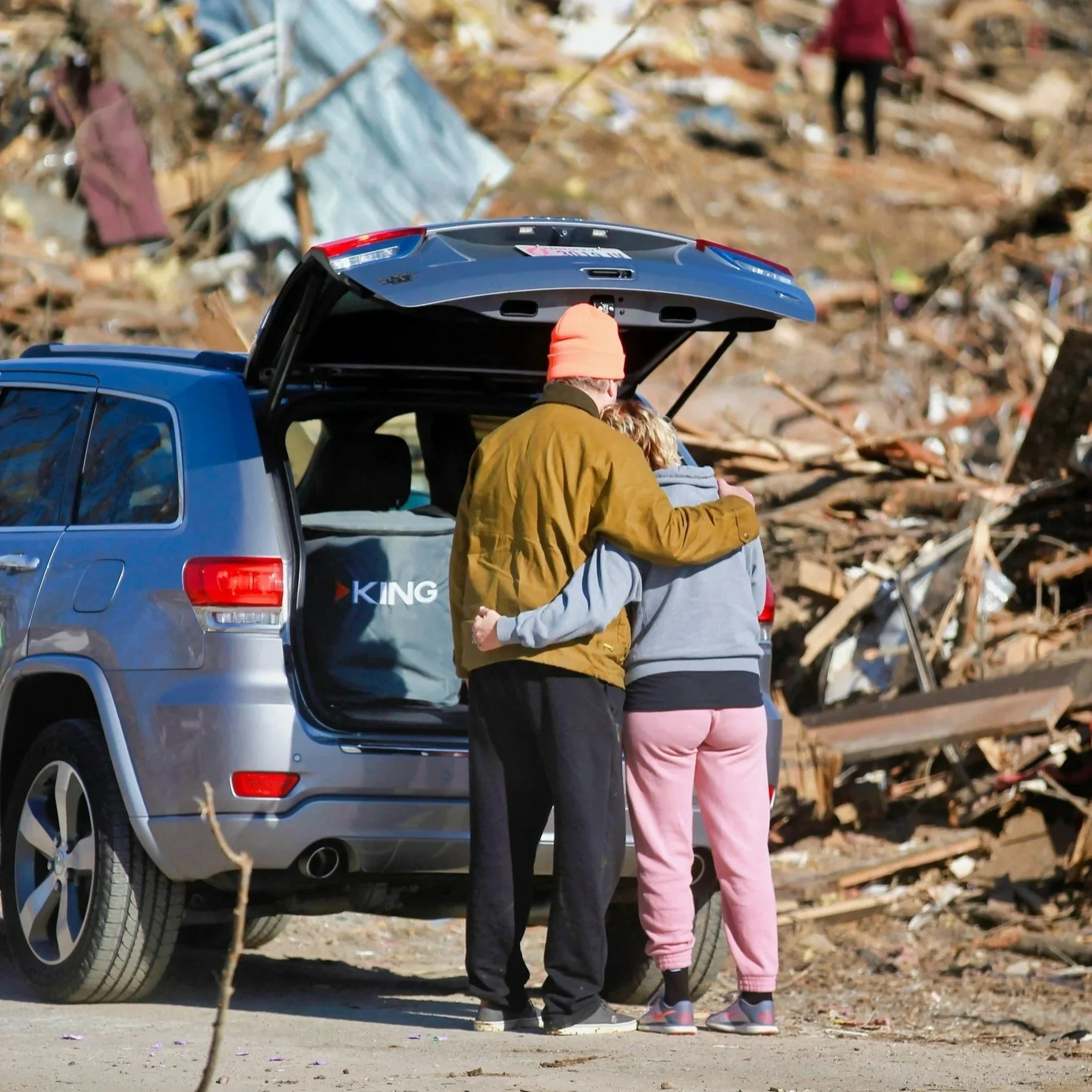
Similar to the preparedness phase, social scientists can also play an active role in the recovery phase of emergency management. With their unique understanding of people and communities, social scientists can help to ensure that no one is left behind as recovery efforts get underway. They can verify that disaster aid is distributed equally, they can analyze disaster costs and make recommendations for policy or building code changes that may limit future costs, and they can make certain that recovery is not limited to the rebuilding of things, but also includes the rebuilding of community, of connection, and of people’s lives.
And finally, in the mitigation stage, emergency managers can turn to social scientists for help in enlisting public or political support for projects, finding funding sources for activities, or identifying communities that have been overlooked in past mitigation efforts. They can ensure that mitigation measures are available and accessible to all, and they can evaluate proposed efforts to limit the likelihood that efforts taken to protect one community wind up placing another community in harm’s way. To put it simply, social scientists can not only ensure that mitigation efforts are fair and equitable, but they can also help garner the support necessary to ensure that the funding is there and that the people are on board.
For emergency management professionals, having access to social scientists is like having a multi-tool. Need to understand the local culture? Ask an anthropologist. Want to understand the financial impact of disaster? Ask an economist. Curious about how different people may respond to emergency warnings or calls to evacuate? Ask a psychologist. Want to know more about how humans behave in a disaster? Ask a sociologist. Interested in understanding the connection between policy or building codes and disaster impacts? Ask a political scientist. Curious about how issues of environmental justice relate to disaster? Ask a legal studies scholar. Want to understand the needs of older people in disaster? Ask a gerontologist. Interested in finding out why people choose to live in disaster-prone areas? Ask a human geographer.
Ultimately, what makes an event a disaster is the fact that people are impacted. The job of the emergency management professional entails more than simply preparing for disasters and cleaning up afterwards; it entails working with and for the people of the local community. To do this most effectively requires having the kind of in-depth understanding of those people and their community that social scientists are uniquely positioned to provide. Managing a disaster is difficult and it is complicated, but having access to social scientists can take some of the burden off the emergency manager.