In this special edition of our Extreme Heat – Building Differently series, we are taking a break from the usual content to spotlight an exciting new Cool Building initiative recently launched in Washington, D.C.

Project Spotlight: Washington, D.C.
The urban heat island effect is being felt in cities around the world, and Washington, D.C. is no different. Research has shown that urban neighborhoods can be up to 7°F warmer than adjacent rural or greener neighborhoods simply because of their abundance of buildings and paved surfaces and their lack of green space.
In our nation’s capital, however, the urban heat island effect has been even more striking. According to the District Department of Transportation (DDOT), some D.C. neighborhoods are as much as 10°F - 15°F warmer than nearby rural communities in the heat of the summer.
To address the temperature disparities between neighborhoods and mitigate the urban heat island effect, DDOT recently launched their Cool Corridors Pilot Study. For this study, three types of solar reflective “cool coatings” are being applied to roadways in five pre-determined urban heat island locations across the city. The cool pavement coatings will then be tested for their effectiveness in lowering surface and air temperatures on and around the treated roadways.
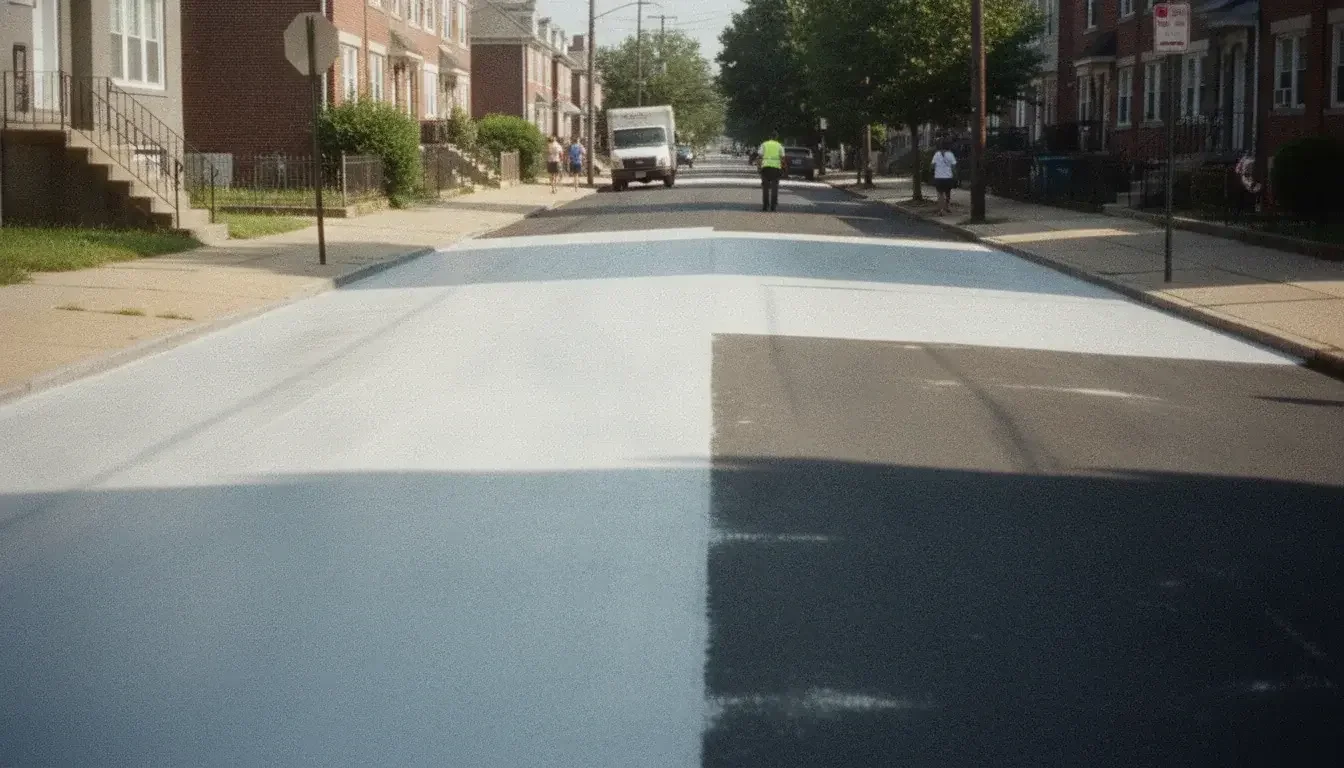
This project builds off the District’s Sustainable DC 2.0 climate and resiliency planning framework to make the city “healthier, greener, and more livable”. Because these coatings reflect solar heat rather than absorbing it like traditional or untreated asphalt, they have the potential to lower surface temperatures by up to 20°F, helping to alleviate the urban heat island effect and create a more comfortable environment for city residents. In addition to potentially lowering city temperatures, officials note that cool pavement coatings may also help to extend the lifetime of roads and parking lots and reduce long-term maintenance costs, making them both environmentally friendly and economically sustainable.
The Cool Corridors Pilot Study is a joint effort between DDOT, the Department of Energy and Environment (DOEE), the Homeland Security and Emergency Management Agency (HSEMA), and the Department of Health (DOH), and utilizes grant funding from FEMA’S BRIC (Building Resilient Infrastructure and Communities) program. It is part of the District’s larger Cool Corridors Multi-Hazard Resilience Study, which emphasizes combining cool pavement coatings with strategies to increase green infrastructure and add tree canopy to ensure that the corridors connecting city residents with green spaces are resilient, safe, and usable.
Image Credit: Getty Images
The main goal of the Cool Corridors Pilot Study is to test the effectiveness of three specific cool pavement products (Pave Tech, GuardTop, and SealMaster) at lowering surface and air temperatures in some of the District’s hottest neighborhoods. Using the Heat Sensitivity and Exposure Index (HSEI), which identifies areas prone to extreme heat based upon the amount of surrounding pavement and the specific vulnerabilities of the community, D.C. officials selected the following five locations to be used in the pilot study:
Brightwood NW
North Michigan Park NE
Ivy City NE
Benning NE
West of Ballpark SW

Different application methods; Image Credit: DOEE
At each of the selected sites, one of the three cool pavement products will be applied and then tested over the coming weeks, with streets in Ivy City serving as the control for the study. To evaluate how well each product performs, students from American University will collect air, surface, and mean radiant temperatures using a tool that measures the heat “coming at a human body from all six directions.” After gathering the temperature data from the various pilot sites, the students will analyze the results to determine each product’s effectiveness at lowering temperatures and then compile their findings into a comparative report to be published at the end of 2026.
According to DDOT, part of the pilot study includes an emphasis on public reporting, so they have included maps of the testing sites and announcements regarding street closures on their website and will make the final report publicly available. Officials hope to use the results of this study to inform future development, transportation design, climate policy, and investment choices while increasing neighborhood resilience and improving quality of life for all Washingtonians.
While the selected products have been used successfully in other cities, including Orlando, Phoenix, and Los Angeles, it is still unclear if or how well they will work to lower temperatures in more northern climates like D.C.’s. If this study demonstrates that cool pavement coatings are effective in a variety of climates, we may see more cities launching similar pilot studies to lower temperatures in their own heat islands. Cool pavement coatings have shown a lot of promise in reducing temperatures and mitigating the urban heat island effect. And because they are simple to apply and scalable, cool pavements may be the easiest way for cities to quickly and economically cool their hottest neighborhoods.
Cheers to Washington, D.C. for taking this big step towards lowering urban temperatures and creating a more comfortable and livable environment that all residents can enjoy!