Emergency Preparedness Essentials for Families & Individuals

Picture of a family standing in a field with a sunset in the background
Since 2004, the United States has recognized September as National Preparedness Month, which serves as a call to action and encourages citizens nationwide to prepare themselves for any emergency they may face in their communities, neighborhoods, and homes. Emergencies can take many forms, and residents of certain areas may be more vulnerable than others. However, regardless of the specific type of emergency or disaster, the two most important steps to take are developing a plan and creating an emergency kit.

Friends and family discussing their emergency plans
Make Your Plan
Preparing for an emergency or disaster requires careful planning. Once an event is in progress, there is often little time to have lengthy discussions about the best course of action, so it’s best to have those conversations well ahead of time.
Your location and the makeup of your household will impact your planning process (i.e., whether you live in a townhouse or single-family home, how many family members you have, whether there are senior citizens or children to plan for, etc.), so keep that in mind as you begin putting your plan together. In general, preparing an emergency plan should be a four-step process:
Step One: Family Discussion
Communication is key before, during, and after an emergency or disaster, so the best place to start is by having a discussion with the members of your household and any other family members you would like to include in your plan. This discussion should cover a few key points:
What are the best sources to get updated information on emergency alerts and warnings? Make sure everyone is clear on how to stay informed during an emergency or disaster.
What is the best plan for sheltering during an emergency or disaster? Where are community shelters? Discuss which scenarios would call for traveling to a mass care shelter vs. staying at home or sheltering in place.
If evacuation is required, what is the most appropriate route? Make sure you discuss options for different types of disasters and always brainstorm multiple strategies in case one or more evacuation routes becomes clogged with traffic or blocked by debris.
How can everyone stay in touch during the emergency or disaster? Develop a plan to maintain communication and make sure everyone has the necessary information to get in contact with other family members through more than one method (i.e., cell phone number, email address, social media handles, etc.).
What supplies does the household emergency kit require? As we’ll review below, an emergency kit needs to have certain supplies, some of which may be perishable, so make sure to review your inventory regularly to determine if anything needs to be added or replaced.
Step Two: Perform a Risk Assessment
No two families are exactly alike, so as you prepare your emergency plan, be sure to consider your family’s unique needs. This is especially important for families with young children, elderly family members, and pets. Things to think about include:
Ages of members within your household
Responsibilities for assisting others
Locations visited frequently (in case your family is separated when the emergency occurs)
Dietary needs
Medical needs including prescriptions and equipment
Disabilities or access and functional needs including devices and equipment
Languages spoken
Cultural and religious considerations
Pets or service animals
Step Three: Write Down Your Plan
Once you have discussed different emergency scenarios with your family and taken stock of the risks and vulnerabilities of your household, neighborhood, and community, it’s time to document your family emergency plan. Visit ready.gov and use the form available there to formalize your plan and capture important household information, names and contact details for family members, meeting places, and medical information.
Step Four: Practice Your Plan
An emergency plan will not be effective if you do not review it regularly and practice key elements like evacuation routes. Don’t just create the plan and stow it away in a drawer or leave it in a folder on your desktop. Make sure you return to it every few months, ensure all the information is accurate and up to date, and perform a careful review of all your plan’s details.
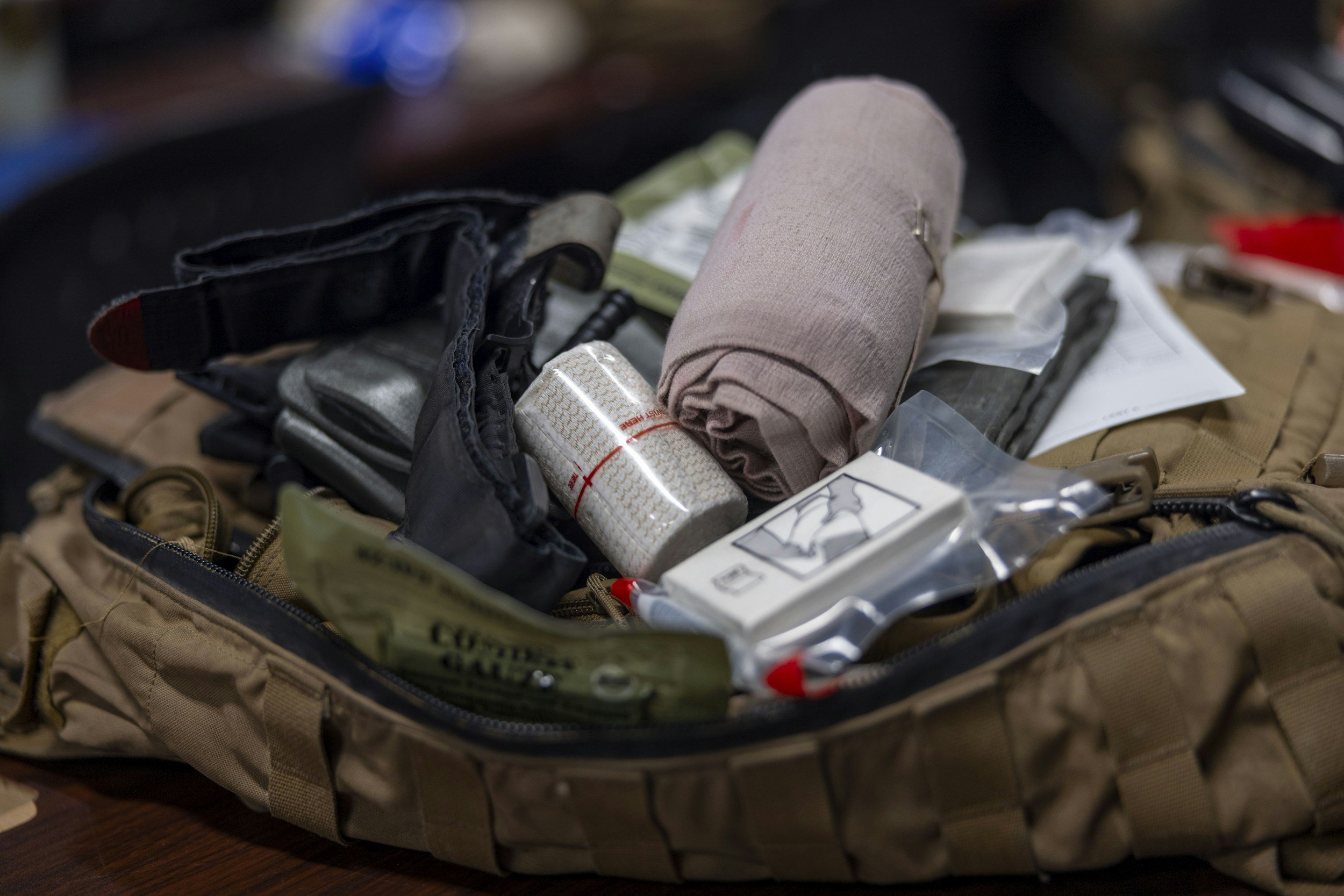
Closeup of a go-bag with medical supplies
Create Your Kit(s)
When disaster strikes, families and individuals often must make the difficult decision to stay home, shelter in place, or evacuate. Always listen to the authorities in an emergency situation, but if you have the means to evacuate, don’t wait to receive an order, get out of harm’s way as soon as possible. No matter if you choose to evacuate or not, it is imperative to prepare beforehand and have emergency kits on hand for each scenario.
Basic Disaster Supplies Kit
Your basic disaster supplies kit can be stored in your home, and it should be stowed in a readily accessible area so you can get to it quickly in an emergency. Consult Ready.gov for more tips about assembling, storing, and maintaining your kit. At a minimum, your kit should include:
Water (one gallon per person per day for at least five to seven days, for drinking and sanitation)
Food (at least a five- to seven-day supply of non-perishable food)
Battery-powered or hand crank radio and a NOAA Weather Radio with tone alert
Flashlight
First-aid kit
Extra batteries
Whistle (to signal for help)
Respirator or face mask (N95 or similar to help filter contaminated air)
Plastic sheeting, scissors and duct tape (to shelter in place)
Moist towelettes, garbage bags and plastic ties (for personal sanitation)
Wrench or pliers (to turn off utilities)
Manual can opener (for food)
Local maps
Cell phone with chargers and a backup battery
Go-Bag
What makes a go-bag different from a basic disaster supplies kit is primarily its portability. During an evacuation, you’ll likely need to travel light, so your go-bag needs to include some key essentials to sustain you and your family until you reach safety or an emergency shelter. There are several resources available to help you assemble your go-bag, but most include the same core items, many of which you probably already have in your home:
Battery-operated or crank radio
Cash
Emergency blanket
Flashlight
Extra batteries for radio and flashlight
Extra keys to your house and car
Extra socks
First-aid supplies
High-protein and nutritious snacks
Important documents in sealed plastic bags (photo ID, passport, etc.)
Knife or multi-tool
Lighter and matches
Medications
Personal toiletry items
Spare chargers for electronics
Water purification tablets
Waterproof bags
Additional Supplies
Beyond the basics, consider adding the following items to your emergency kit or go-bag. The necessity of these items will depend on your situation and always err on the side of mobility when assembling your go-bag.
Soap, hand sanitizer and disinfecting wipes to disinfect surfaces
Prescription medications (store extra in case you can’t refill your prescription in a timely fashion)
Non-prescription medications such as pain relievers, anti-diarrhea medication, antacids or laxatives
Prescription eyeglasses and contact lens solution
Infant formula, bottles, diapers, wipes and diaper rash cream
Pet food and extra water for your pet
Cash or traveler's checks
Important family documents such as copies of insurance policies, identification and bank account records saved electronically or in a waterproof, portable container
Sleeping bag or warm blanket for each person
Complete change of clothing appropriate for your climate and sturdy shoes
Fire extinguisher
Matches in a waterproof container
Mess kits, paper cups, plates, paper towels and plastic utensils
Paper and pencil
Books, games, puzzles, or other activities for children
For more information on how to prepare for an emergency, visit these resources: