Preparing for a warmer future requires many solutions. Here are a few examples of some of the new tech, old tech, and low-tech ways we can begin to build differently today.
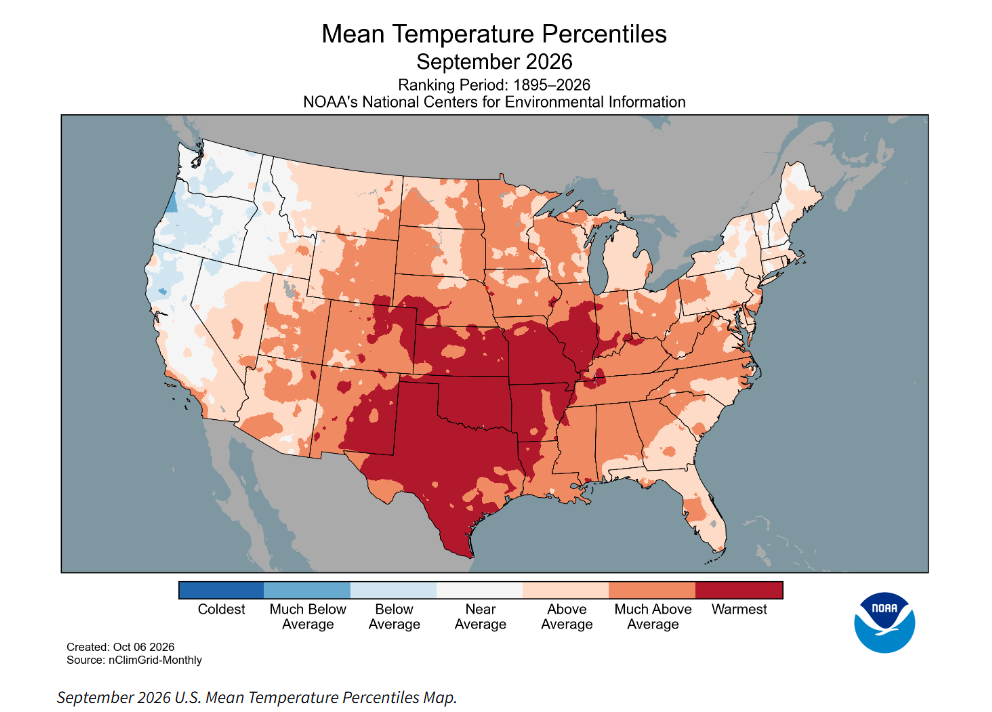
By all measures, September 2026 was hot. According to a recent report from NOAA’s National Centers for Environmental Information (NCEI), the United States just experienced its warmest September since record-keeping began in 1895, and worldwide, average temperatures for the month made it the 2nd hottest September on the planet since 1850. Globally, September 2026 also brought the highest ocean surface temperatures and third-highest land temperatures ever recorded for the month.
In the central United States, September’s heat was particularly relentless, with states like Kansas, Oklahoma, and Missouri recording higher temperatures than were seen in the 1930s during the Dust Bowl. And the heat wasn’t just limited to daytime highs – nighttime temperatures throughout the 48 contiguous states in the U.S. also broke records, with nighttime lows more than 1.2°F higher than the prior record set in 2019.

Image Credit: Climate Central
As both our daytime highs and nighttime lows continue to rise, the heat will not just be an annoyance, it will be an issue of survival. All metrics indicate that our planet is heating up at an unprecedented rate. To be prepared for a warmer future, we must build with the heat in mind, utilizing some of the traditional passive cooling methods from the past, while also incorporating new and innovative passive and active cooling techniques for the future.
In this, the third and final article in our Extreme Heat – Building Differently series, we will look at some of the new cooling methods being implemented around the world. Some of these strategies are active cooling methods utilizing new technology, some are old passive cooling technologies that have been re-imagined, and some are simply low-tech ways to stay cool when the temperature climbs.
What is Active Cooling?
Active cooling is defined as the use of external energy sources to increase or control heat removal. Unlike passive cooling methods, which use natural processes like ventilation, shading, and convection to increase heat removal, active methods rely on electricity to lower temperatures mechanically. Some common examples of active cooling methods include air conditioning, evaporative coolers, ceiling fans, and misting fans.
Active cooling methods are typically more effective than passive methods at cooling large spaces quickly, but that speed and efficiency also come with a cost. According to the International Energy Agency (IEA), active cooling methods such as air conditioning and electric fans account for nearly 20% of the total electricity used in buildings. As the number of air conditioning units in use worldwide is anticipated to triple by 2050, the IEA predicts that the energy required to run so many systems will increase dramatically too, reaching the current energy consumption of India and China combined. And this additional energy will not be cheap. Estimates from Italian researchers with the CMCC (Euro-Mediterranean Center on Climate Change) place the cost for the anticipated increase in energy usage at a whopping $124-177 billion.
New Cooling Technologies
It is clear that finding climate-friendly ways to cool our buildings is crucial. The economic costs of the anticipated increases in energy usage are staggering, and the impact on the environment from that additional energy usage will only worsen our current climate situation.
The good news is that there are lots of new ideas on the horizon, many of which are already in use around the world. These new technologies seek to address some of the problems with conventional cooling systems, most importantly the high levels of energy usage required to run traditional air conditioning.
Membranes & Desiccants
The main reason that air conditioning systems are so energy inefficient is because they are designed to lower temperatures and remove moisture simultaneously – tasks which require a great deal of energy to perform at the same time. One new approach to active cooling has been to separate these tasks using membrane and desiccant technology borrowed from desalination systems.
In this method, as outdoor air enters the membrane unit, water vapor from the air is pulled across the membrane using a vacuum pump. The water vapor becomes liquid before being either ejected from the system (in the form of condensation) or absorbed by desiccant materials. The no-longer-humid air then passes through a conventional cooling unit and into the interior of the building.
According to researchers with MIT, this dual approach has been shown to be effective at lowering temperatures, reducing energy demand, and lessening the amount of greenhouse gases released. In addition, membrane and desiccant methods can be adapted to different climates to ensure maximum effectiveness. Researchers found that in dry and arid climates, hybrid membrane-desiccant systems work well, while in more humid climates, desiccant systems alone tend to be most effective.
Active Solar Cooling
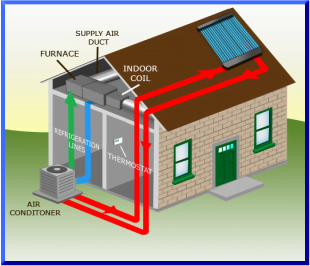
Image Credit: Charlotte Comfort Systems
Another way to reduce the energy demand of traditional air conditioning units is to use solar energy to power thermal chilling units. Known as active solar cooling, this method employs solar panels or other solar thermal collectors to provide electricity to the air conditioning unit or thermally driven chiller. Air conditioning units using solar panels are often smaller and more efficient than conventional air conditioning systems, making them a good alternative for people living in small homes or apartments.
Sustainable Mechanical Cooling
Traditional air conditioning not only uses a great deal of energy, but it also tends to be a major source of greenhouse gas emissions. Because greenhouse gas emissions contribute to global warming, lessening the environmental impact from conventional air conditioning must also be considered when building for a warmer future.
Sustainable mechanical cooling focuses on replacing the commonly used high global warming potential (GWP) air conditioner refrigerants with more climate-friendly alternatives. According to researchers, this simple change could have a big impact, potentially cutting energy use by up to 15% and reducing the amount of GWP refrigerants used by as much as 60%.
Surface Cooling
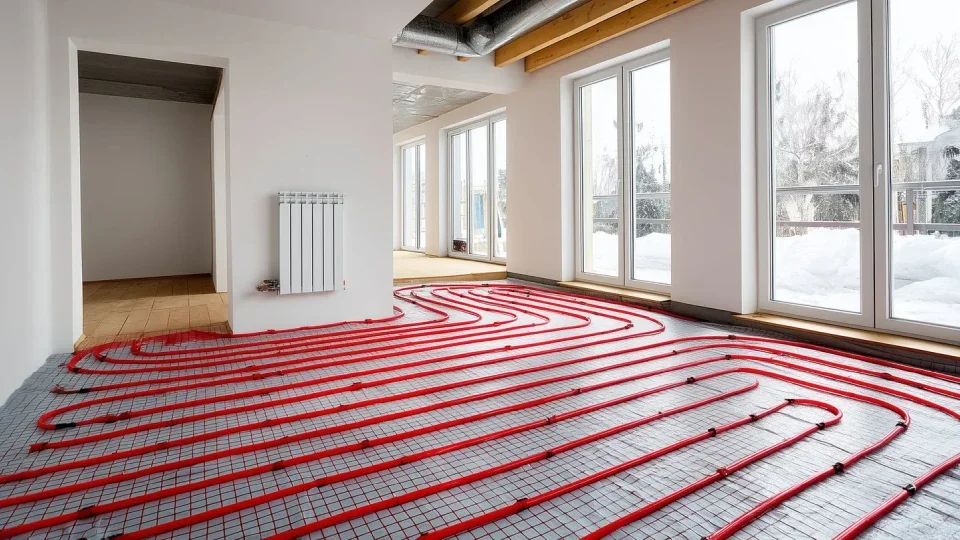
Home Surface Cooling System
While finding ways to make air conditioning more energy-efficient is important, it is equally important to find new and different methods to lower temperatures and remove heat. One such option is surface cooling systems. In these systems, cold water is circulated throughout a building via a series of pipes embedded in floors, walls, or ceilings. As the cold water passes through the pipes it cools the air which is then evenly distributed throughout the interior.
Aside from being more energy efficient, there are several benefits to surface cooling systems. These systems are more effective than conventional air conditioning, they can be retrofitted in buildings without major construction, they are unobtrusive, and they easily convert from a cooling system to a heating system simply by replacing the cold water in the pipes with hot water.
Salt-Based Radiative Cooling Panels
Radiative materials have also shown promise as an energy-efficient cooling option. Used for passive cooling, radiative materials take advantage of the Earth’s atmosphere to remove heat. These materials work by absorbing and emitting heat in the form of radiation, which is then able to escape directly into the Earth’s atmosphere.
Recently, researchers at the Lawrence Livermore National Laboratory used radiative materials to develop salt-based cooling panels. These panels have a coating made from a porous and aerogel-like structure of sodium chloride (table salt) and potassium chloride and can reflect incoming solar heat while simultaneously allowing radiative heat from below to escape. Panels can be applied to building rooftops or used for other cooling needs like refrigeration. According to the researchers, these panels are not only more effective than other types of cooling film, but they are also lightweight, low-cost, easy to manufacture, and scalable.
Old Cooling Technologies Reimagined
Building for a warmer future does not have to require the development of new technologies. In many cases, it is more practical and effective to utilize old technology in new and different ways.
Gando Primary School
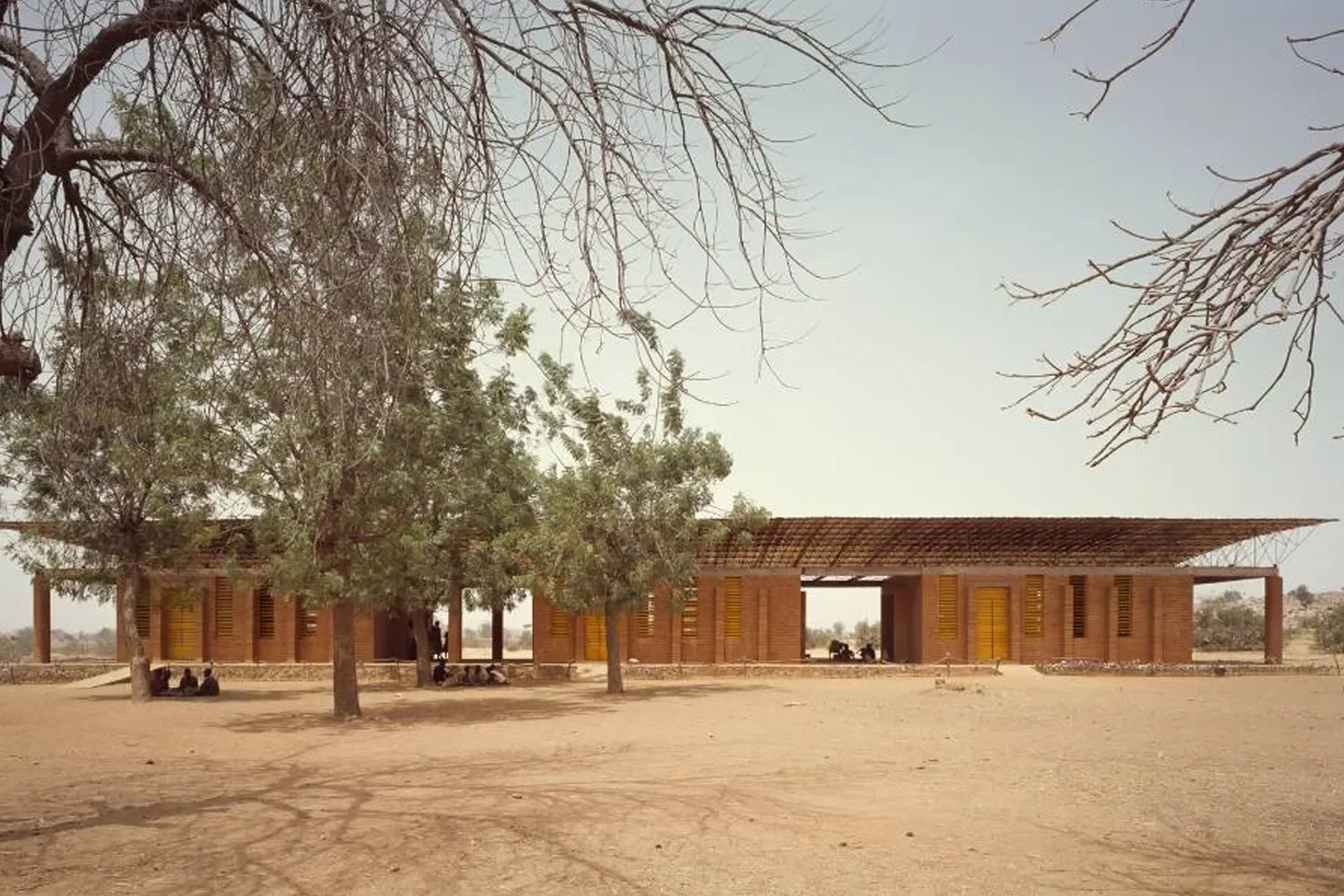
Gando Primary School in Burkina Faso; Image Credit: Kere Architecture
The Gando Primary School in Burkina Faso was designed to stay cool without mechanical systems. Using locally sourced materials, the school has a detached roof constructed of clay tiles with a dry-stacked brick ceiling underneath and walls built out of a clay-cement hybrid. The detached roof provides shading while also allowing for air flow and ventilation, while the clay-cement walls provide protection from the heat.
Hemp Hotel
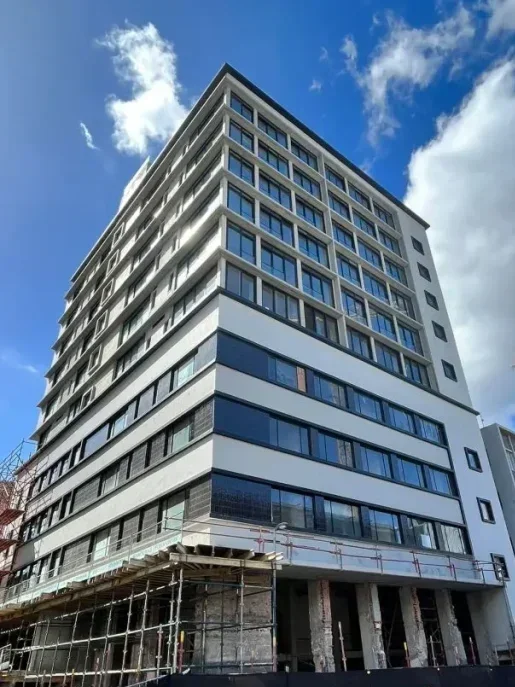
Hemp Hotel, Cape Town, South Africa
The 12-story Hemp Hotel in Cape Town, South Africa provides an example of the potential uses of hempcrete as a climate-friendly building material. Made from hemp fibers, lime, and water, hempcrete is a far more sustainable building material than other options. In addition, because hempcrete has high thermal properties, it is naturally able to regulate temperatures by absorbing heat during the day and releasing it at night.
Dancing Light Residence
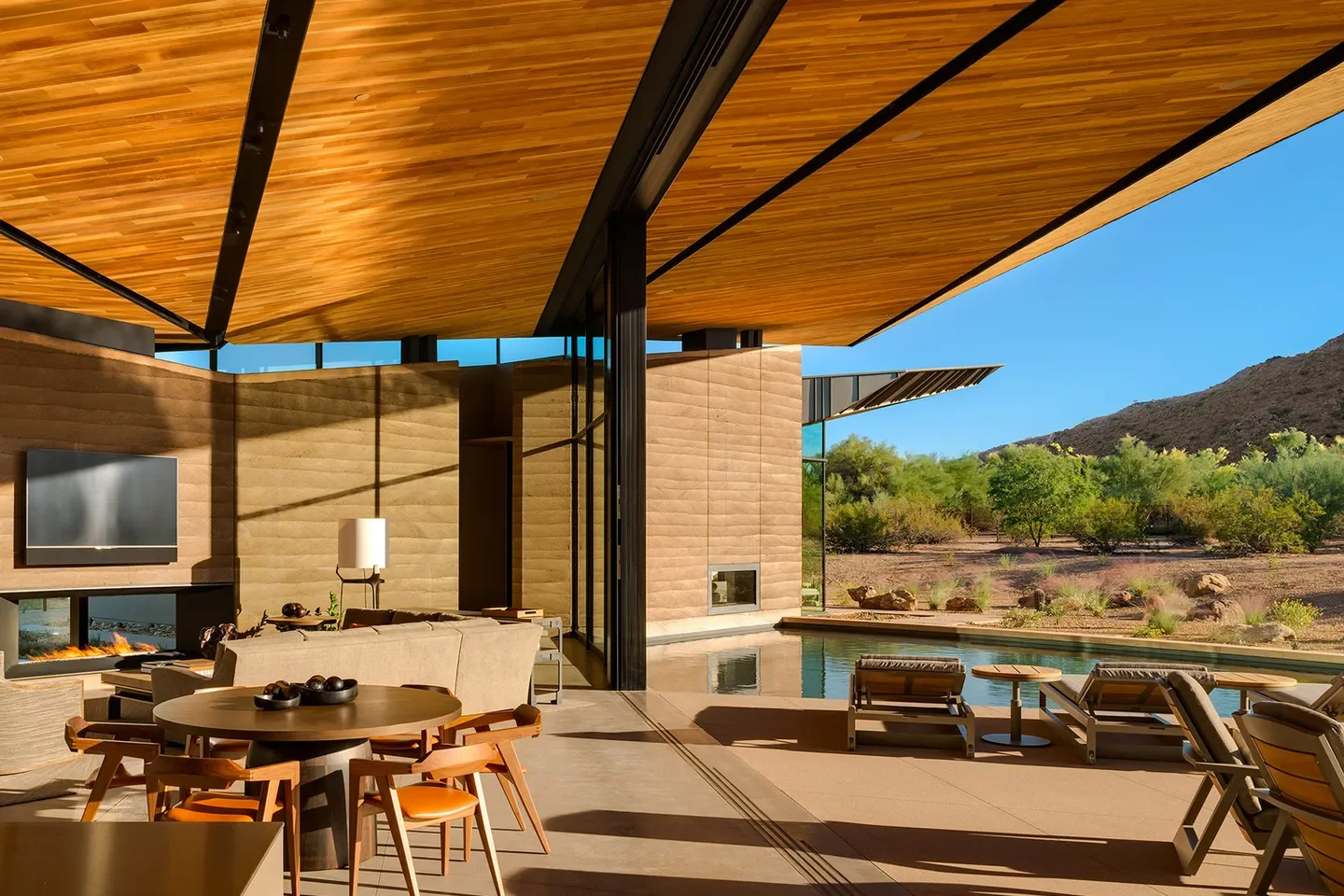
Dancing Light House in Arizona; Photo Credit: Alexander Vertikoff
At the Dancing Light Residence in Paradise Valley, Arizona, rammed earth technology is combined with a floating roof to construct a home that stays cool in the Arizona heat. Like the Gando Primary School detached roof, the floating roof provides shade and allows for air flow and ventilation. The rammed earth bricks act in a similar manner to the hempcrete bricks, however, rammed earth has been found to perform better than hempcrete at minimizing heat gain due to its high mass and high thermal properties.
Virginia Tech Columns
Students at Virginia Tech found an innovative way to reinvent the evaporative cooling technology behind the screens and lattices that have been used for centuries to keep homes cool in ancient Persia, India, and Egypt. And like the screens and lattices of the past, this technology is not only effective, but it is aesthetically appealing too.
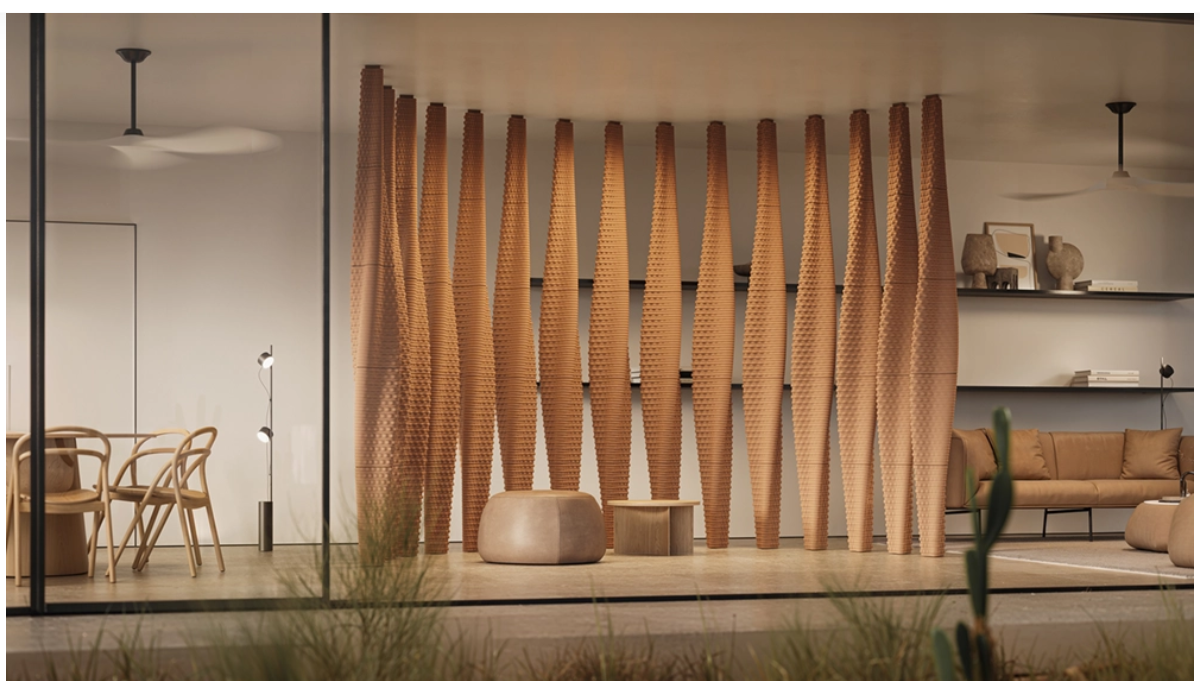
Virginia Tech Cooling Columns; Photo Credit: Saeed Sakhdard and Ilan Farahi
Using 3D printing technology, the students created hollow columns made of clay or porcelain. These columns are filled with water and sand so that as warm air passes through the column’s porous exterior, the water inside the column evaporates, cooling the air as it exits the column and disperses throughout the interior.
While their initial design focused on columns, the team at Virginia Tech sees this technology as having a much broader application than columns alone. They have successfully created cooling partition walls, and they believe that there is also potential to create cooling furniture or even cooling bricks that can be used as building materials. Because this technology relies on air movement for cooling, the team acknowledged that to be most effective, cooling columns or partitions will need to be placed in a room with strong natural air flow or paired with fans to ensure that the cooled air is equally distributed throughout the room.
Other Low-Tech Cooling Solutions
Sometimes, the best solutions are the simplest ones.
Minimize Heat Gain
The easiest way to regulate interior temperatures is to minimize the amount of heat that can enter the building in the first place. Drawing the blinds, closing the curtains, sealing up gaps or leaks around doors and windows, and/or planting shade-providing vegetation around the exterior of the building are all simple, cheap, and effective ways to minimize heat gain and lower temperatures inside homes and buildings.
Use Local Materials
Using locally sourced building materials is another simple way to both reduce your carbon footprint while also taking advantage of the inherent features of these materials that make them able to respond to local climate conditions.
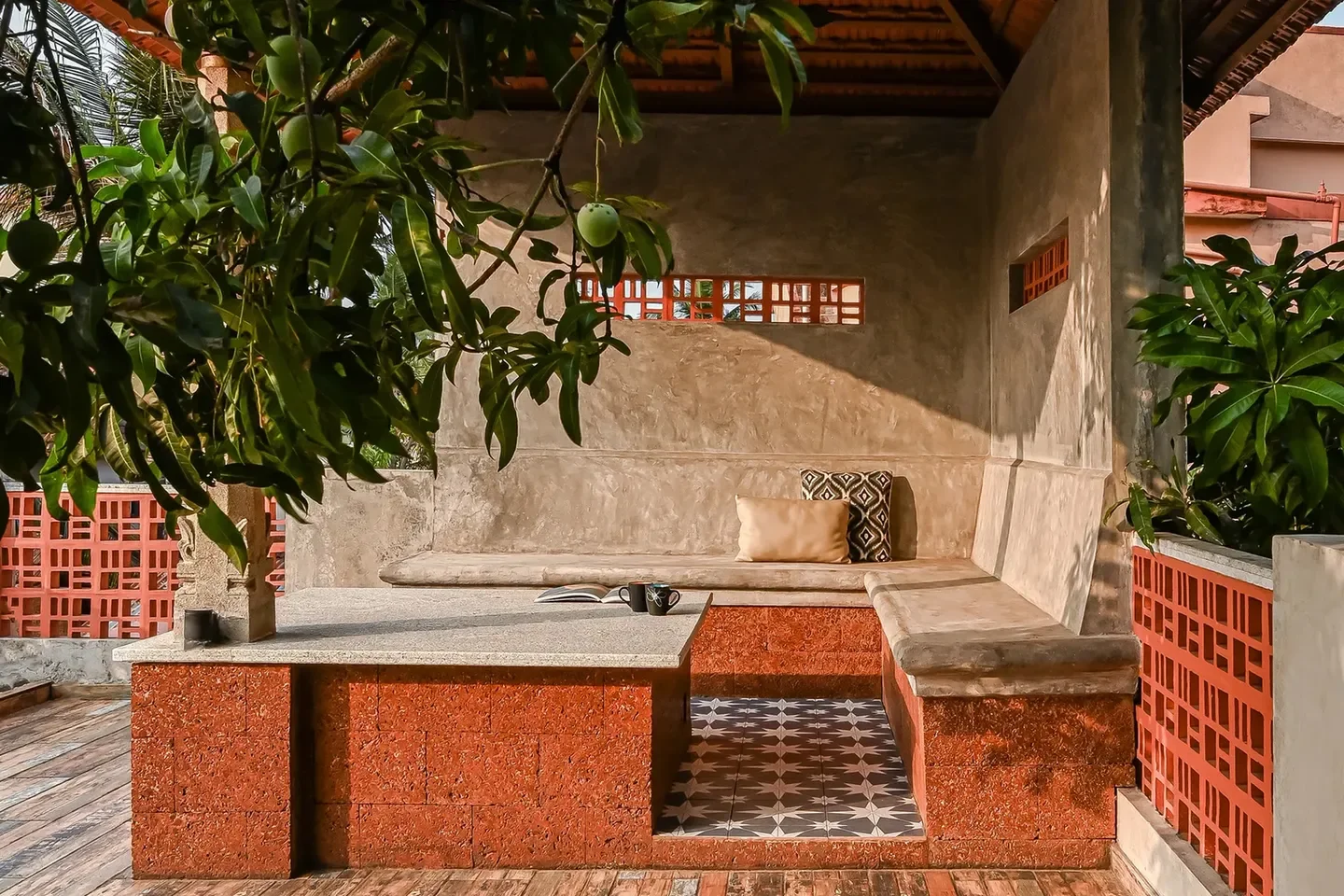
Gazebo shaded with Mangalore tiles; Photo Credit: Nilkanth Bharucha
For example, in India, many homes are built with mud walls made from a mixture of mud, sand, straw, and lime. These walls can be modified depending on the climate. In Southern India, it may be more common to have walls covered with a natural lime plaster rather than paint or traditional plaster, so they are able to breathe. In parts of the country that are more prone to rain, the walls can be paired with pitched roof overhangs for additional protection. In coastal areas or other areas with heavy rainfall, Mangalore tiles made out of locally sourced red colored clay are often used instead of mud walls to ensure that water is unable to enter the home while still allowing for air flow and ventilation.
Sleeping Porches
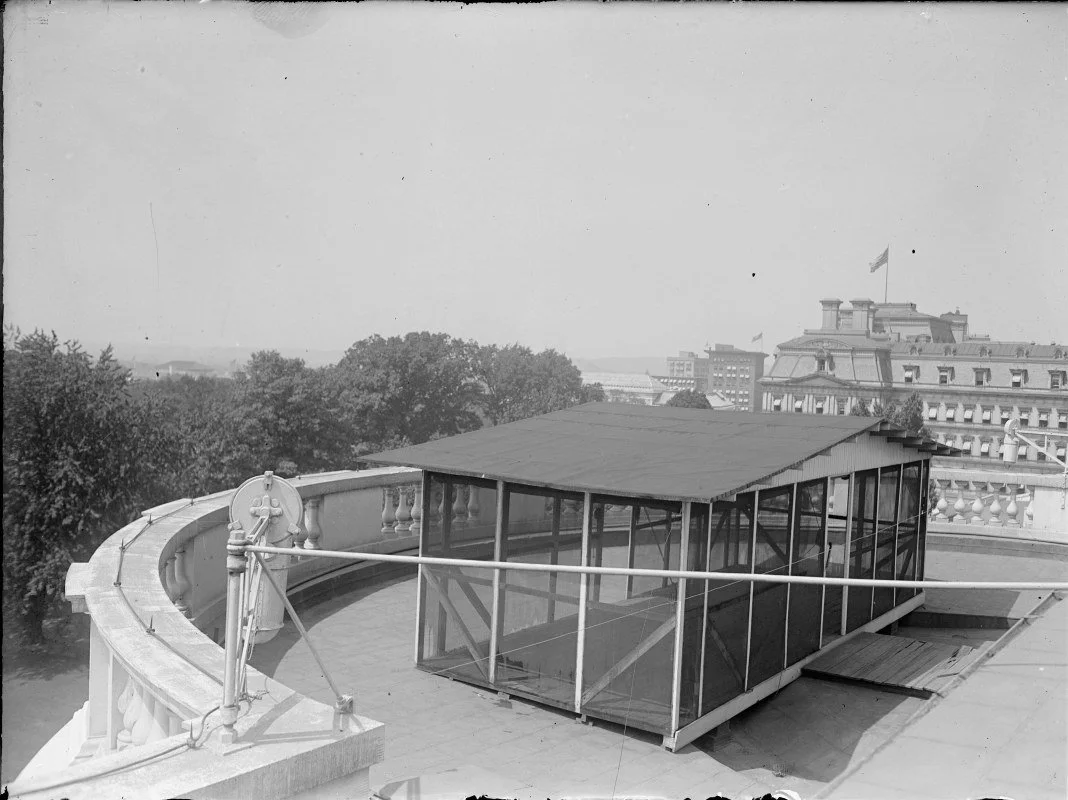
Sleeping porch on the roof of the White House during the William Howard Taft Administration; Photo Credit: Library of Congress
A throwback to the days before air conditioning, sleeping porches are a feature found in many older homes, but far less common to see in newer construction. Sleeping porches are exactly what they sound like – a screened-in area attached to the house that has natural air flow and thus provides a cool environment for sleeping. While typically on the 2nd or 3rd floor on the corner, side, or back of a home, sleeping porches have also been constructed on rooftops.
Demerara Windows
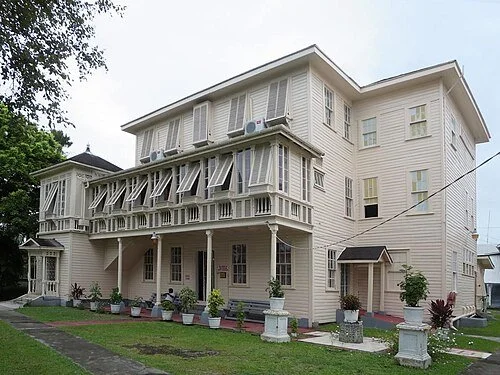
Demerara windows on the exterior of the Walter Roth Museum of Anthropology; Photo Credit: David Stanley via Wikimedia Commons under CC BY 2.0
In the tropical nation of Guyana, Demerara windows have been a common feature on homes since the 18th century. These windows are designed with a top hinge so they can be propped open from below and are outfitted with louvres that are angled to filter direct sunlight while allowing light and air to move through. For extra cooling power, ice or water can be placed on the windowsill to cool the air as it passes through the window.
Evaporated Water
Just as Demerara windows can be made more effective at cooling when water is combined with moving air, evaporated water can be used in a variety of ways to bring down interior temperatures. The Ancient Egyptians soaked reed mats in water and hung them in windows and doors to take advantage of evaporative cooling and in Ancient Persia, evaporated water was key to the functionality of both badgirs (windcatchers) and qanats (aqueducts). Evaporated water was even used to create a make-shift air conditioning system using ice blocks and a large cast-iron box in an attempt to save James Garfield’s life after he was shot in 1881.
Building Differently for a Hotter Planet
The future looks hot, but it’s not too late for us to build differently. The decisions we make now in terms of where we build and how we build will have a huge impact on our ability to withstand a warmer future.
In Part 1 of this series, we learned about Cool Building strategies, like Cool Roofs, Cool Walls, and Cool Pavements, as well as Green Building strategies, such as Green Roofs, Green Walls, and Green Spaces. In Part 2, we examined some of the innovative Passive Cooling strategies from the past, such as Wind Catchers/Wind Towers and Screens/Lattices. And in this article, Part 3 of our series, we have highlighted multiple examples of New Cooling technologies, Old Cooling technologies re-imagined, and Low-Tech Cooling options that can be adapted for the 21st century.
We know that our planet is warming and that much of this warming has been directly caused by human activity. Ideally, this understanding would lead us to come together as global citizens to address our climate crisis by working to reduce both the amount of energy consumed throughout the world and the levels of polluting chemicals being released into Earth’s atmosphere each day. Unfortunately, we do not live in an ideal world.
Until or unless we make the changes necessary to slow or reverse our global warming trends, extreme heat will continue to become more common, more widespread, and more dangerous to human health. We cannot wait for the ideal – we can and must act now.
Paint your roof or your driveway white. Add vegetation around your home to provide shade and evaporative cooling. Create a green wall. Plant trees. Close your blinds during the day. Hang damp curtains in front of an open window. Replace your traditional air conditioning unit with one that uses climate-friendly refrigerants or solar panels. Install a surface cooling system. Use building materials that are derived from the environment, like locally sourced mud or clay, hempcrete, or rammed earth technologies. Whatever you choose, just do something.
There are a multitude of ways we can build differently to be prepared for the future.
We know better, it’s time we build better.