Extreme Heat - Building Differently Part 1: Cool & Green
Global temperatures are rising and nowhere has this been more pronounced than in our cities, which are heating up twice as fast as the rest of the planet. The main driver behind higher urban temperatures has been the built environment. It is the very features that define a city (e.g. large buildings, numerous roadways, abundance of concrete and asphalt) that make it hotter by absorbing solar energy in the daytime and releasing that energy as heat into the surrounding environment during the night.
The good news is that because we understand the relationship between the built environment and higher temperatures, we can do something about it – we can build differently. Whether it is new construction or retrofitting existing structures, there are a variety of building strategies that can be used to lower urban temperatures, cool our homes and buildings, and increase our ability to withstand extreme heat events.
In this article, the first in our Extreme Heat – Building Differently series, we will examine several Cool and Green building strategies that can be used to help mitigate the urban heat island effect and create more comfortable and livable cities.
Cool Building Strategies
Cool building strategies work to reduce temperatures inside of buildings and in the surrounding environment by reflecting heat away from surfaces through the use of materials with high solar reflectance and high thermal emittance.
High solar reflectance, also referred to as “albedo”, describes the ability of a material to reflect sunlight rather than absorb it. Surfaces with high albedo tend to be light colored or white to reflect solar energy away from the surface of the structure.
High thermal emittance describes the ability of a material to shed solar energy that has been absorbed in the form of thermal infrared radiation rather than heat. Surfaces with high thermal emittance help to lower temperatures by releasing absorbed heat directly into the Earth’s atmosphere rather than into the building and the surrounding environment.
The most commonly used cool building strategies are Cool Roofs, Cool Walls, and Cool Pavements.
Cool Roofs
Cool roofs work to lower temperatures by using light-colored or white coatings to reflect heat away from a structure. As the World Resources Institute highlighted, energy that is reflected does not cause warming, but energy that is absorbed does. The more solar energy that can be reflected away from buildings and surfaces, the less warming that will occur. According to the U.S. Department of Energy, while conventional roofs can reach temperatures in excess of 150°F, reflective coatings have been shown to lower temperatures by as much as 50°F.
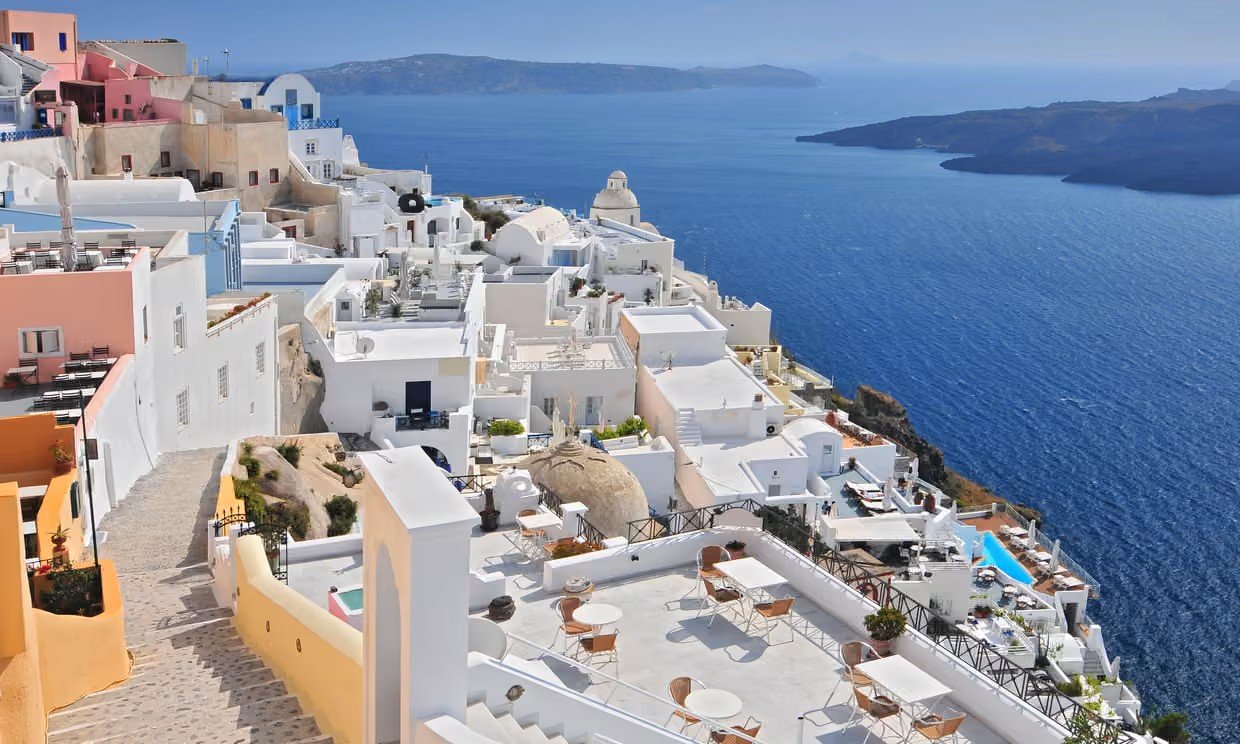
White rooftops in Greece; Photo credit: Cezary Wojtkowski/Getty Images
Cool Roofs are not a new innovation. In fact, people living in hot and sunny climates have been using light-colored roofing materials for generations. One of the best examples of cool roofs may be the iconic white roofs on buildings throughout Greece, as seen in the photo above.
Cool Walls
Just like cool roofs, cool walls use reflective strategies to lower the temperature inside of buildings and in the surrounding environment. The most common way this is accomplished is through the use of white or light-colored paint on exterior walls, however there are other options, including light-colored vinyl siding, cladding, or other products that contain special reflective pigments.
Although rooftops are exposed to more direct sunlight than exterior walls, there are far more walls than rooftops in a city. The sheer number of exterior walls, along with their proximity to the warm ground, and the fact that they tend to be less insulated than roofs, has made walls another significant source of warming in cities.
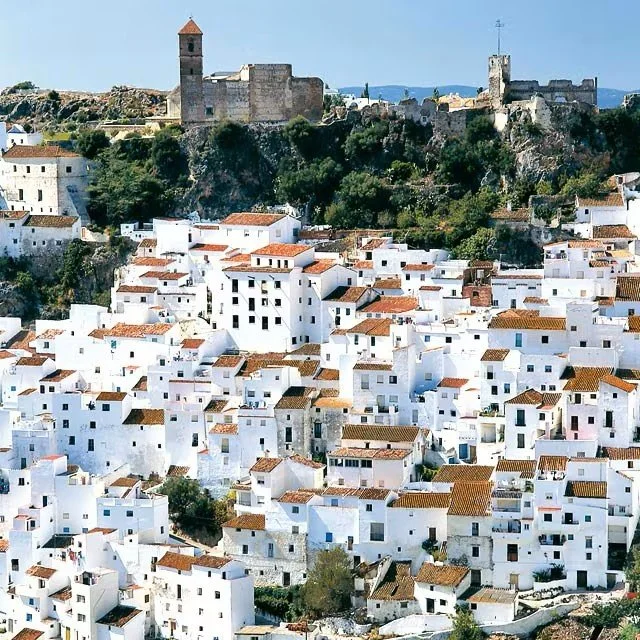
Pueblos Blancos, Spain
Overall, cool walls have been shown to be as effective as cool roofs in lowering temperatures inside buildings and in the surrounding environment. In older buildings that are less well-insulated, cool walls tend to be particularly beneficial by drastically lowering the amount of heat that can enter the structure. Cool walls have also been used for centuries to lower temperatures in warm climates. The White Towns of Andalusia (Pueblos Blancos) in Spain, as shown in the photo above, provide a great example of whitewashing going as far back as Roman times.
Cool Pavements
Cool pavements are a newer innovation than cool roofs and walls but rely on the same reflective properties to lower urban temperatures. Similar to cool roofs and walls, cool pavements are created using paving materials that reflect more solar energy. This can be accomplished through the use of conventional paving materials like concrete and asphalt that are made light-colored, or through the use of newer technologies like coatings or grass paving.
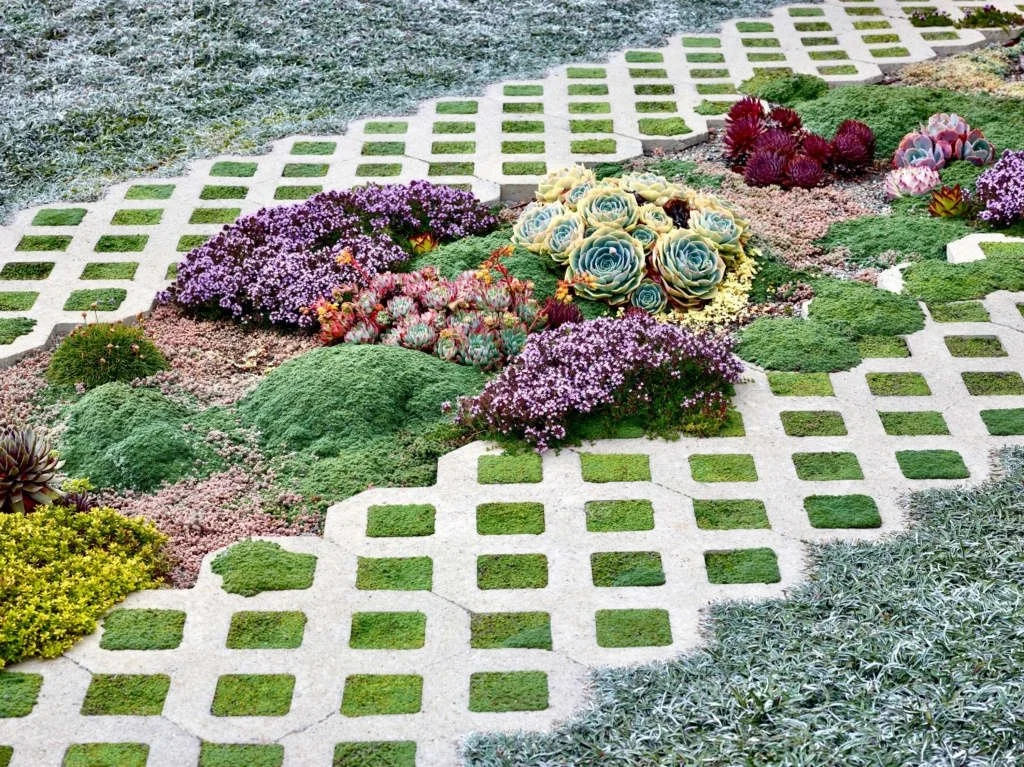
Green pavers; Photo Credit: Marion Brenner/Gardenista
Like rooftops, pavements are exposed to a great amount of direct solar energy, absorbing more than 80% of sunlight and releasing it into the environment as heat. This trap and release cycle of heating exacerbates the urban heat island effect and increases temperatures in the surrounding environment. By modifying pavements to make them more reflective, cool pavements can be 10-16°F cooler than those using conventional paving materials like asphalt, which can reach temperatures as high as 152°F.
Beyond helping to lower temperatures and mitigate the urban heat island effect, cool pavements have been shown to enhance safety because light-colored roads improve visibility at night, and to increase quality of life by making paved public gathering areas cooler and more comfortable for people to congregate in together.
Cool Building Benefits & Costs
There are far more benefits from cool building than there are costs. The clearest benefit from cool building strategies is their ability to lower temperatures both inside of buildings and in the surrounding environment. By helping to lower temperatures, cool building strategies also help to reduce energy usage and energy costs. With lower energy usage comes lower levels of greenhouse gas emissions, helping to reduce air pollution. And lower temperatures in combination with less air pollution result in less heat-related illness or death and improvements to human health and comfort.
In addition, cool building strategies can be particularly beneficial in older buildings or those without air conditioning. Lower temperatures on roofs and walls can help to extend the life of these structures by protecting them from temperature fluctuations. Cool building strategies may even decrease the need for air conditioning use, further reducing both energy usage and greenhouse gas emissions.
While cool building options can be extremely helpful in lowering building and environmental temperatures, they may not be the right solution for everyone. For example, in colder climates, cool roofs can lead to higher energy costs in the winter as warming sunlight is reflected away from the structure. While these additional heating costs may be offset by savings in the summer, cool roofs tend to be a better option for those living in warmer climates.
Cool roofs can also be more expensive than traditional roofs, particularly when incorporated into existing buildings to replace conventional roofing materials. During new construction, however, the cost of a cool roof is often in line with the cost of a traditional roof. Some types of conventional roofing materials can even be retrofitted for use in cool roofs. Because most cool roofs require a certain degree of regular maintenance and upkeep, cool roofs may have more ongoing costs than traditional ones.
Green Building Strategies
Green building strategies work to lower temperatures in and around buildings by using plants, trees, and other natural features to cool the air. There are two primary ways that green building strategies work to lower urban temperatures: through evaporative cooling and through shading.
According to the World Resources Institute, evaporative cooling describes the process by which trees, plants, and moist surfaces such as soil or bodies of water are able to cool the air by drawing in warm water from the land and releasing it into the surrounding environment as water vapor. Similar to the way sweating works to cool the body, evaporative cooling uses the power of evaporation to cool the air and lower ambient air temperatures. In plants and trees, this process is referred to as evapotranspiration.
In addition to the benefits provided by evapotranspiration, plants and trees can also help to lower temperatures through shading, which quite simply describes the process of blocking solar energy from being able to reach surfaces and heat them up. While shading can be accomplished with a variety of structures, both natural and human-made, the dual properties of evapotranspiration and shading that trees and plants provide make the use of natural features a particularly powerful tool to mitigate urban heat. In fact, studies have shown that trees can lower urban temperatures by as much as 2-9°F through shading and evapotranspiration alone.
The most commonly used green building strategies are Green Roofs, Green Walls, and Green Spaces.
Green Roofs
Green roofs, also referred to as rooftop gardens, are designed to use the power of evaporative cooling from plants to reduce temperatures inside and around buildings. These gardens help to lower temperatures by cooling the air on and above the roof, while simultaneously providing thermal insulation to limit the amount of solar heat absorbed by the roof and released into the building. The pervious soil in rooftop gardens has the additional benefit of helping to manage stormwater runoff.
When a group of climate scientists from NASA’S Goddard Institute for Space Studies (GISS) examined three rooftop gardens in Chicago, they found that two of the three gardens were effective at lowering temperatures both inside the building and in the surrounding environment. Their study revealed several factors that may contribute to how effective a green roof will be in lowering temperatures, including whether the garden is extensive, using shallow soil and low-maintenance plants, or intensive, using deeper soil and more diverse plants; the local climate; and the type of ventilation and insulation in the building.
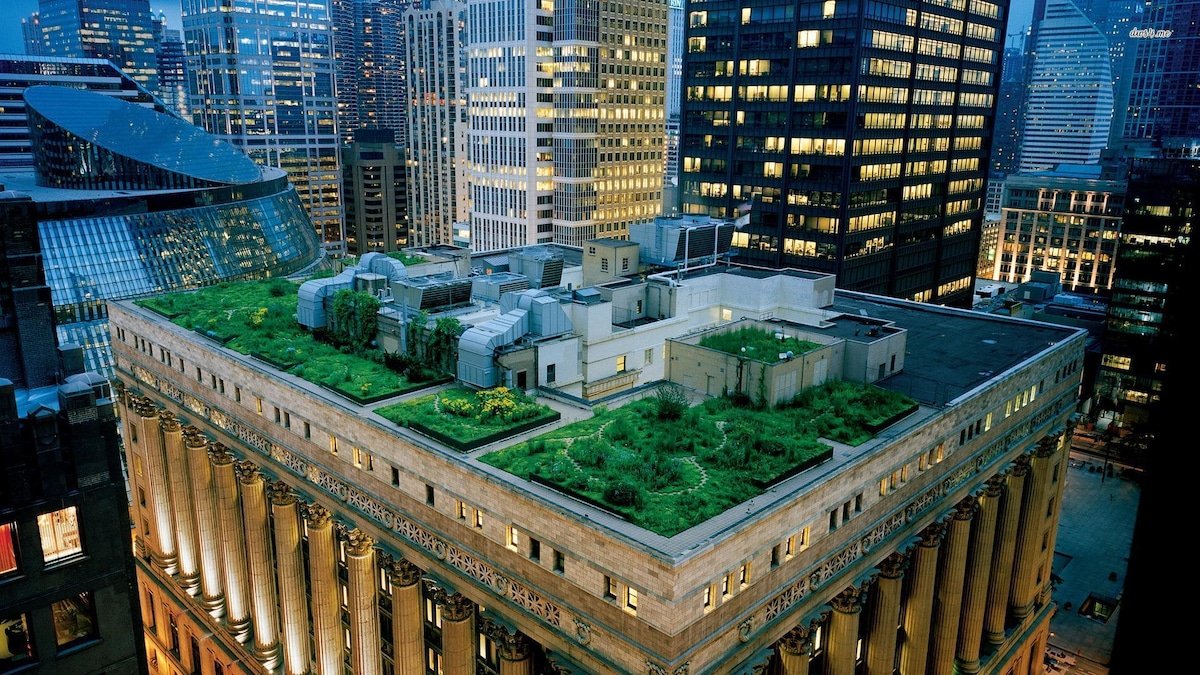
Rooftop Garden at Chicago's City Hall; Photo Credit: DJANDYW.COM AKA NOBODY / Flickr / CC BY-SA 2.0
While the term “green roof” is a newer addition, rooftop gardens have been around for centuries. The most famous example of a rooftop garden may be the Hanging Gardens of Babylon, but anthropologists report that living roofs have been used since prehistoric times, with the earliest documented example found on the ziggurats of ancient Mesopotamia.
Green Walls
Green walls, commonly known as vertical gardens, work similarly to green roofs by harnessing the cooling power of plants to lower temperatures inside of buildings and in the surrounding environment. According to the American Society of Landscape Architects, there are three types of green wall commonly used – green facades, living walls, and retaining living walls.
Green facades consist of a framework to support climbing vines or cascading ground covers with a soil bed at the base. In this type of vertical garden (pictured below), plants are typically rooted to the base of the structure and attach themselves to the framework, spreading to make a wall of vegetation.
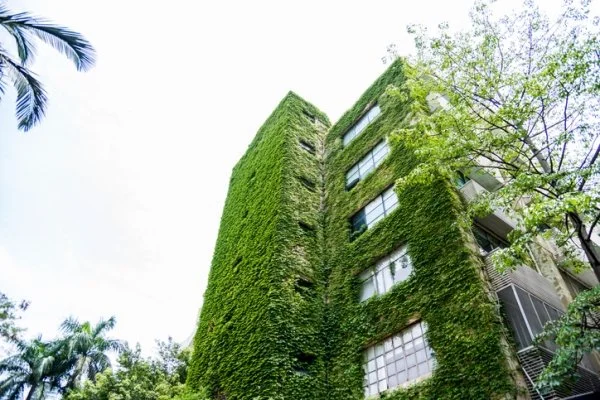
Green facade on apartment building
Living walls, on the other hand, consist of pre-vegetated panels and can accommodate a greater density and a greater variety of plant life. Because these plants are rooted directly to the wall panel rather than the base, living walls tend to have a thicker and more robust layer of vegetation than green facades. Both green facades and living walls can be free standing structures or attached to existing buildings.
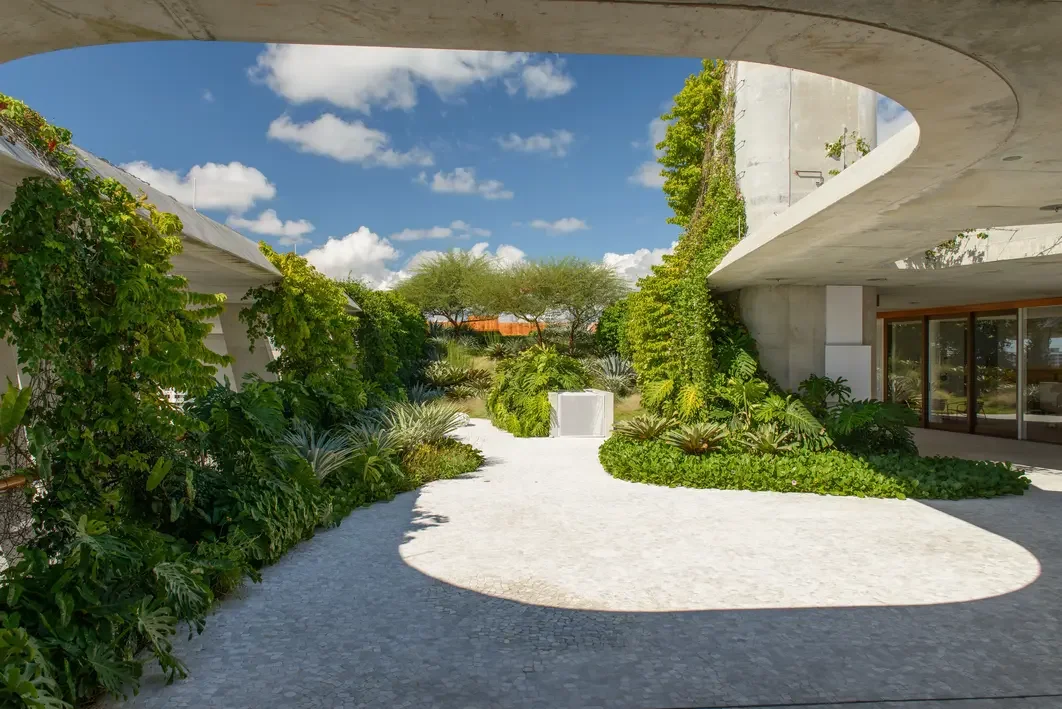
Living Walls; Photo Credit: Stephen Dunn Photography
Retaining living walls are a little different than green facades and living walls in that their main purpose is to stabilize slopes using vegetation. Retaining living walls have less of an impact on building temperatures, but can help to lower local air temperatures through shading and evapotranspiration.
In terms of reducing heat, green walls have been shown to be just as effective as green roofs. For example, temperatures behind green walls can be as much as 10°C cooler than the surrounding air. Green walls can also reduce temperature fluctuations at the wall’s surface, which helps to limit the amount of heat that can spread between walls and into the building. And green walls can lower the temperature around intake valves, allowing HVAC systems to work more efficiently and potentially cutting energy costs by 23%.
Green Spaces
Green spaces are those areas in which the built environment is either replaced by or supplemented with natural vegetation like trees and plants. Multiple studies have shown that expanding green spaces is one of the most effective ways we can lower urban temperatures and mitigate the urban heat island effect.
Many cities and communities have begun to increase green space and expand the tree canopy through the use of tree planting campaigns sponsored by organizations like The Nature Conservancy, The Arbor Day Foundation, or other local programs like this one in Maryland. These programs encourage the use of native plants and often provide residents or community groups with free or low-cost saplings to be planted, along with guidance on tree care and maintenance.
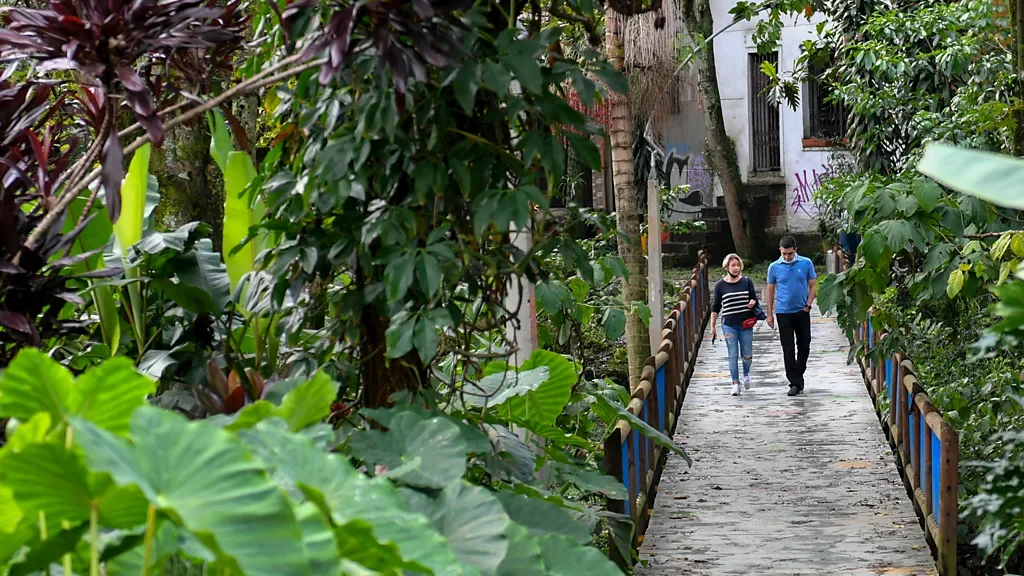
Green corridor in Medellin, Colombia; Photo Credit: Getty Images
Some cities have chosen to expand green spaces into green corridors, in which trees and vegetation are strategically planted along paved surfaces like roadways and bike paths to create a cool and shaded corridor. These green corridors often serve to connect other green spaces within a city and have been shown to be effective at lowering surface and air temperatures by at least 3°F.
Green Building Benefits & Costs
The benefits of green building techniques are nearly identical to those of cool building strategies, namely lower temperatures, less energy use, lower energy costs, and lower levels of greenhouse gas emissions. Like cool roofs and walls, green roofs and walls also experience fewer temperature fluctuations, extending their lives and reducing maintenance costs.
Green building strategies can even provide benefits to the general public through the expansion of green spaces and green corridors. These spaces provide shade, clean the air, and help to improve human comfort and health. Green building strategies have also been shown to provide benefits in terms of stormwater management as permeable surfaces can reduce urban flooding and manage runoff.
There are, however, a couple of downsides to green building strategies that are important to consider. Green building options can get expensive. Aside from the costs of regular upkeep, maintenance, and the occasional replacement of plants, green building options can require the installation of additional structural elements in order to support the weight of heavy rooftop gardens or living walls.
The other downside to utilizing green building options is that they will increase humidity in the surrounding environment. For areas that face both high temperatures and high humidity, green roofs and walls may not be the best solution.
Building for the Future
Our building choices affect urban warming, but they also impact how we experience the heat. Heat can be debilitating, particularly when there are few options for relief. As we have seen, there are a variety of ways we can lower urban temperatures and mitigate the urban heat island, from simple strategies like adding more vegetation or painting roofs and walls white, to more complex ones like creating a rooftop garden or replacing asphalt with grass pavers. With heat waves becoming more frequent, more widespread, and of longer duration, the way we choose to build will play a significant role in our ability to cope with, adapt to, and survive extreme heat events.
*It is important to note that Green Building and Green Infrastructure are not the same. While both involve the use of natural features, green infrastructure describes a specific approach to urban planning exclusively for stormwater and wastewater management that incorporates both natural and engineered solutions.
Coming Up…
Urban heat may be increasing, but it isn’t a new phenomenon. For centuries, cities have been hot, cramped, and densely populated. So how did people manage to keep cool in warm climates before electricity? In our next article, Part 2 of our series, Extreme Heat – Building Differently, we will look at how people have stayed cool throughout history and across cultures to see what lessons we can learn about innovative ways to beat the heat.