Categories of Work in FEMA’s Public Assistance Program
Barns with tornado in the background
The Public Assistance (PA) program, FEMA’s largest grant program, provides reimbursement for costs associated with the response to, and recovery from, a Presidentially declared disaster. Applicants of FEMA’s Public Assistance Program are state, local, tribal, and territorial (SLTT) governments. Below we’ll review each FEMA PA category of work, with some basic examples of what FEMA pays for following a disaster. If you want to learn more specific information about FEMA’s PA program, including eligibility criteria and other policy-related requirements for all of these categories of work, refer to FEMA’s Public Assistance Program and Policy Guide (PAPPG).
When administering Public Assistance program grants, FEMA separates the work being undertaken into two “types” of work, and seven discrete “categories” of work (Categories A-G).
The two overarching “types” of work are:
Emergency Work (Categories A and B) - work that must occur immediately to save lives, protect public health and safety, protect improved property, eliminate (or lessen) an immediate threat to life, health, public safety, or improved property.
Permanent Work (Categories C through G) - work that is required to restore (repair or replace) a facility or piece of community infrastructure to its pre-disaster design and function, in accordance with the latest codes and standards.
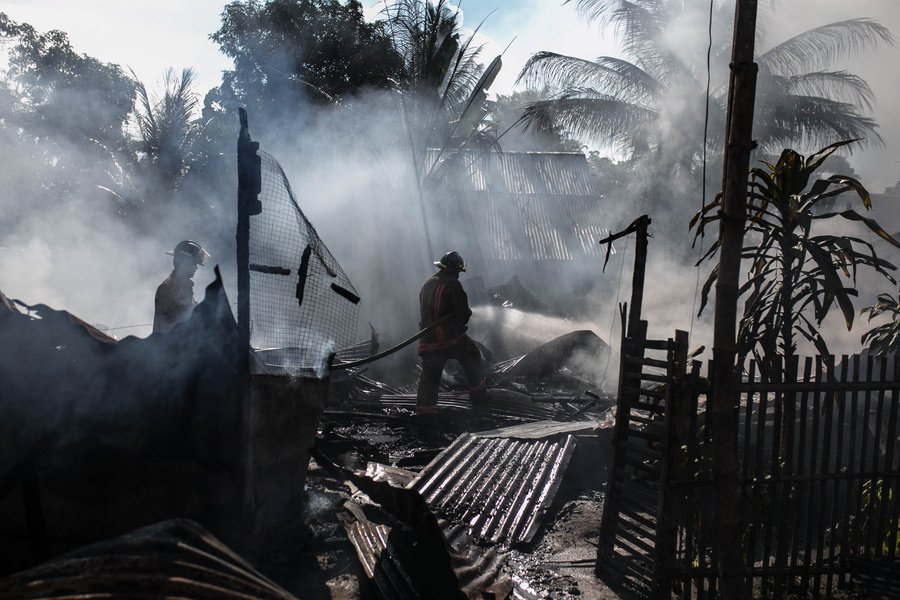
Firefighters extinguish the remnants of a house fire
Emergency Work
To be eligible, the work being claimed must eliminate (or lessen) an immediate threat to life, safety, public health, or additional damage to community wide infrastructure.
Category A – Debris Removal
Debris removal activities include everything required to remove the debris from the impacted area. FEMA requires “cradle-to-grave” accounting for debris throughout the process, from clearance, to reduction, to removal, and finally disposal. To be eligible, the removal of the debris must be in the public’s interest and must follow the guidelines established in FEMA’s Public Assistance Program and Policy Guide. This requires that the work must:
Eliminate immediate threats to lives, public health, and safety;
Eliminate immediate threats of significant damage to improved public or private property;
Ensure economic recovery of the affected community to the benefit of the community at large; or
Mitigate further risk to life or property by removing substantially damaged structures that are blighted or have been targeted for removal by local officials (with the proper authority to demand their removal).
Category B – Emergency Protective Measures
Emergency Protective Measures are actions taken by SLTT governments before, during, or after a disaster to save lives, protect public health and safety, or safeguard property. A great many activities can fall under this category of work, providing that (like Cat A), they eliminate or lessen immediate threats to health, safety, or improved property. These activities can include (but are not limited to):
Pre-positioning / transporting, and setting up equipment
Flood protection/mitigation (i.e. sandbags or barriers)
Evacuation and sheltering
Emergency operating center costs
Medical care and transportation
Traffic control
Fire suppression
Search and rescue operations
Community outreach and information campaigns to provide public service announcements and guidance about health and safety hazards
Hazardous materials removal and disposal
Safety and substantial damage inspections
Labor (including overtime)
Meals for emergency workers
A yellow loader parked in front of a mound of dirt
Permanent Work
Permanent Work is any work required to repair, reconstruct, or replace infrastructure that has been damaged as a direct result of the disaster. To be eligible, permanent work must restore these facilities to their pre-disaster design, function, and capacity, and remain compliant with current codes and standards.
Further, the applicant (SLTT government) must have the legal responsibility to own, operate, or maintain the facility. The damage must be the direct result of the disaster, located within the declared area, and must have occurred within the “incident period” (the timeframe defined by the declaration). Federally owned facilities (i.e., infrastructure whose primary responsibility falls on the federal government to repair or replace) are not eligible for FEMA assistance.
Category C – Roads/Bridges
Category C projects (FEMA’s largest permanent work category) generally include things like:
Road surfaces, shoulder areas, adjacent ditches and drainage structures (culverts and cross drains), low-water crossings, and guardrails
Bridge decking and pavement, piers, girders, abutments, approaches, and slope protection
Associated facilities, such as lighting, sidewalks, and signage
Category D – Water Control Facilities
Water control facilities include structures built for a wide variety of purposes, such as channel realignment, recreation/navigation, land reclamation, irrigation, fish/wildlife habitat maintenance, interior drainage, erosion prevention, flood control, or storm water management. Generally, these facilities include (but are not limited to):
Dams and reservoirs
Levees and floodwalls (note that many flood control works fall under the authority of other federal agencies, like US Army Corps of Engineers and are thus ineligible)
Lined/unlined engineered drainage channels
Canals
Aqueducts
Sediment and debris basins
Storm water retention and detention basins
Coastal shoreline protective devices
Irrigation facilities
Pumping facilities
Navigational waterways and shipping channels
Category E – Buildings and Equipment
Uninsured costs associated with the repair or replacement of buildings and equipment is generally eligible, providing that the damage was a direct result of the event, and the facility was regularly maintained. Important note: insurance is always the first line of defense. FEMA will only participate in the portion of costs to repair or replace a facility that is not covered by insurance.
For equipment, FEMA uses industry standard equipment rates to determine appropriate reimbursement costs. Traditionally, Category E projects are written to cover the costs of:
Buildings (schools, administrative centers, hospitals, jails, courts, and other buildings)
Structural and non-structural components, including mechanical, electrical, and plumbing systems
Contents and equipment within the building, including any furnishings, files, research-related contents, and animals
Equipment (vehicles and construction equipment)
Category F – Utilities
Category F projects cover eligible public utility infrastructure. This is different from large commercial utility providers, and is meant to cover utilities that are owned, operated, and maintained by eligible applicants (SLTT governments). Examples of these types of projects include:
Water storage facilities, treatment plants, and delivery systems
Power generation, transmission, and distribution facilities (including, but not limited to, wind turbines, generators, substations, and power lines)
Natural gas transmission and distribution infrastructure
Sewage collection systems and treatment plants
Communication systems
Category G – Parks, Recreational, and Other Facilities
Category G serves as a catch-all for any other facilities that are not already covered by Categories C through F. As such, it includes a hodgepodge of eligible publicly owned facilities, including (but not limited to):
Mass transit facilities such as railways
Beaches
Parks
Playground equipment
Swimming pools
Bath houses
Tennis courts
Boat docks
Piers
Picnic tables
Golf courses
Ball fields
Fish hatcheries
Ports and harbors
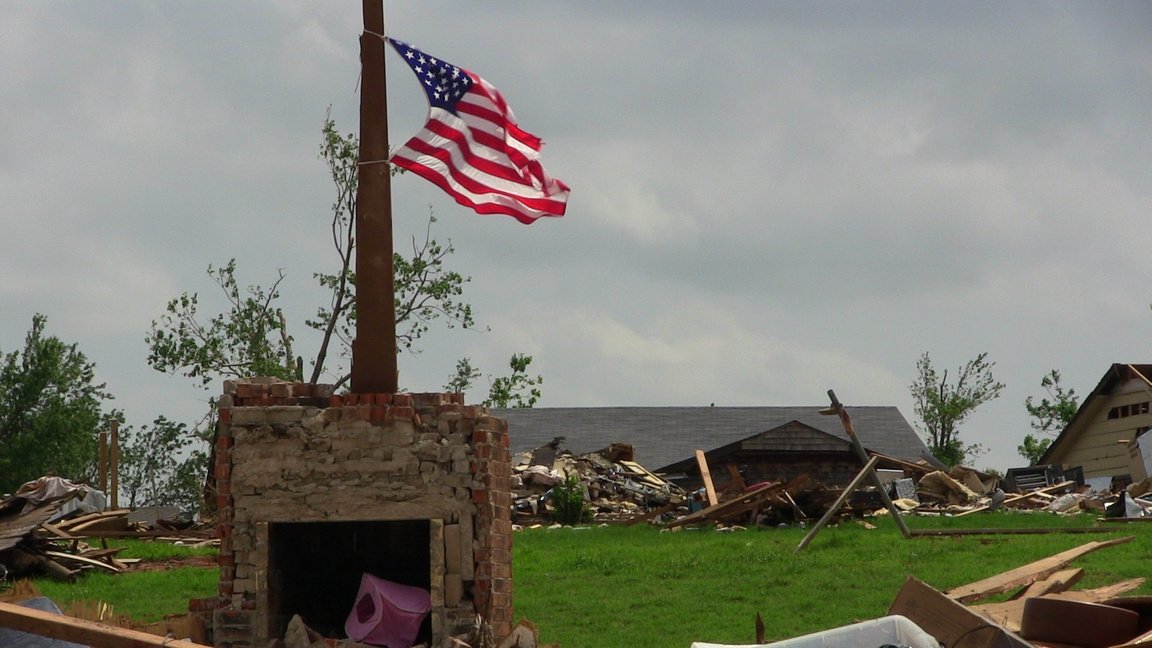
US flag flying above the rubble of damaged homes following a storm
The final category of work (Category Z) is not an actual “Category” in the same sense as the categories above. Category Z projects are always the last projects written by FEMA for applicants of the PA program, and cover the costs associated with managing Public Assistance program grants. This includes administrative support required to compile, track, and manage damages, prepare grant documentation, and attend FEMA meetings. These can be the applicant’s own employees (referred to as “force account” staff), or contractor support. All hours and expenses claimed on a Category Z project must be tied directly to eligible activities performed in pursuit of FEMA grants and to the applicants’ eligible projects for the disaster.
If you want to learn more about FEMA’s Categories of Work, including additional eligibility criteria and other policy-related requirements, see FEMA’s website and the current version of FEMA’s Public Assistance Program and Policy Guide. For more general information, check out the Congressional Research Service’s resources, including FEMA's Public Assistance Program: A Primer and Considerations for Congress and A Brief Overview of FEMA’s Public Assistance Program.