Advocacy Letter: Protecting Southern Maryland Fisheries Following the Potomac Interceptor Spill
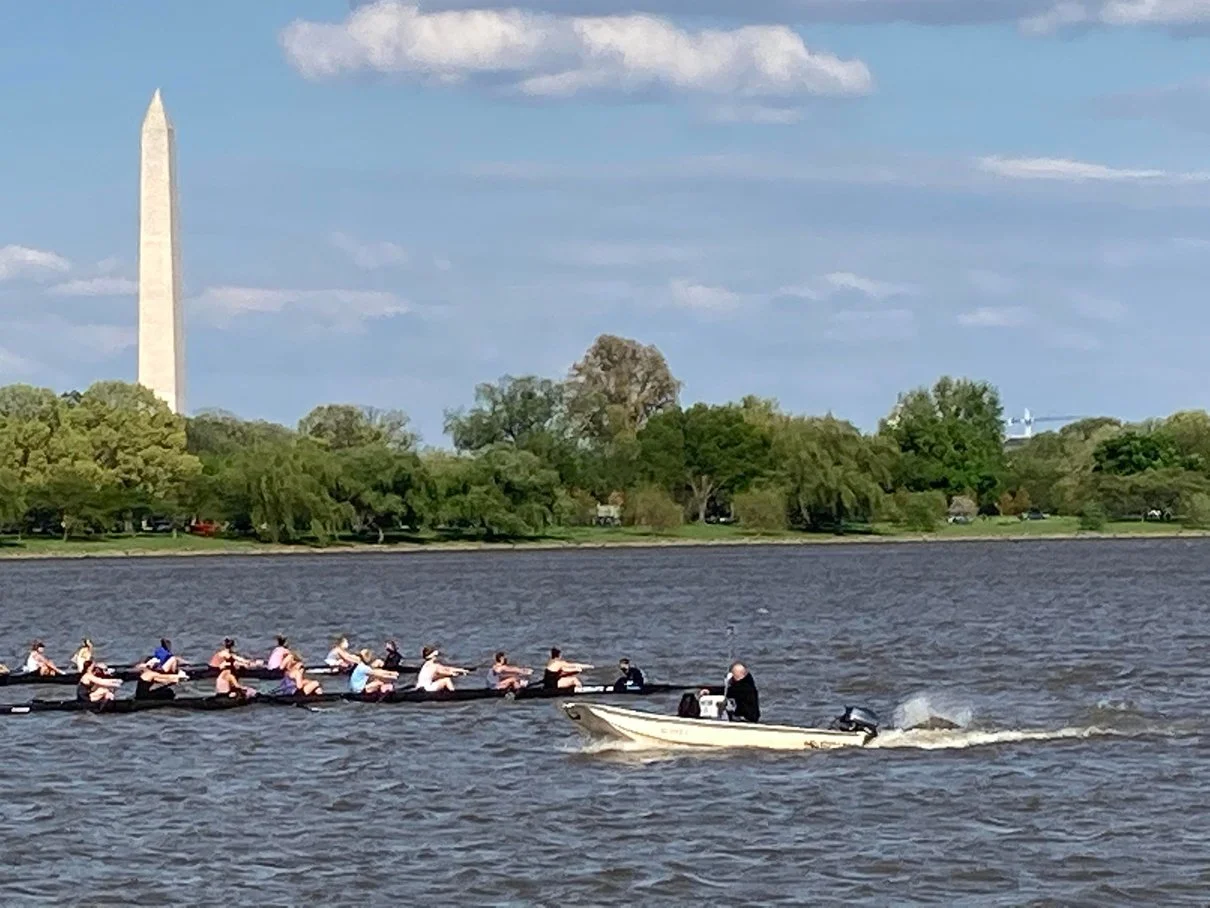
Rowers practicing on the Potomac River with the Washington Monument in the background
A potential ecological catastrophe is currently unfolding in the Potomac River and the State of Maryland has to solve it. That’s the shortest explanation of the consequences of the Potomac River Interceptor collapse from the perspective of long-term recovery and water quality within the Potomac River.
Maintaining a healthy balance within any river ecosystem requires societal commitment; a community-wide understanding that rivers are a collective resource and their health benefits us all. Here in the State of Maryland, our ownership of (and responsibility for) the Potomac River is an almost 400-year-old legacy written directly into our 1632 charter. From the “first fountain of the River Pottowmack” to its mouth at the Chesapeake Bay, the Potomac River is the defining geographic feature outlining Maryland’s southern and western borders. Our responsibility for the Potomac spans the entire river, from shore to shore.
In February, I sent a letter to state officials (full text below) in which I strongly urged them to “devote the full scientific and technical capabilities of the State of Maryland” to protect fisheries downriver from contamination. I’m quite proud that our leaders here in Maryland not only understand their important role but have taken direct action. In the letter I made five specific recommendations:
Identify stakeholders and erect a dedicated Task Force charged with the explicit mission of protecting Maryland’s shell fishing industry.
Examine mitigation options to suppress bacterial growth downriver that DC Water can take, right now, within its area of jurisdiction.
Implement a targeted testing regimen at critical points along the Potomac and release the results to the public on a consistent, routine basis.
Develop an immediate list of viable actions that watermen, marina owners, conservation groups, and others can themselves take, to reduce the likelihood of shellfish bed contamination.
Establish a coordinated crisis and issues management communications strategy that delivers routine, transparent updates to watermen, marina owners, conservation groups, and residents, actively addresses misinformation, and safeguards public trust and market stability in Maryland’s shellfish industry.
Kudos to the State of Maryland for already implementing recommendations #1, #3, and #5. These were actions that were within their immediate control.
Recommendations #2 and #4 are understandably more difficult, but they can also be supported by organizations (like ours) willing to devote resources and energies to identifying long-term strategies to improving water quality and protecting our fisheries.
And that’s what we’re doing. As we discover new approaches, strategies, or innovative technologies based on sound science, we will elevate them for consideration.
So, if anyone out there has great ideas for nature-based solutions that can remediate an entire river, then now’s the time. We, and every conservation group located in or near the southern Potomac, are all ears.
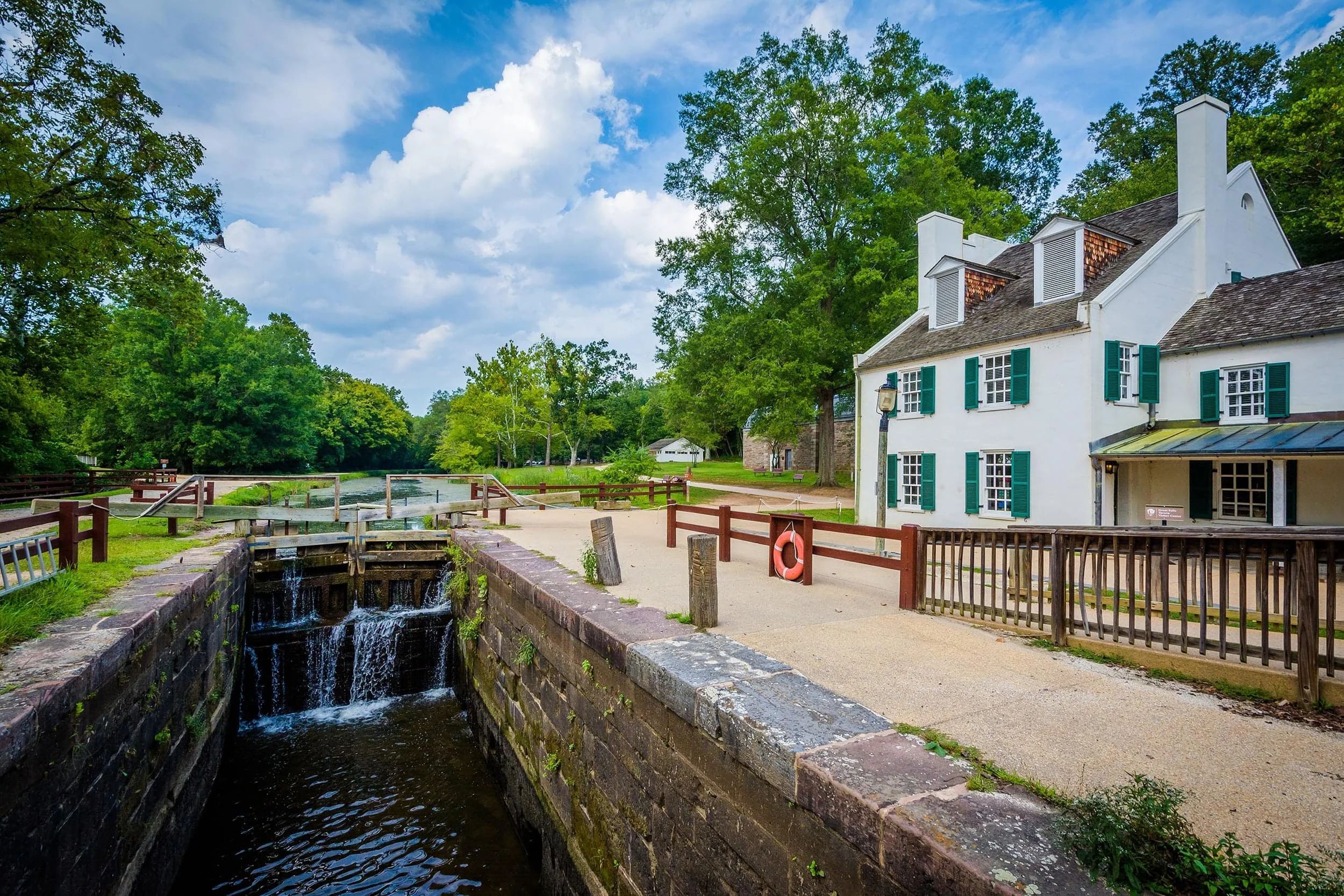
C&O Canal in Montgomery County, MD
Subject: Active measures to protect Southern Maryland fisheries from Potomac River bacterial contamination
Dear Secretary McIlwain,
I write to you today as a concerned citizen raised within the fishing community of St. Mary’s County, to strongly urge MDE to take immediate actions to prevent the environmental crisis in the Potomac from becoming an economic catastrophe downriver in Southern Maryland’s historic and economically vital oyster fisheries.
The scale of this discharge causes deep concern that relying upon hydrodynamics and UV decay may be insufficient to suppress bacteria levels within the water column and suggests thatactive measures should be taken right now in the Potomac’s upper reaches to ensure that oyster fisheries beyond the sanctuary remain unaffected.
I strongly urge your office to devote the full scientific and technical capabilities of MDE to:
Identify stakeholders and erect a dedicated Task Force charged with the explicit mission of protecting Maryland’s shell fishing industry.
Examine mitigation options to suppress bacterial growth downriver that DC Water can take, right now, within the water column, and within its area of jurisdiction.
Implement a targeted testing regimen at critical points along the Potomac and release the results to the public on a consistent, routine basis.
Develop an immediate list of viable actions that watermen, marina owners, conservation groups, and others can themselves take, to reduce the likelihood of shellfish bed contamination.
Establish a coordinated crisis and issues management communications strategy that delivers routine, transparent updates to watermen, marina owners, conservation groups, and residents, actively addresses misinformation, and safeguards public trust and market stability in Maryland’s shellfish industry.
I am encouraged by the FEMA declaration approval and hope that NOAA will also approve their request. In the meantime, Maryland must not wait for the federal government to lead. While federal coordination is ongoing, Maryland should take proactive steps inherent in its own authorities to protect communities downriver.
Our watermen and marina owners deserve the State of Maryland’s unwavering commitment to protecting their livelihoods and enforcing water quality standards within the whole of the river. I urge Maryland leaders to take a whole community approach to this ecological emergency, led by MDE, supported by DNR, DOH, and other State Departments and Agencies. This approach not only exercises our authority and responsibility to protect the health of the river but also shows those who are connected to it that we embrace our role as its protector.
This issue is extremely important to me. My family and lifelong friends are members of the Southern Maryland fishing community. Each year in October, we celebrate our State’s unique oyster heritage at the National Oyster Festival in St. Mary’s County. That event is only six months from now. If there is anything I, or my office, can do to help with this crisis, please do let me know.
Yours in service,
Clinton Parker Pipkin
Concerned Citizen
Managing Director, SRP Partners
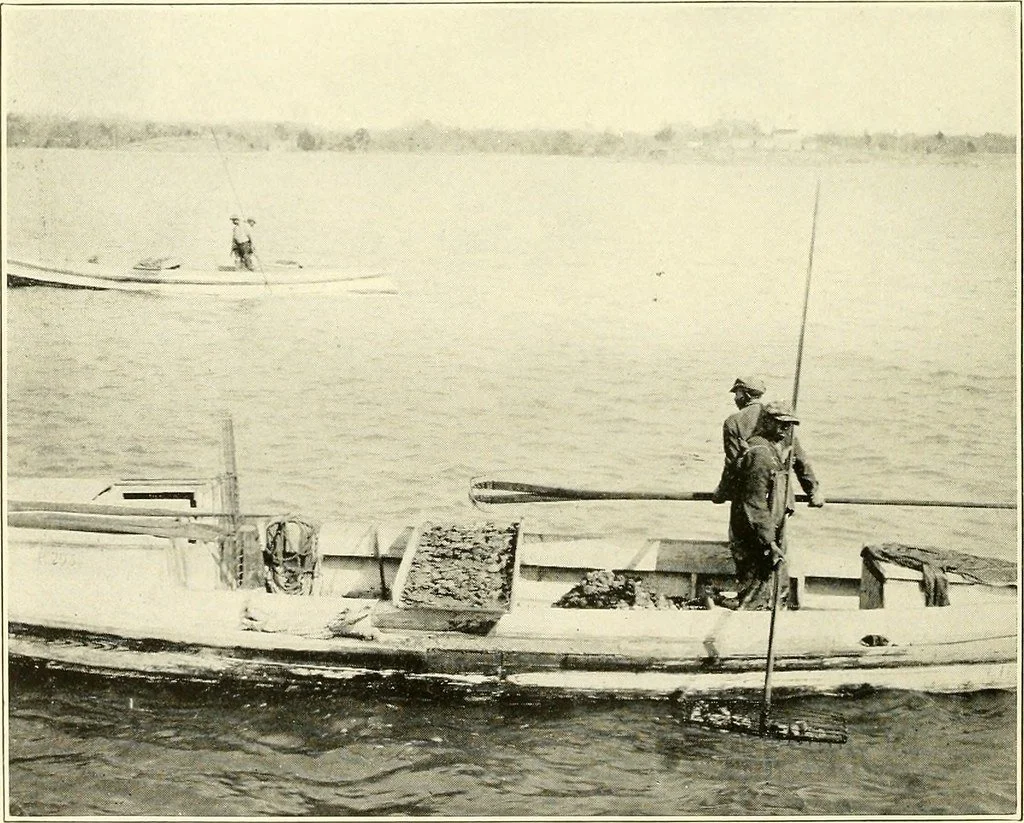
Tonging oysters in Maryland. Image courtesy of Prof. E.N. Cory, Maryland State University & Smithsonian Libraries
Background
On January 19th, a 6’ diameter sewer line (known as the Potomac River Interceptor) collapsed near the Clara Barton Parkway along the banks of the Potomac River. The pipe carries sewage from the Northern Virginia suburbs across the Potomac River, and down the river’s eastern edge to its treatment location at the Blue Plains Wastewater Treatment Plant.
The cause of the collapse remains under investigation.
As a result of the collapse, hundreds of millions of gallons of raw sewage were discharged directly into the Potomac River near Lock #10 on the C&O Canal.
DC Water (the public utility responsible for providing water and wastewater services to 700,000 customers in District of Columbia and surrounding suburbs) has since diverted and sequestered the raw sewage in the C&O Canal, as construction crews work to repair the collapsed section.
While the State of Maryland did not cause the collapse, Maryland is responsible for regulating and monitoring the overall health of the Potomac River and its critical ecosystem. Maryland Department of the Environment (MDE) along with the Department of Natural Resources also regulates shellfish harvesting waters within the whole of the Potomac River, including collecting water samples, performing bacteriological testing, and examining shellfish for bacterial and chemical contamination. This remains an ongoing process.